
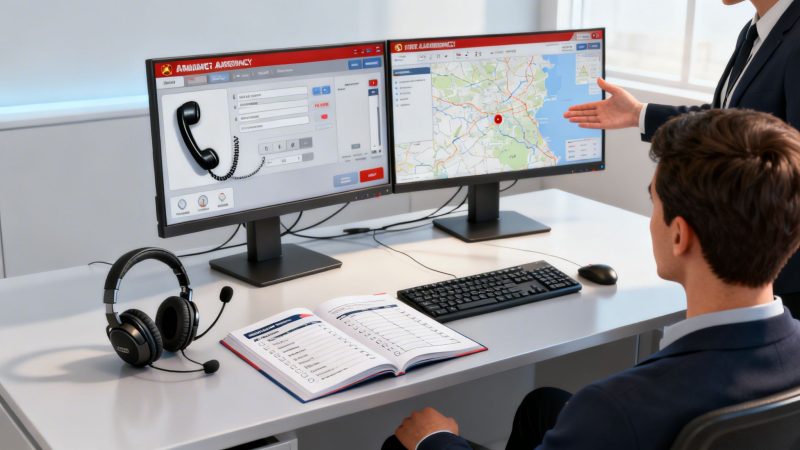
Top 12 Best 911 Dispatcher Training Programs for 2026
Becoming a 911 dispatcher is a calling that demands specific, high-stakes skills, and selecting the right training is the critical first step. This guide is built to cut through the noise and provide a clear, actionable comparison of the top 911 dispatcher training programs available today. Whether you are an individual aspiring to join a Public Safety Answering Point (PSAP), an agency director aiming to certify a new hire, or a seasoned telecommunicator seeking advanced credentials, finding a program that fits your budget, schedule, and career goals is essential.
We have gathered and analyzed a curated list of national academies, online providers, and specialized certification bodies. This resource moves beyond simple descriptions to offer practical insights into each program's focus, from initial certification and protocol mastery to stress resilience and leadership development. You will find details on cost, duration, prerequisites, and the specific certifications awarded.
Each entry includes direct links and key takeaways to simplify your decision-making process. We’ll also point out opportunities to save money, such as agency-wide licenses for continuing education or online programs that reduce travel expenses. The goal is to equip you with the information needed to confidently choose a training path that prepares you for the realities of the dispatch console and supports long-term career growth in this demanding, yet rewarding, field.
1. APCO Institute – Public Safety Telecommunicator (PST1) and EMD Program
The APCO Institute serves as a foundational resource for public safety agencies, delivering what is arguably the most widely recognized entry-level curriculum in the United States. Its Public Safety Telecommunicator (PST1) course is a cornerstone for new-hire academies, aligning directly with the APCO/NENA recommended minimum training guidelines. This makes it an ideal choice for Public Safety Answering Points (PSAPs) aiming to establish a standardized, nationally respected certification pathway for their teams.

APCO provides a robust catalog beyond its initial PST course, including essential programs like Emergency Medical Dispatch (EMD) and Communications Training Officer (CTO). The availability of multiple delivery modes, such as in-person, virtual instructor-led, and self-paced online courses, offers agencies flexibility in how they train their staff. For a practical example, a department could run a full in-person academy for a new recruit class while simultaneously having a veteran dispatcher complete a CTO course online, minimizing scheduling conflicts and overtime costs.
Pricing and Access
- Pricing: APCO uses a clear pricing structure, with significant discounts offered to APCO members. For example, the PST1 online course might cost around $160 for members versus $285 for non-members.
- Actionable Insight: For agencies training multiple dispatchers, an agency-level APCO membership often pays for itself through course discounts alone. Before purchasing courses, calculate the cost difference for your expected annual training volume; a single membership could save you hundreds or even thousands of dollars over a year.
- Access: Course materials, including the EMD guidecards, are typically provided upon enrollment or program implementation within an agency.
Unique Strengths and Considerations
A primary benefit of APCO's EMD program is its structured implementation support, which helps agencies integrate the system, including its proprietary guidecards, into their operational workflow. However, a notable limitation is that these EMD guidecards are only accessible after an agency officially adopts and implements the APCO EMD program. This differs from other services where you might preview materials. Furthermore, maintaining APCO certification requires ongoing Continuing Dispatch Education (CDE) and periodic recertification, which represents a recurring cost and time commitment that agencies must budget for.
Website: APCO Institute PST Courses
2. NENA – National Emergency Number Association Training
NENA, the National Emergency Number Association, provides a curriculum focused heavily on the operational and leadership aspects of public safety communications. While APCO is often seen as the go-to for foundational, entry-level training, NENA excels in providing advanced and specialized 911 dispatcher training programs. Its courses are ideal for agencies seeking to develop their supervisors, Communications Training Officers (CTOs), and leadership teams with standards-driven content that has a strong emphasis on Next Generation 9-1-1 (NG9-1-1).
The association offers a mix of instructor-led online (ILO) and in-person courses, giving agencies the flexibility to host training regionally. As a practical example, three smaller, neighboring agencies could pool resources to bring a top-tier "Center Supervisor" course directly to their area, reducing travel costs and logistical burdens for everyone involved. NENA's focus on supervision and NG9-1-1 makes it a critical partner for PSAPs preparing for the future of emergency response.
Pricing and Access
- Pricing: NENA uses a tiered pricing model with lower costs for members. Prices vary by course; for example, a Center Manager Certification Program might cost around $700 for members and $825 for non-members.
- Actionable Insight: For agencies planning to host a course, partnering with neighboring PSAPs is the most effective way to save money. By co-hosting, you can easily meet the minimum enrollment numbers (e.g., 10 for ILO, 18 for in-person) and share the costs, making elite training accessible for a fraction of what it would cost to send staff to a national conference.
- Access: Course materials are provided upon registration. Hosted courses require a minimum number of paid registrants before they can be confirmed.
Unique Strengths and Considerations
NENA's key advantage is its forward-looking curriculum, particularly its in-depth training on NG9-1-1 concepts, management, and implementation. Its CTO program is also highly regarded, providing a practical framework with documentation that helps agencies build a robust and legally defensible training process. Much like modern dispatch software platforms that integrate complex data, which you can learn about in this dispatch system comparison, NENA’s training prepares staff to manage the increasingly complex data environment of NG9-1-1. A primary consideration is the enrollment minimum for hosted classes. Smaller agencies may find it challenging to meet these numbers on their own, making regional collaboration a necessity rather than an option.
Website: NENA Hosted Courses
3. IAED / Priority Dispatch – EMD, EFD, EPD Certification and ACE Accreditation
The International Academies of Emergency Dispatch (IAED) offers a highly structured, protocol-driven approach to dispatcher training, favored by agencies that prioritize standardization and measurable quality assurance. Its certifications in Emergency Medical Dispatch (EMD), Emergency Fire Dispatch (EFD), and Emergency Police Dispatch (EPD) are built around a specific set of protocols that guide call-takers through every step of an incident. This system is designed to create extreme consistency, ensuring callers receive the same level of care regardless of which dispatcher answers the phone.

Beyond individual certifications, the IAED’s most distinguished offering is its Accredited Center of Excellence (ACE) program. Achieving ACE status is a significant undertaking that signals a PSAP’s commitment to the highest performance and compliance benchmarks in the industry. For a practical example, an agency pursuing ACE accreditation might use the IAED's QA software to flag all cardiac arrest calls for review, ensuring post-dispatch instructions are given correctly 100% of the time. This makes the IAED/Priority Dispatch system a top choice for agencies aiming for operational excellence.
Pricing and Access
- Pricing: Costs are quote-based and tailored to the agency's size and needs. Implementation, certification for each dispatcher, software, and ongoing support are all factored in, making it a significant financial commitment.
- Actionable Insight: When negotiating a contract, ask about bundled pricing for multi-discipline implementation (e.g., EMD and EFD). Adopting multiple protocols at once often comes at a lower total cost than adding them piecemeal later. Also, request a multi-year cost projection that includes recertification fees to avoid surprise expenses.
- Access: Protocols and training materials are proprietary and only available to agencies that formally adopt the Priority Dispatch system. Access is granted upon contract and implementation.
Unique Strengths and Considerations
The primary strength of the IAED model is its integrated quality assurance framework. The protocols are designed to be audited, and the system provides the tools and methodology for conducting regular case reviews. A major consideration, however, is the high level of organizational commitment required. Maintaining ACE accreditation or even just compliance with the protocols demands a robust internal QA program and a culture of strict adherence, which can be a substantial ongoing operational lift. This system is less of a simple training course and more of a complete operational philosophy that an entire agency must adopt.
Website: IAED Accreditation Information
4. Total Response (formerly PowerPhone) – Protocol-Driven Training and Site-Licensed CE
Total Response, formerly known as PowerPhone, offers a unified approach to emergency call handling by integrating protocols for police, fire, and medical dispatch into a single system. This makes it a compelling choice for consolidated communication centers that want their dispatchers to be proficient across all disciplines. The training model is distinctly different from per-seat certification programs; it is built around a site license that grants an entire agency unlimited access to its suite of online courses.

The platform’s strength lies in its all-inclusive nature for customer agencies. As a practical example, an agency with a site license could certify five new hires, have ten veteran dispatchers complete their annual T-CPR recertification, and enroll three supervisors in a leadership module—all without incurring any additional per-user fees. This structure is ideal for agencies that value predictable budgeting and want to empower their entire team with continuous professional development opportunities.
Pricing and Access
- Pricing: Access is based on a quote-based site license for the Total Response call-handling system. The training component is included with this license, not sold separately.
- Actionable Insight: For agencies with high turnover or a commitment to extensive continuing education, the site license model can offer major cost savings over time. Instead of paying hundreds of dollars per dispatcher for initial certification and recertification every two years, one annual fee covers everyone. Calculate your "cost per training hour" under this model versus a-la-carte pricing to see the dramatic savings.
- Access: Online training modules and certification pathways are available exclusively to employees of agencies that have licensed the Total Response system.
Unique Strengths and Considerations
A major benefit is the system's cross-discipline focus, which ensures dispatchers are not just EMD-certified but are also trained in structured call-taking for law enforcement and fire incidents. This creates a more versatile and standardized response across all emergency types. The unlimited access model encourages a culture of continuous learning, as dispatchers can explore CE topics at their own pace without the agency worrying about per-course costs. The primary limitation, however, is that these valuable training resources are completely tied to being a Total Response customer; they are not available for individual purchase or for agencies using other protocol systems.
Website: Total Response (PowerPhone)
5. NECI 9-1-1 – Basic 9-1-1 Dispatcher Certification
The National Emergency Communications Institute (NECI) provides a nationally recognized Basic 9-1-1 Dispatcher certification designed for broad applicability. The curriculum is built upon a foundation of APCO, NENA, and NFPA standards, ensuring its relevance and acceptance across many jurisdictions. This makes NECI a flexible choice for PSAPs, community colleges, and even high schools looking to implement standards-aligned 911 dispatcher training programs that create a direct career pathway.

NECI stands out by offering clear progression routes from its basic certification to advanced roles like Communications Training Officer (CTO) and agency instructor. As a practical example, an agency could use the NECI curriculum to establish a pipeline with a local community college, where students complete the Basic 9-1-1 course before applying, arriving on day one with foundational knowledge. This tiered approach allows individuals to build a career, not just get a job.
Pricing and Access
- Pricing: Costs are not standardized and vary significantly based on the training partner delivering the course. An individual might pay a few hundred dollars at a community college, while an agency contracts for a group rate.
- Actionable Insight: Agencies can become a NECI training partner to certify their own instructors. This initial investment in a "train-the-trainer" model can dramatically lower long-term training costs by bringing certification capabilities in-house, eliminating the need to pay per-head fees to outside vendors for every new hire class.
- Access: Course materials are provided upon enrollment through a licensed partner. Full certification for some courses requires completion under the supervision of a NECI-certified instructor.
Unique Strengths and Considerations
A key advantage is NECI's integration with the Law, Public Safety, Corrections & Security (LAPSEN) network, which helps build a talent pipeline directly from high school and Career and Technical Education (CTE) programs. This is a strategic benefit for agencies struggling with recruitment. However, the decentralized delivery model means quality and cost can fluctuate between partners, requiring agencies to vet their chosen training provider. Furthermore, to deliver the curriculum and issue official certifications, an agency or college must have its instructors certified by NECI, which is an upfront organizational commitment.
Website: NECI 911
6. Smart Horizons – 911 Public Safety Telecommunicator Basic Program
Smart Horizons offers a highly accessible, self-paced online basic telecommunicator program designed for individuals entering the field or agencies needing a flexible foundational course. The 60-hour curriculum aligns with APCO ANS and NENA standards, providing a solid knowledge base covering everything from the roles and responsibilities of a dispatcher to liability, technology, and stress management. As one of the more affordable 911 dispatcher training programs, it serves as an excellent starting point for new hires before they begin more intensive, hands-on agency training.

This program's key advantage is its on-demand nature. For example, a PSAP can have a new dispatcher begin training immediately upon being hired, working through the material at their own pace while waiting for a scheduled academy class to start. This allows them to learn core concepts and terminology upfront, making them better prepared for practical training and accelerating their time-to-competency.
Pricing and Access
- Pricing: The program is priced per learner, with a typical cost around $234. Smart Horizons also offers site subscription models for agencies, providing a more cost-effective solution for training larger groups.
- Actionable Insight: For aspiring dispatchers, completing this course independently is a low-cost way to make your resume stand out. It demonstrates initiative and a foundational understanding of the profession, potentially giving you an edge over other applicants for a relatively small investment of money and time.
- Access: Course access is granted immediately online upon purchase, making it one of the fastest ways to begin formal dispatcher education.
Unique Strengths and Considerations
The main strength of Smart Horizons is its cost-effectiveness and scheduling flexibility, which is ideal for individual learners or agencies with unpredictable hiring cycles. However, the program is entirely online and self-contained; it does not include agency-specific policies or hands-on radio and CAD simulation. The certification is based on course completion and CEUs, not a specific protocol system like EMD. Therefore, it should be viewed as a prerequisite or supplement to a comprehensive, agency-led training program that includes practical, hands-on skill development.
Website: Smart Horizons 911 Public Safety Telecommunicator Basic Program
7. TEEX (Texas A&M Engineering Extension Service) – Public Safety Telecommunicator (TCOLE)
For individuals and agencies in Texas, the Texas A&M Engineering Extension Service (TEEX) provides a critical, state-specific training pathway. Its 80-hour Public Safety Telecommunicator course is designed expressly to meet the requirements set by the Texas Commission on Law Enforcement (TCOLE). This makes it an essential resource for anyone aspiring to become a licensed telecommunicator in Texas or for agencies seeking to bring new hires into compliance with state mandates.

As an extension of a major public university, TEEX offers a credible, academic-level training experience focused on public safety. A practical example would be a Texas sheriff's office enrolling a class of five new hires in an upcoming TEEX course to ensure they can all sit for the TCOLE licensing exam on the same schedule, streamlining the onboarding process. The curriculum is specifically structured to give candidates the foundational knowledge required for a career within the Texas 911 system.
Pricing and Access
- Pricing: The in-person course fee is typically around $475 per student. TEEX offers multiple payment options and can process departmental purchase orders.
- Actionable Insight: Before enrolling, check with your target employing agency. Many Texas PSAPs sponsor new hires for this course or provide tuition reimbursement upon successful completion and licensure. By securing a job offer first, you can effectively get this mandatory state training for free.
- Access: Courses are offered at various locations throughout Texas. Registration is managed directly through the TEEX website, which clearly lists schedules and prerequisites.
Unique Strengths and Considerations
The primary strength of the TEEX program is its direct alignment with TCOLE licensure, a non-negotiable requirement for working as a telecommunicator in Texas. This removes any guesswork about whether a program will be accepted by the state. A key consideration, however, is that its utility is largely confined to the Texas market. While the skills are transferable, the specific TCOLE certification may not be recognized in other states. Additionally, while TEEX offers online webinars for other topics, these typically do not count toward TCOLE credit for initial licensure, making the in-person course mandatory.
Website: TEEX Public Safety Telecommunicator Course
8. Virtual Academy – Online 9-1-1 Telecommunications Training
Virtual Academy provides a massive, subscription-based library of online content, making it a strong choice for agencies focused on continuing education rather than initial certification. Its strength lies in its extensive catalog of over 350 hours of 9-1-1-specific material, covering frontline skills, dispatcher wellness, leadership, and technology. This model is perfect for Public Safety Answering Points (PSAPs) that need a scalable, on-demand solution for in-service training and professional development.
The platform allows supervisors to create role-based learning tracks, assign specific courses to individuals or groups, and easily track completion. For instance, a supervisor could assign a mandatory "Stress Management for Telecommunicators" course to all staff annually while having new supervisors complete a dedicated leadership track, all within the same platform. This flexibility makes it a powerful tool for maintaining skills, addressing performance gaps, and supporting employee retention initiatives.
Pricing and Access
- Pricing: Access is subscription-based and typically quoted per agency, based on the number of users. Regional or multi-agency pricing is also available.
- Actionable Insight: To maximize your subscription value and save money on overtime, use the platform for "downtime training." Supervisors can assign short, 15-30 minute modules for dispatchers to complete during quieter periods on shift, fulfilling CE requirements without scheduling dedicated training days.
- Access: The platform is entirely web-based, providing on-demand access to all courses included in the agency's subscription.
Unique Strengths and Considerations
Virtual Academy’s primary advantage is the sheer depth and variety of its content, which supports continuous learning far beyond initial certification. It’s an excellent way to keep staff engaged and demonstrate an organizational commitment to their growth. However, it's crucial to understand its role; Virtual Academy does not provide initial EMD, EFD, or EPD protocol certifications. Instead, it complements these core programs by offering supplementary education on topics they don't cover. Agencies must view this as a resource for ongoing professional development, not as a replacement for foundational dispatcher training programs like those from APCO or Priority Dispatch.
Website: Virtual Academy 911 Training
9. 911 Training Institute (911TI) – Resilience, Crisis Call Mastery, Peer Support, Leadership
The 911 Training Institute (911TI) occupies a unique and critical space in dispatcher education, focusing on the human element of the job rather than initial certification protocols. Its evidence-informed courses are designed to address the immense psychological demands of the profession, providing specialized training in stress resilience, crisis call mastery, and peer support. This makes 911TI an essential complementary resource for agencies looking to invest in their team's long-term well-being and performance beyond foundational skills.

Courses like the "Survive & Thrive" series and the Emergency Mental Health Dispatching program equip dispatchers with practical tools to handle high-stress calls and manage their own mental health. For a practical example, a dispatcher trained by 911TI might use a specific breathing technique learned in the course to remain calm while handling a chaotic, multi-caller incident, leading to clearer communication and better outcomes. This focus on practical, in-the-moment skills is a hallmark of their training.
Pricing and Access
- Pricing: 911TI offers transparent per-person pricing for its multi-day intensives, typically ranging from $500 to $1,000 depending on the course.
- Actionable Insight: Look for state-specific grant funding or POST approval, as many of 911TI's courses are eligible for reimbursement. Securing this funding can allow an agency to implement this vital wellness training with minimal impact on its operational budget, saving thousands of dollars while reducing burnout and sick leave.
- Access: Courses are offered via live-virtual sessions or in-person training events. Enrollment is done directly through the 911TI website for scheduled dates.
Unique Strengths and Considerations
The institute's primary strength lies in its research-backed focus on dispatcher mental health and crisis intervention skills, areas often underdeveloped in standard 911 dispatcher training programs. The Certified Peer Supporter course, for example, provides a structured framework for creating an internal support system within a PSAP. However, a key consideration is that these are not entry-level certification courses; they are designed for active dispatchers and leaders. Additionally, because courses run on a fixed schedule, popular sessions can fill up quickly, requiring agencies to plan their training calendar well in advance.
Website: 911 Training Institute Courses
10. Denise Amber Lee Foundation (DALF) – Virtual Learning, QA, CTO/Supervision
The Denise Amber Lee Foundation (DALF) has become a vital source for continuing education and leadership development, focusing on the cultural and operational aspects of a PSAP. Rather than providing initial entry-level certification, DALF excels in specialized training for experienced dispatchers, Communications Training Officers (CTOs), and supervisors. Its offerings are built around a philosophy of continual improvement and establishing a strong Quality Assurance (QA) culture within emergency communications centers.

The foundation is known for its frequent virtual learning sessions, which are typically 90-120 minutes long and cover timely topics like leadership, crisis intervention, and employee well-being. A practical example is an entire shift participating in a live virtual session on "Active Assailant Calls" for a low per-person fee, gaining crucial knowledge without the high cost or logistical hassle of sending the whole team to an in-person class.
Pricing and Access
- Pricing: Costs are course-specific. Virtual sessions may be offered individually, while specialized programs like QA evaluator training have separate registration fees. Pricing is not uniform across the catalog.
- Actionable Insight: Budget-conscious agencies should monitor DALF’s annual schedule and prioritize the live virtual sessions. These often provide the highest value by delivering targeted training on current issues for a relatively low per-person cost, avoiding travel and lodging expenses associated with in-person conferences and saving thousands per event.
- Access: Courses are available via the foundation's website, with registration handled for individual events or on-demand catalog access.
Unique Strengths and Considerations
DALF’s biggest strength is its focus on the human and cultural elements of dispatch. Its QA programs teach not just the mechanics of case review but also how to foster a supportive environment for improvement. This makes it one of the more unique 911 dispatcher training programs available for leadership. A key consideration is that its training is not a substitute for foundational PST or EMD certification; it is supplemental. Additionally, since many popular courses are offered live, agencies must plan around the annual schedule to ensure staff availability.
Website: Denise Amber Lee Foundation
11. The Healthy Dispatcher – Beyond the Basics and Team/Leadership Training
The Healthy Dispatcher addresses a critical, often overlooked aspect of dispatcher development: long-term well-being and professional growth. Instead of focusing on initial certification, this platform provides ongoing, practical training on resilience, communication, leadership, and burnout reduction. Its monthly live virtual 'Beyond the Basics' training series is specifically designed to support working dispatchers, offering accessible continuing education that directly impacts day-to-day performance and job satisfaction.

This program stands out by targeting the "soft skills" that are essential for career longevity and creating a positive center culture. A practical example is a supervisor noticing team friction and enrolling the whole shift in the next "Conflict Resolution" session. This targeted, low-cost intervention can immediately improve team dynamics and morale. For PSAP leaders, it offers targeted courses for frontline supervisors, helping them build stronger, more resilient teams.
Pricing and Access
- Pricing: Individual live sessions in the 'Beyond the Basics' series are typically very affordable, often around $35 per person. Team and agency-level packages offer further cost reductions for broader access.
- Actionable Insight: Consider subscribing an entire shift or team to the monthly sessions. The low cost per employee makes it a budget-friendly way to provide consistent professional development that fosters a shared language around wellness and communication, which can save money by boosting morale and reducing costly turnover.
- Access: Training is delivered via live virtual sessions, with certificates of completion provided for easy continuing education tracking.
Unique Strengths and Considerations
The core strength of The Healthy Dispatcher is its focus on the human element of public safety telecommunications. The training directly confronts issues like emotional fatigue and workplace conflict, which are major contributors to burnout and high turnover rates. Its flexible, two-hour format is easy to integrate into busy shift schedules, unlike multi-day seminars.
However, this is not a substitute for foundational 911 dispatcher training programs or protocol-specific certifications like EMD. It is a supplemental resource. The content is also dependent on the monthly topic schedule, so agencies cannot access a full library on-demand and must plan attendance around the live session dates.
Website: The Healthy Dispatcher Training
12. ThisGen 911 – AI-Powered Dispatcher Training Simulator
ThisGen 911 introduces an AI-driven simulator designed to supplement traditional 911 dispatcher training programs with on-demand, realistic call scenarios. It offers a solution for agencies looking to accelerate new-hire practice and standardize training without monopolizing the time of senior dispatchers or trainers. The platform provides unlimited, non-scripted simulations where AI-powered callers react dynamically to the trainee's line of questioning, complete with background noise and potential language barriers for added realism.
The system’s strength lies in its immediate feedback mechanism. For example, a trainee can practice handling a domestic violence call five times in a row, with the AI caller responding differently each time, until they consistently ask all critical questions. After each simulated call, it generates a coaching transcript and a protocol-aware analysis, highlighting areas for improvement. This allows trainees to build confidence and proficiency independently.
Pricing and Access
- Pricing: ThisGen 911 operates on an enterprise model with pricing provided via a direct quote. Costs are typically based on agency size and the scope of implementation.
- Actionable Insight: When requesting a quote, ask for a pilot program or trial period. This allows your agency to test the simulator's effectiveness with a small group of new hires, providing a clear ROI calculation. For instance, you can measure if it reduces the live-floor training time needed by 20%, which directly translates into saved salary costs for trainers.
- Access: Access is provided on a subscription basis to the agency. The platform is web-based and can be integrated with local maps for jurisdiction-specific training scenarios.
Unique Strengths and Considerations
A key advantage is the simulator’s ability to scale training efforts significantly. One trainer can oversee the progress of an entire class of recruits who are all practicing simultaneously, freeing up valuable instructor time for targeted, high-level coaching. It’s an excellent tool for drilling specific, low-frequency/high-risk call types that are difficult to replicate in a live environment. However, this tool is a supplement, not a replacement for formal certification courses. Its primary purpose is practice and skill refinement. Agencies should view it as a way to enhance, not substitute, their core training curriculum and operational systems like dispatch management software.
Website: ThisGen 911
911 Dispatcher Training: 12-Program Comparison
| Provider | Core Features ✨ | Delivery & UX ★ | Target Audience 👥 | Value / Pricing 💰 | Notable Strength 🏆 |
|---|---|---|---|---|---|
| APCO Institute – PST1 & EMD Program | Standardized PST1 curriculum + EMD guidecards ✨ | In-person / virtual / online · ★★★★ | New hires, agencies seeking national certs 👥 | 💰 Moderate; member discounts; recert costs | Nationally recognized standard & EMD implementation 🏆 |
| NENA – National Emergency Number Association | NG911, CTO, supervision & leadership content ✨ | Instructor-led online & in-person · ★★★★ | Agencies focused on NG911 & regional hosting 👥 | 💰 Varies by course & membership; host mins | Strong NG911 focus & regional hostability 🏆 |
| IAED / Priority Dispatch | Protocol-based EMD/EFD/EPD + QA & ACE accreditation ✨ | Structured protocol + QA model · ★★★★★ | Agencies needing strict protocols & accreditation 👥 | 💰 Quote-based; can be significant | ACE accreditation = recognized benchmark 🏆 |
| Total Response (PowerPhone) | Cross-discipline protocol training & site license ✨ | Unlimited online for licensed customers · ★★★★ | Agencies wanting unlimited site-licensed CE 👥 | 💰 One-price site license; quote-based | Unlimited access + T‑CPR integration 🏆 |
| NECI 9-1-1 | Standards-aligned basic dispatcher & CTO pathways ✨ | Partner-delivered online/classroom · ★★★★ | Education partners, workforce pipelines, agencies 👥 | 💰 Varies by delivery partner | Flexible basic academy + instructor pathways 🏆 |
| Smart Horizons – PST Basic | 60-hour self-paced APCO/NENA-aligned course ✨ | Fully self-paced online · ★★★ | Individuals/new hires with tight budgets 👥 | 💰 Low-cost example (~$234/learner) | Affordable, flexible onboarding option 🏆 |
| TEEX (Texas A&M) – TCOLE TCOLE | 80-hour TCOLE-aligned telecommunicator course ✨ | State-focused course & practice exams · ★★★★ | Candidates/agencies requiring Texas licensure 👥 | 💰 State/registration pricing; variable | Direct pathway to Texas licensure 🏆 |
| Virtual Academy | 350+ hrs CE, role-based tracks, assignable courses ✨ | Web-based on-demand subscription · ★★★★ | Agencies needing scalable CE & in‑service training 👥 | 💰 Subscription / quote-based | Depth & scalability for retention programs 🏆 |
| 911 Training Institute | Stress resilience, crisis-call mastery, peer support ✨ | Live-virtual & in-person intensives · ★★★★ | 911 pros needing wellness & crisis skills 👥 | 💰 Transparent per-person pricing | Research-informed practicums & assessments 🏆 |
| Denise Amber Lee Foundation | QA, CTO/supervision, monthly virtual learning ✨ | Frequent live & on-demand sessions · ★★★★ | PSAPs, supervisors focused on QA culture 👥 | 💰 Variable by course/subscription | Strong community engagement & QA focus 🏆 |
| The Healthy Dispatcher | Communication, leadership, resilience monthly series ✨ | Monthly 2‑hr live virtual sessions · ★★★ | Working dispatchers & shift teams 👥 | 💰 Low-cost, high-frequency | Practical, retention-focused micro‑training 🏆 |
| ThisGen 911 | AI-driven adaptive simulations, analytics & QA ✨ | On-demand realistic sims with instant coaching · ★★★★★ | New‑hire practice, candidate screening, scalable drills 👥 | 💰 Enterprise / quote-based | Realistic adaptive sims + instant feedback & analytics 🏆 |
Charting Your Course: Selecting and Implementing Your 911 Dispatcher Training Program
Navigating the extensive landscape of 911 dispatcher training programs can feel as complex as managing a multi-agency incident. From foundational certifications like APCO's PST1 and IAED's protocol-driven courses to specialized resilience training from the 911 Training Institute, the right path depends entirely on your agency’s specific needs, budget, and long-term goals. This guide was built to move beyond simple lists and provide a strategic framework for making these critical decisions.
The core takeaway is that no single program is a universal solution. A new dispatcher in a small, rural PSAP has different initial training needs than a veteran in a large, urban center seeking leadership skills. Similarly, an agency adopting a new EMD protocol has distinct requirements from one looking to bolster its team's mental health and stress management abilities. Your selection process should be a deliberate one, weighing the pros and cons of national standards, online accessibility, and specialized skill development.
Key Insights and Actionable Next Steps
To translate this information into action, focus on a structured approach. Your journey from selection to successful implementation involves several key stages, each with its own considerations for efficiency and cost-effectiveness.
1. Conduct a Thorough Needs and Gap Analysis:
Before committing funds, pinpoint exactly what your center is missing. Are you seeing an increase in specific call types that your current protocols don't adequately cover? Is dispatcher burnout and turnover a primary concern? A practical way to do this without expensive consultants is to review your Quality Assurance (QA) data from the last six months. Identify the top three areas where dispatchers consistently struggle; this data provides a clear, evidence-based justification for a program like Total Response for call control or The Healthy Dispatcher for stress mitigation.
2. Create a "Right-Fit" Shortlist:
Using your gap analysis, filter the programs discussed.
- For New Hires: A combination of a foundational course (like APCO PST1 or NECI 9-1-1) and a protocol-specific certification (like IAED or Total Response) is essential.
- For Continuing Education (CE): Look for cost-effective, site-licensed options. Virtual Academy and Total Response offer subscriptions that allow your entire team to access training, significantly lowering the per-person cost compared to sending individuals to separate off-site classes. This is a direct money-saving strategy for fulfilling annual CE requirements.
- For Specialized Skills: If your goal is to reduce sick leave and improve retention, investing in programs from the 911 Training Institute or Denise Amber Lee Foundation is not just a "soft skill" expense. It's a direct investment in operational continuity and can reduce overtime costs associated with staff shortages.
3. Plan for Seamless Implementation:
Purchasing a program is only the first step. To see a real return on investment, you must integrate it effectively. For instance, if you adopt a new EMD protocol, schedule dedicated practice time using simulators or role-playing. When implementing a new online CE platform, assign a lead dispatcher to champion the system, answer questions, and track completion. Without a dedicated implementation plan, even the best 911 dispatcher training programs risk becoming "shelf-ware," a wasted expense.
Practical Tip for Budgeting: Many agencies overlook grants. The Denise Amber Lee Foundation, for example, often highlights grant opportunities for public safety training. Before you assume a program is out of reach, assign someone to spend a few hours researching state and federal grants specifically allocated for emergency communications training and wellness.
Ultimately, the most effective training strategy is a blended one. It combines a solid, standardized foundation with ongoing, targeted development that addresses both technical proficiency and the human element of the job. By using this guide to make an informed choice and following a structured implementation plan, you can empower your dispatchers, improve operational outcomes, and build a more resilient and effective emergency communications center.
Ready to connect your newly trained dispatchers with a powerful, real-time coordination platform? Resgrid, LLC provides a comprehensive dispatch, communication, and management system that complements your team's skills by providing the tools they need to manage calls, personnel, and incidents effectively. See how our platform can integrate with your PSAP's workflow by visiting Resgrid, LLC.