
The Impact of Technology in Law Enforcement and Public Safety
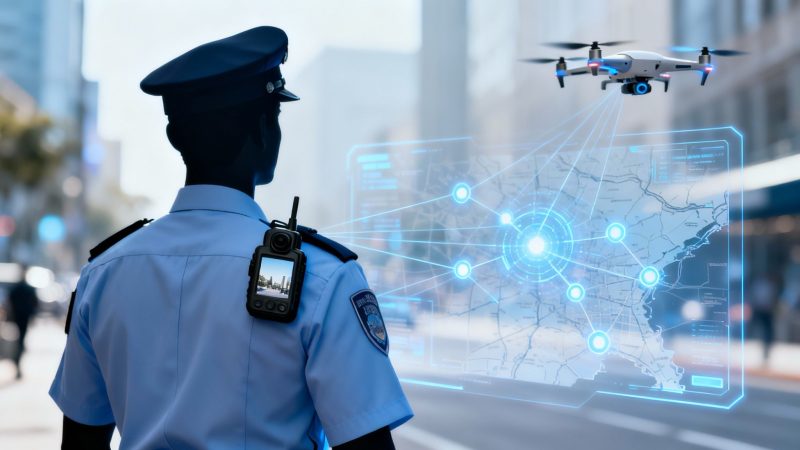
When we talk about "technology in law enforcement," we're really talking about the whole digital toolkit—the software, hardware, and systems that agencies rely on to work smarter, keep officers safer, and build better relationships with their communities. This isn't just one thing; it's everything from dispatch systems and body cameras to AI-powered analytics, all working together to help agencies make decisions based on data, not just gut feelings.
The Digital Shift in Modern Policing
Moving from old-school policing to the modern, tech-driven approach is a lot like swapping a paper map for a live GPS. The paper map gives you a decent, static overview of the area. But a live GPS? That's a different world. It gives you real-time traffic updates, finds faster routes on the fly, and recalculates instantly if you hit a roadblock. That leap is exactly what technology brings to law enforcement—it helps shift operations from being purely reactive to proactive and intelligent.
This guide will walk you through the essential tools making this change happen. We're not talking about expensive luxuries here, but necessities. We'll look at dispatch systems, AI analytics, and body cameras to show how they all connect, creating an ecosystem for smarter policing. The end goal is always the same: faster response times, better-informed decisions, and more transparency for the community.
Why Integration Is Essential
When your systems don't talk to each other, you create information silos that grind critical operations to a halt. If dispatch, records management, and the units in the field are all on separate platforms, no one has the full picture. A truly integrated setup lets data flow freely, giving every officer a complete and up-to-date view of what’s happening as it unfolds.
Practical Example: Imagine a pursuit where a suspect crosses into a neighboring jurisdiction. Without integrated systems, your officers lose radio contact and visibility. With an integrated platform, officers from both agencies can see each other's locations on a shared map and communicate seamlessly, coordinating a safe and effective response.
An integrated technology ecosystem empowers law enforcement to move from simply reacting to incidents to anticipating needs and allocating resources with precision. This shift is fundamental to improving both officer safety and public outcomes.
For agencies looking to get their internal processes in order, a solid guide can make all the difference. For instance, a resource like Mastering Internal Affairs Investigations offers a clear framework for bringing accountability and transparency into the modern era, which is a huge piece of this puzzle.
Making Advanced Technology Accessible and Affordable
For a long time, powerful operational tech came with a price tag that put it out of reach for smaller or budget-strapped agencies. That's just not the case anymore. The big takeaway here is that you don't need a massive upfront investment to modernize your operations.
Platforms like Resgrid are changing the game by offering powerful, open-source solutions that deliver top-tier capabilities at a fraction of the cost. By choosing systems that are scalable and affordable, any agency can:
- Avoid Expensive Contracts: Instead of a multi-year, six-figure contract for a proprietary CAD system, you can use a flexible subscription model that costs a fraction of that, freeing up tens of thousands of dollars for patrol vehicle maintenance or officer training.
- Reduce Upfront Costs: Implement robust dispatch and management tools without needing a $50,000 capital expenditure. This allows you to use your operational budget for immediate improvements.
- Gain Immediate Value: Start with core dispatch features you need now. As your budget allows next quarter, you can add advanced analytics or personnel tracking features without needing a new system or contract negotiation.
This approach puts powerful tools within reach for any agency, proving that effective policing is about having the right tools, not just the most expensive ones.
Core Technologies Modernizing Law Enforcement
At the heart of any modern police force is a stack of foundational technologies that acts as its digital nervous system. These aren't just flashy gadgets from a sci-fi movie; they are practical, essential tools that form the backbone of daily operations. Getting a handle on how these core systems work together is the first step toward building a faster, smarter, and more accountable agency.
This chart really drives home how much policing has evolved—moving from reactive methods to a proactive approach powered by data and technology.
It’s a clear visualization of the jump from paper maps and instinct to GPS and, eventually, to predictive analytics that enable more intelligent and safer responses.
To get a clearer picture, let's look at the key pieces of technology agencies are using today and what they actually do.
The following table breaks down the most common technologies, explaining what they are, the benefits they provide on the ground, and how they help the bottom line.
Key Law Enforcement Technologies and Their Primary Functions
| Technology Type | Core Function | Practical Benefit & Cost-Saving Insight |
|---|---|---|
| CAD/RMS | Real-time dispatch management (CAD) and long-term incident/records database (RMS). | Officers get crucial background info before arriving on scene. Integrating the two automates reporting, saving hundreds of admin hours per year. This translates to thousands of dollars in salary costs that can be reallocated to active patrol. |
| Body-Worn Cameras | Records police-public interactions to provide an objective account. | Provides indisputable evidence, resolves complaints quickly, and serves as a powerful training tool. Reduces litigation costs by clarifying events, potentially saving the department from a single lawsuit that could cost more than the entire BWC program. |
| Communications Platforms | Unified systems for voice, text, data, and location sharing. | Enables seamless coordination between different agencies and units, preventing dangerous communication gaps during large-scale incidents. A shared platform can replace multiple subscription services for messaging and mapping, consolidating costs into one efficient tool. |
| Sensors & Drones | Unmanned aerial vehicles and stationary sensors for surveillance and reconnaissance. | Safely assesses dangerous situations (e.g., active shooters, disaster sites) without risking officer lives. Offers a cost-effective alternative to helicopters, where a single hour of flight time can cost thousands, a drone mission costs a few dollars in electricity. |
| Analytics & AI | Software that analyzes crime data to identify patterns and predict future hotspots. | Allows for proactive resource deployment to high-risk areas, preventing crimes before they happen and optimizing patrol routes. This maximizes fuel efficiency and officer time, reducing operational overhead. |
Each of these technologies plays a critical role, but their true power is unlocked when they work together as a cohesive system.
The Central Hub: CAD and RMS
Think of Computer-Aided Dispatch (CAD) as the brain and the Records Management System (RMS) as the long-term memory of a law enforcement agency. CAD is the live command center, handling incoming calls, tracking officer locations via GPS, and dispatching the right units. The RMS is the agency's digital library—a secure archive of every incident report, arrest record, and piece of evidence.
Practical Example: A dispatcher gets a 911 call about a robbery. A modern CAD system instantly pings the RMS, cross-referencing the address. It flags that a similar incident happened last week and that the location has a history of domestic disputes. Suddenly, the responding officer has critical context before they even arrive. It’s no longer just an address; it's a known situation, allowing for a much safer and more strategic response.
Body-Worn Cameras: A Clearer Picture
Body-Worn Cameras (BWCs) have quickly become one of the most visible technologies in law enforcement. These small, rugged cameras provide an unbiased, firsthand account of police-public interactions. Their main job is to boost transparency and accountability for everyone involved.
The footage they capture is incredibly valuable:
- Evidence Collection: It provides objective video and audio evidence for investigations and court cases.
- Training and Review: Supervisors can use real-world footage to coach officers on things like de-escalation tactics and procedural compliance.
- Complaint Resolution: It offers clear proof that can quickly confirm or dismiss citizen complaints, protecting both the public and officers from false claims.
Cost-Saving Insight: A frivolous lawsuit over a "he said, she said" traffic stop can cost a department tens of thousands in legal fees. BWC footage that clearly shows the interaction can lead to an immediate dismissal of the case, saving the department the entire cost of litigation with a single video file.
Advanced Communication Platforms
Good communication is the lifeblood of any coordinated response. While the classic radio is still essential, modern platforms create a much richer, more connected environment. These systems go way beyond simple voice commands, pulling messaging, data sharing, and personnel tracking into a single, unified tool.
This shift toward software is obvious when you look at market trends. The global law enforcement software market was valued at USD 18.06 billion in 2024 and is projected to hit USD 40.76 billion by 2033. This growth is being driven by major investments, like the USD 15 million modernization program launched by the Port Authority Police Department of New York and New Jersey. You can read the full research about law enforcement software market trends to see just how agencies are investing in these tools.
Practical Example: Imagine a multi-agency response to a major event, like a city-wide festival. A modern communication platform allows officers from different jurisdictions—who might be on completely different radio channels—to share real-time updates, images, and map locations through a secure mobile app. An incident commander can see every single unit's position on a live map and direct resources with pinpoint precision. This prevents duplicate responses to the same incident, saving fuel and man-hours.
Exploring the various features of modern dispatch software can give agencies a clearer picture of what’s possible. This level of seamless coordination doesn't just improve safety; it saves money by optimizing resources and preventing the costly communication breakdowns that can put everyone at risk.
How AI and Data Analytics Are Reshaping Policing
For decades, police work has been mostly reactive. An incident happens, a call comes in, and officers respond. But with the rise of Artificial Intelligence (AI) and data analytics, that's all starting to change. We're now seeing a major shift toward a more predictive and preventative model of policing.
These aren't futuristic concepts; they're practical tools helping agencies make sense of enormous amounts of information that would be impossible for a human to sift through. The entire goal is to spot patterns, allocate resources more intelligently, and get ahead of incidents before they happen. It's about saving time, money, and ultimately, keeping communities safer.

This new way of thinking is catching on fast. A 2025 survey from Cellebrite found that 79% of law enforcement professionals believe AI makes investigations more effective. On top of that, 64% think it can actually help cut down on crime rates. With 51% of agencies already planning to bring AI tools on board in the next couple of years, it's clear this is becoming a standard piece of the modern policing toolkit. You can dig into more of the findings on the growing adoption of AI in law enforcement.
Demystifying Predictive Policing
When people hear "predictive policing," they often think of sci-fi movies where people are arrested before they do anything wrong. That's not what this is about. At its core, it's just a highly advanced form of data analysis.
Practical Example: A department notices a rise in car break-ins but doesn't know where to focus patrols. By feeding years of incident data into an analytics platform, they discover a pattern: the break-ins spike on Thursday and Friday nights between 10 PM and 2 AM, concentrated in three specific parking garages near downtown entertainment venues. Now, instead of random patrols, they can deploy two officers to those specific locations during those exact times.
By using analytics to optimize patrol routes based on historical data, agencies can increase presence in high-risk areas. This targeted visibility acts as a powerful deterrent, often preventing crime from happening in the first place and maximizing the impact of limited patrol resources.
This data-driven approach means a much more efficient use of personnel, vehicles, and fuel, which translates directly into cost savings for the department.
Accelerating Investigations with AI
Beyond just patrol routes, AI is proving to be an invaluable partner during active investigations. A major case can generate thousands of hours of video from traffic cams, business security systems, doorbell cameras, and officer body cams. Manually reviewing all that footage is a soul-crushing task that could take a single detective weeks or even months.
An AI-powered system can chew through that same mountain of data in a fraction of the time. You can train algorithms to scan for specific things—a person wearing a red jacket, a particular model of car, or even just movement in a specific area—and flag only the relevant clips for a human to review.
Cost-Saving Insight: Imagine an AI scans 1,000 hours of city camera footage overnight for a suspect's blue sedan. A task that might take a team of three detectives a full week of overtime can now be done in hours. This single use case can save the department over $10,000 in overtime pay, more than covering the cost of the software for a year.
- Massive Time Savings: Frees up investigators from drudgery to focus on building the case.
- Faster Case Resolution: Quicker closure for victims and their families.
- Reduced Overtime Costs: Directly cuts down on expensive overtime hours.
Ethical Considerations and Responsible Use
Of course, with great power comes great responsibility. The use of AI and data analytics in policing is packed with serious ethical questions that can't be ignored. The biggest concern is algorithmic bias.
If the historical crime data fed into an AI system is already skewed—perhaps reflecting past biases in arrest patterns—the AI will learn and amplify those biases. This could lead to a feedback loop of over-policing in certain communities, doing more harm than good.
To make this work, agencies have to be completely transparent with the public about how these tools are being used. You need rock-solid policies that govern their application and ensure accountability. Without that public trust, even the most advanced technology is doomed to fail. Responsible implementation is the only way to ensure AI serves as a tool for fairness, not a force that deepens existing inequalities.
Measuring the Real-World Impact on Community Safety
Pouring money into new law enforcement technology isn't about getting shiny new toys; it's about seeing tangible results that make communities safer. The real value of these tools is measured by their impact on the ground—lower crime rates, faster response times, and stronger public trust. When agencies can connect what they spend to concrete outcomes, they can justify their investments and show a clear return on public safety.
This isn't just theory. We've seen compelling success stories from major cities that show exactly how smart tech implementation leads to measurable improvements. These examples offer a clear roadmap for other agencies looking to do the same.
From Anecdotes to Actionable Data
For years, proving a new program worked often came down to a few good stories. Now, data analytics lets departments draw a straight line from a technology investment to a specific community benefit. This data-driven approach is what you need to get budgets approved and earn buy-in from stakeholders.
Practical Example: When an agency can walk into a city council meeting and show that a new dispatch system cut average response times by 90 seconds, the conversation shifts from cost to value. That minute and a half can be the difference between life and death in a medical emergency or catching a suspect in a criminal pursuit. The data proves the investment is saving lives, not just costing money.
Real-World Success Stories in Crime Reduction
Several cities have become powerful case studies for using technology to push down crime rates. New York City, for instance, saw an incredible 75% reduction in crime between 1993 and 2015. A big part of that drop was fueled by integrating advanced data analytics, which gave them a full picture of what was happening and allowed for evidence-based decisions.
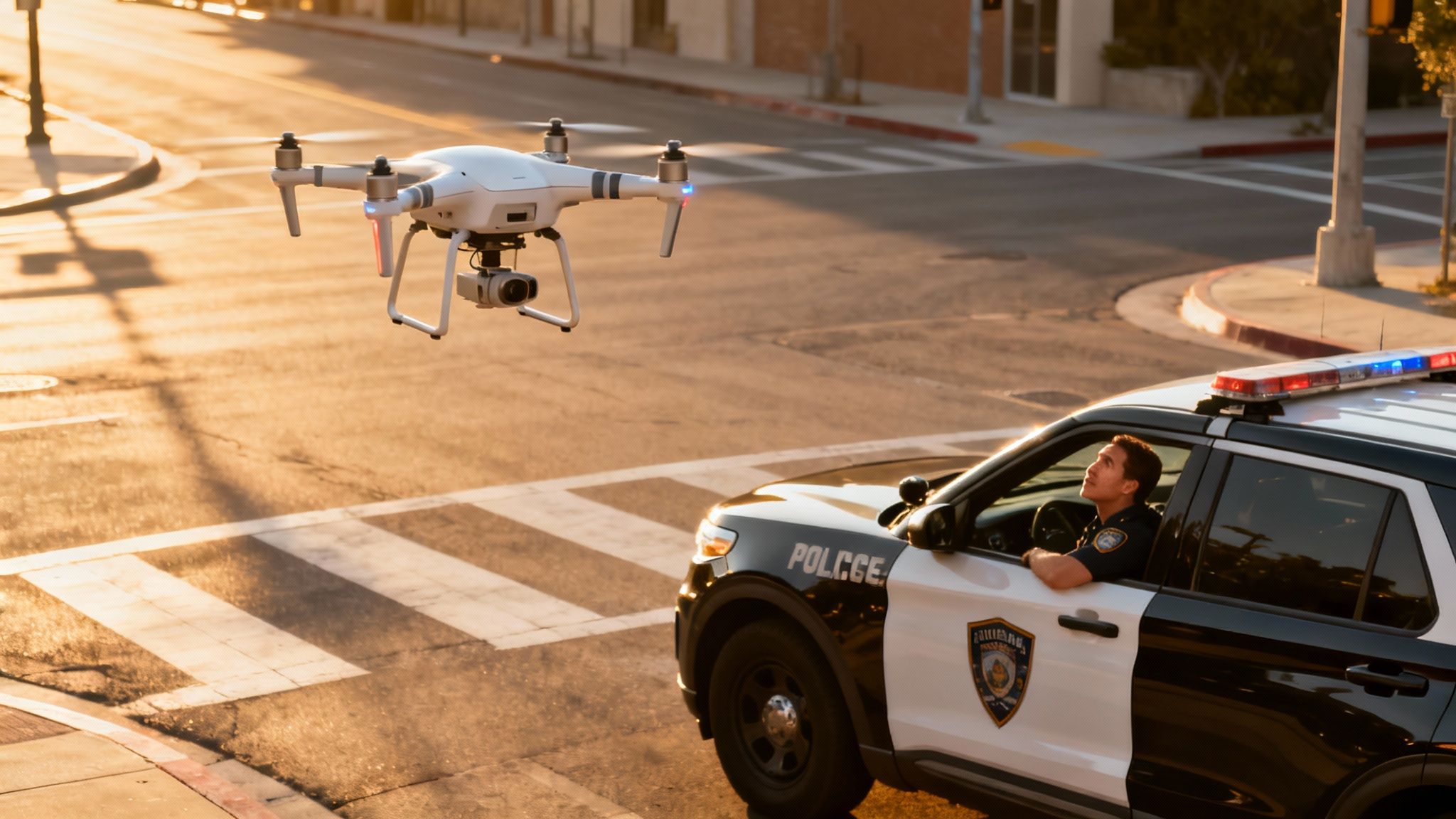
San Francisco's modern approach has also paid off, with its Real Time Investigation Center (RTIC) and Drone as First Responder programs. These initiatives helped drive a 28-30% decline in crime during their first few years. You can dig deeper into how this kind of transformation is reshaping public safety with this in-depth analysis on integrated law enforcement systems.
The key takeaway here is that integrated technology systems are not just operational upgrades; they are force multipliers that directly lead to safer streets and more efficient policing. When data flows seamlessly from drones, sensors, and databases to officers on the ground, the entire agency gets more effective.
Actionable Insights: Tracking Key Metrics
To see these kinds of results, agencies have to focus on tracking the right metrics. This is where the strategy becomes actionable—turning raw data into a compelling story of progress and value.
Here are the key performance indicators (KPIs) that really matter:
- Reduced Response Times: This is one of the most direct ways to measure operational efficiency. Tracking the time from when a call comes in to when an officer arrives on scene shows the immediate impact of better dispatch and communication tools.
- Lower Crime Rates: By analyzing incident data before and after rolling out new tech, agencies can show a direct link between their tools and a drop in specific crimes like burglaries or car thefts.
- Improved Case Clearance Rates: Technology like AI-powered video analysis can seriously speed up investigations. A rising clearance rate is hard proof that new tools are helping detectives solve cases faster and bring closure to victims.
- Decreased Citizen Complaints: Body cameras and other tools that increase transparency often lead to fewer complaints and use-of-force incidents. This is a critical metric for showing improved community relations and accountability.
Actionable Insight: Create a simple monthly dashboard tracking these four KPIs. Share it with city leadership and the public. This transparency not only justifies the technology investment but also builds community trust by demonstrating a commitment to data-driven improvement and accountability.
A Smart Implementation Guide for Law Enforcement Agencies
Bringing new technology into a law enforcement agency can feel like a high-stakes bet. You're often caught between tight budgets and the undeniable need to modernize. The good news? With the right strategy, this process doesn't have to be a painful expense. It can be a smart, value-driven investment. This isn't about buying the most expensive toys; it's about making deliberate choices that deliver real impact without blowing your budget or causing chaos in your operations.
Honestly, the whole process starts long before you ever see a product demo. It kicks off with a simple but crucial question: what problem are we actually trying to solve here? Without a clear answer, agencies can easily burn through thousands on solutions that look great on paper but do nothing to fix the real weaknesses in their workflow.
Start with a Thorough Needs Assessment
Before you spend a single dime, the first real step is a comprehensive needs assessment. This is where you take a hard look at your agency's day-to-day operations, the pain points your people deal with, and where your current tech is falling short. Think of it as drawing up a blueprint for your modernization plan, ensuring every new tool has a specific job to do.
Practical Example: You discover your officers spend an average of 45 minutes per shift manually entering the same incident details into three different systems. This identifies a critical need for an integrated CAD/RMS that automates data entry. The goal becomes clear: find a system that can cut that redundant administrative time by at least 50%.
A successful technology rollout is built on a foundation of clearly defined needs. When you focus on solving your most pressing operational challenges first, you make sure every dollar spent directly improves efficiency, officer safety, and community outcomes.
This bottom-up approach does two things. First, it pinpoints the most critical needs, so you don't end up buying a solution for a problem you don't have. Second, it builds buy-in from your team from the very beginning, which makes the transition a whole lot smoother later on. For anyone mapping out this journey, a solid step-by-step guide on AI implementation can offer a great framework for strategic planning.
Prioritize Interoperability to Avoid Digital Silos
Once you know what you need, the next big rule is to demand interoperability. In plain English, this just means making sure any new tech can "talk" to the systems you already have. A brand-new drone is a lot less useful if its video feed can't be pulled directly into your command center's mapping software.
Creating digital silos—where different systems can't share information—is one of the most common and costly mistakes agencies make. It forces your staff to punch in the same data over and over again, creates dangerous communication gaps during critical incidents, and completely undermines the goal of running a connected, data-driven operation. Real efficiency comes when your CAD, RMS, body cams, and comms platforms work together like a single, cohesive unit.
Embrace Cost-Effective and Scalable Solutions
Here's the most practical piece of advice for any agency: modernizing doesn't have to mean a multi-million dollar price tag. The rise of open-source and scalable platforms has completely changed the game, offering powerful tools without the crushing costs of traditional, proprietary software.
Platforms like Resgrid are a perfect example. Instead of getting locked into an expensive, long-term contract with hefty licensing fees, agencies can adopt a flexible, open-source system. This approach gives you advanced dispatch, personnel tracking, and management tools while saving you a ton of money.
- No Vendor Lock-In: You stay in control of your data and systems, never trapped by a single provider.
- Lower Total Cost of Ownership: By ditching huge upfront fees and recurring licenses, you free up budget for other critical priorities, like new patrol vehicles or tactical gear.
- Scalability on Your Terms: A small town can start with a basic dispatch package for a few hundred dollars a month. If they expand and add a new fire department next year, they can simply add those users to their plan without a complete system overhaul.
This model puts advanced law enforcement technology within reach for departments of all sizes, from small rural sheriff's offices to major metropolitan police forces.
Your Technology Evaluation Checklist
As you start looking at different options, use this simple checklist to keep your decision-making on track. It will help you look past the slick sales pitches and focus on the long-term value and security of your investment. A new system is only as good as its security, and you can learn more about what to watch for by reviewing guides on how to properly secure first responder platforms.
Here’s a straightforward checklist to help you make the right call:
- Total Cost of Ownership (TCO): Ask for a five-year cost projection. Does the price cover everything—implementation, training, support, and future updates—or are there hidden fees lurking?
- Scalability and Flexibility: Can the system grow with your agency? Can you customize it to fit your specific workflow, or are you forced into their "one-size-fits-all" model?
- Security and Compliance: Does the platform meet CJIS and state data security standards? Where is the data hosted, and who has access to it?
- Ease of Use and Training: Request a live demo for your patrol officers, not just command staff. Is the interface intuitive enough for an officer to use under pressure in the field?
- Vendor Support and Reliability: Ask for references from three other agencies of your size. What’s the provider’s reputation for customer support and system uptime?
By following these practical steps, agency leaders can navigate the tricky world of technology adoption with confidence, ensuring they invest in tools that are not only effective but also financially sustainable for the long haul.
Where Do We Go From Here? A Look at Connected, Cost-Effective Policing
When you boil it all down, the evolution of law enforcement tech isn’t about chasing sci-fi gadgets. It’s about building a smarter, safer, and more connected operation. We've walked through how all these pieces—from dispatch and records to body cams and AI—can create a seamless flow of information. That’s the new normal. This connectivity turns reactive responses into proactive, data-driven strategies that keep both officers and the public safer.
But here’s the thing: the future isn’t defined by the agency with the biggest checkbook. It belongs to the departments that find smart, scalable, and genuinely cost-effective solutions. The real game-changer is technology that packs a punch without locking you into eye-watering contracts or demanding a massive upfront investment. This makes modernizing a reality for any agency, no matter the size or budget.
Your Practical First Step
For departments ready to make that leap, the path forward is clearer than it's ever been. An open-source platform gives you a practical, budget-friendly way to get advanced dispatch, communication, and management tools up and running almost immediately. It’s the smartest way to gain a tactical edge while keeping an eye on long-term financial health.
The best technology is the one that solves real-world problems without breaking the bank. By focusing on accessible and interoperable systems, agencies can build a solid digital foundation that grows with their needs, delivering value from day one and proving its worth for years to come.
This is exactly the reality that platforms like Resgrid were built for. They offer a powerful, open-source alternative that puts complete control right back in your hands. Take a look at the different pricing and plans available. You’ll see just how achievable an effective, connected system can be, giving you a tangible first step toward a more efficient and cost-effective future. You can adopt the tech you need and see an immediate return.
Frequently Asked Questions
When you start looking at new law enforcement tech, the same questions always come up. How much does it cost? Does it actually work in the real world? Getting straight answers to these practical concerns is the first step for any agency—big or small—to make a smart decision. Here are some of the most common questions we hear.
What’s the Biggest Challenge for Agencies Adopting New Technology?
Honestly, it’s a tie between budget constraints and internal resistance. Getting the funding is always a tough hill to climb. But even when you have the money, convincing officers who are set in their ways to change how they do things can be just as difficult. If a new system feels complicated or like just another task, it's dead in the water.
Practical Solution: The best way around this is to get your frontline people involved from the very beginning. When an officer sees how a tool can actually solve one of their daily headaches—like replacing a clunky, multi-step reporting process with a simple one-click mobile form—they'll become its biggest supporter.
A successful technology rollout isn't about the tech itself; it's about solving real problems for the people using it every single day. Show them the immediate value, and you’ll turn skeptics into champions.
How Can Smaller Departments Afford This Kind of Advanced Tech?
For a long time, they couldn't. The old model of massive upfront licensing fees and iron-clad contracts priced them out. But that's not the only game in town anymore. Smaller departments can get their hands on incredibly powerful tools by looking at scalable, open-source solutions.
Actionable Insight: Instead of pursuing a single, large federal grant for a $250,000 CAD system, a smaller agency can use its existing operational budget to subscribe to a platform like Resgrid for a few thousand dollars a year. This avoids the lengthy, competitive grant process and provides immediate access to essential technology without a major capital outlay.
How Does Technology Directly Improve Officer Safety?
It all boils down to one thing: situational awareness. The difference technology makes here is night and day. Before an officer even gets to a scene, they can have critical intel sent right to their terminal or phone—things like a location’s violent history or known risks on-site. Having that context before you step out of the car is a game-changer.
Practical Example: A CAD alert for a domestic dispute automatically includes a warning that firearms are registered at the address and that the last call resulted in an assault on an officer. Responding units know to approach with heightened caution and wait for backup, turning a potentially volatile ambush into a controlled, safer response.
Ready to see how an affordable, scalable platform can bring your operations into the modern era? Resgrid gives you a powerful, open-source solution for dispatching, messaging, and personnel tracking without the insane costs or vendor lock-in of traditional systems. Learn more at https://resgrid.com.