
A Guide to the Police Mobile Command Center
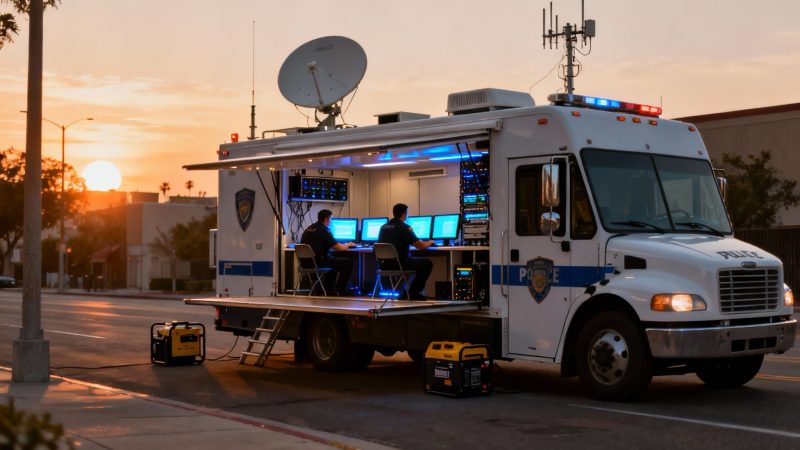
Think of a police mobile command center as a headquarters on wheels. It’s a self-contained nerve center designed to bring command, control, and communication capabilities right to the heart of a major incident, establishing order when everything feels like chaos.
The Nerve Center on Wheels
Imagine a massive, multi-car pileup on the highway. It's pure confusion. Now, picture an air traffic control tower suddenly materializing right next to it. That tower would immediately start coordinating emergency vehicles, establishing clear communication lines, and painting a unified picture of the entire scene for everyone involved.
That’s exactly what a police mobile command center does for ground operations. It's the central hub for making critical decisions and gathering intelligence when it matters most. These aren't just spruced-up RVs; they are highly specialized vehicles built from the ground up with a single mission: to create operational control where none exists. When local infrastructure is down, overwhelmed, or just too far away, these units roll in to bridge the gap.
From Battlefield to Main Street
The whole idea of a mobile headquarters isn't new. It actually traces its roots back to the battlefields of World War I. Military commanders started mounting radios and maps on trucks so they could stay close to the action. That military-born concept eventually made its way into civilian use for police and first responders.
Today, these vehicles are game-changers, linking radio systems from different agencies and feeding in live video from drones to give commanders incredible situational awareness. You can explore the history of these command vehicles to see how their military DNA shaped their modern design.
The real value of a mobile command center is its power to instantly project command and control into any environment. It can take a chaotic crisis scene and turn it into an organized, managed incident response zone in a matter of minutes.
Core Mission Objectives
The mission of any police mobile command center really boils down to three key functions:
- Command: It gives senior officers and agency leaders a dedicated space to make critical decisions. They're close enough to have direct oversight but removed from the immediate chaos on the ground.
- Control: It acts as the operational brain for the entire incident. From here, commanders manage the deployment of personnel, vehicles, and other resources to make sure the response is effective and coordinated.
- Communication: It’s a powerful communications hub, bridging the gap between different agencies, departments, and technologies. This ensures everyone is on the same page and working from the same playbook.
Practical Example: Take a large city marathon. A mobile command center can pull in video feeds from hundreds of cameras, monitor multiple radio channels, and dispatch officers to incidents without jamming up the standard communication lines. This not only saves precious time but also prevents small issues from snowballing into bigger problems. In another scenario, like a prolonged search-and-rescue operation in a remote area, a department can use the vehicle's advanced tools to manage volunteer check-ins and assignments efficiently, saving significant money on overtime for sworn officers and preventing resource waste.
The Anatomy of a Modern Command Vehicle
To really get what a police mobile command center is all about, you have to look under the hood and inside its walls. It’s less like a single truck and more like a collection of specialized, mission-critical systems all working together. Every single component is purpose-built to make sure the unit can run on its own, completely independent and effective, no matter what’s going on outside.
At its core, the vehicle's purpose is simple. It boils down to three key functions that make an effective incident response possible.
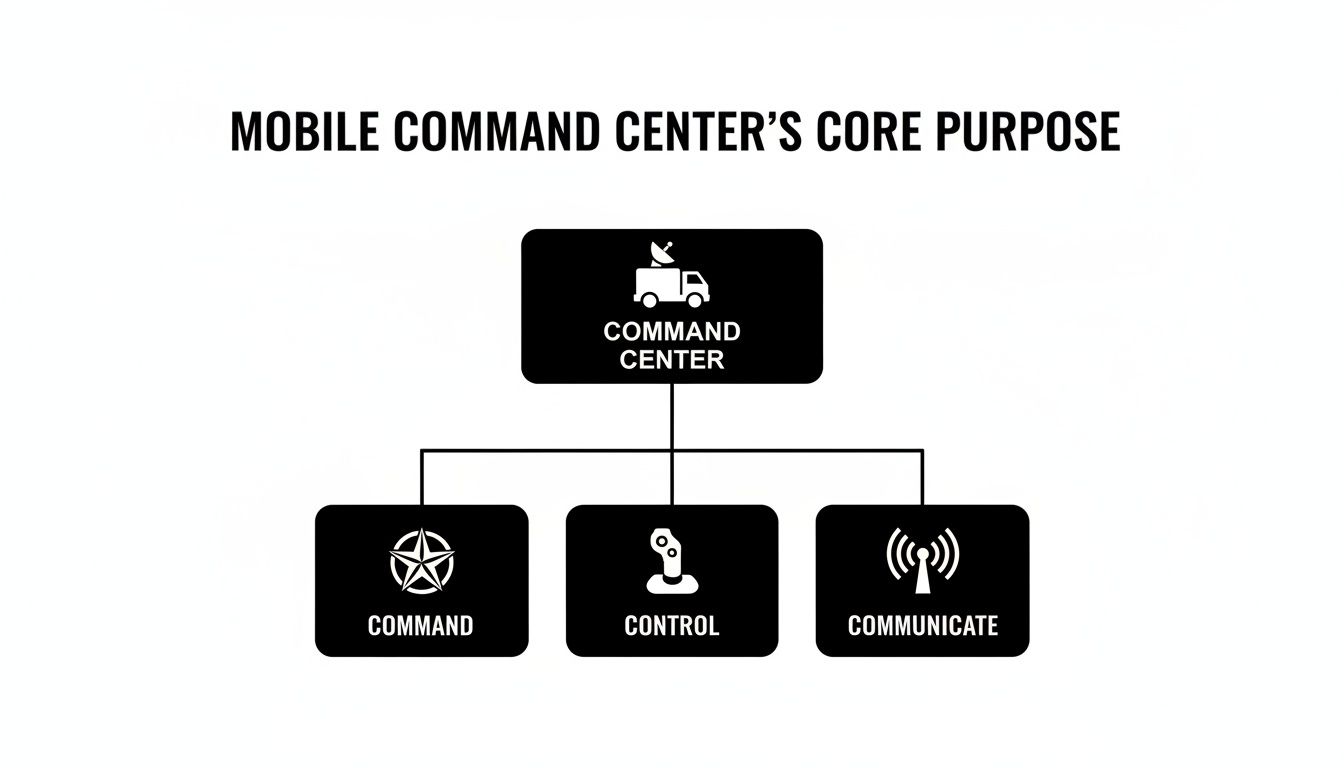
This shows how every single system on board is designed to support the bigger goals of command, control, and communication during a crisis. Let's dig into the physical systems that make these goals a reality.
The Communications Hub
Without a doubt, the most vital system is the communications suite. It's the vehicle's voice, its ears, and its lifeline to the outside world. This isn't just a powerful radio—it’s a multi-layered network built for total redundancy. You simply can't afford to go dark.
Modern command vehicles are packed with a robust mix of communication tools:
- Radio Interoperability Systems: These are the magic boxes that let different agencies—police, fire, EMS, even federal partners—talk to each other on their own radios. It’s a game-changer that eliminates the dangerous communication gaps we used to see.
- Satellite Uplinks: When a hurricane or tornado takes out local cell towers and internet lines, a satellite connection is your guarantee of staying online. This link is non-negotiable for video conferencing, transferring data, and accessing crucial cloud-based resources.
- Cellular and Wi-Fi Networks: You'll find multiple cellular routers, usually from different carriers, bonded together to create a single, resilient internet connection. Secure Wi-Fi hotspots then let personnel connect laptops and tablets both inside and around the vehicle.
Actionable Insight: When speccing out a new vehicle, prioritize a system that bonds multiple cellular networks (e.g., AT&T, Verizon, T-Mobile) into a single connection. This is a relatively small upfront investment that prevents a single carrier's outage from crippling your entire operation. It is far cheaper than relying solely on pricey per-megabyte satellite data for routine internet access.
The essential systems on board are complex, but understanding what they do and where you can be smart with your budget is key. Each component serves a distinct purpose, from keeping the lights on to enabling seamless multi-agency coordination.
| Core Components of a Mobile Command Center | ||
|---|---|---|
| Component System | Primary Function | Actionable Insight for Cost Savings |
| Communications Suite | Enables interoperable radio, satellite, and cellular connectivity for all voice and data needs. | Prioritize a multi-carrier cellular bonding system to reduce reliance on expensive per-megabyte satellite data. |
| Onboard IT & Cybersecurity | Provides the local network, servers, and workstations for operators and protects sensitive data. | Invest in robust endpoint security and user training to prevent breaches, which are far more costly to fix after the fact. |
| Independent Power System | Generates and stores electricity to run all systems off-grid for extended periods. | Opt for a hybrid system with a generator and a large battery bank to cut fuel consumption by over 50% and enable silent operations. |
| Strategic Interior Workspace | Creates an efficient and functional environment for command staff and operators to work in. | Use modular and multi-functional furniture that can be reconfigured for different missions, maximizing the utility of the space. |
Ultimately, a smart build focuses on redundancy and efficiency, ensuring the vehicle is a reliable force multiplier without becoming a financial burden to operate and maintain.
Onboard IT Networks and Cybersecurity
Just like any office, a police mobile command center runs on its own internal IT network. This is the backbone that powers everything from operator workstations and massive display screens to body camera docking stations. With onboard servers, you can process and store critical data locally, which is a huge advantage when your connection to the outside world is shaky.
But all that connectivity creates vulnerabilities. Cybersecurity isn't an afterthought; it's a non-negotiable part of the design. These networks are hardened with heavy-duty firewalls, encrypted communication channels, and strict access protocols to shield sensitive operational data from anyone trying to get in.
Independent Power Systems
A command center with no power is just an expensive RV. These vehicles are engineered to operate completely off-grid, sometimes for days on end. This is usually done with a combination of power sources that provide both redundancy and flexibility.
The most common setup is a powerful diesel generator that can run every system on board as long as you can keep feeding it fuel. But relying only on a generator has its drawbacks—it's loud and it burns through a lot of fuel.
Practical Example: Picture a multi-day search for a missing child. Running a generator 24/7 will burn through hundreds of gallons of fuel and create a constant racket. A much smarter, more cost-effective approach is a hybrid power system. This pairs the generator with a large bank of high-capacity batteries and an inverter. The generator runs for a few hours to charge the batteries, then shuts down, letting the vehicle run silently on battery power for 8-10 hours. This simple change can slash your fuel consumption by over 50% and allows for quiet, discreet operations when you need them.
Strategic Interior Design
The layout inside a command vehicle is just as important as the tech it holds. It’s a workspace designed for peak efficiency under incredible stress. Most designs create distinct zones to keep operations flowing smoothly without people tripping over each other.
You'll almost always find these zones:
- Operator Stations: These are individual workstations for dispatchers, analysts, and comms officers, each decked out with multiple monitors and full access to all the necessary software.
- Command and Briefing Area: A separate space, often with a large conference table and a smartboard. This is where commanders hold meetings, brief their teams, and make strategic decisions away from the constant buzz of the operations floor.
- Galley and Lavatory: Absolutely essential for supporting personnel during long deployments. Having a small kitchen and a bathroom ensures the team can stay on-site and focused without having to leave for basic necessities.
Real-World Deployment Scenarios
A police mobile command center is far more than just a truck packed with cool technology; it's a strategic linchpin that fundamentally changes how an agency tackles complex situations. Its real value comes to life in the field, where it can turn a chaotic, sprawling scene into a coordinated, surgical response.
Think of it as the operational anchor in everything from natural disasters to massive public gatherings. By bringing decision-makers, communications gear, and real-time intelligence right to an incident's doorstep, it dramatically cuts down response times and improves outcomes. The power to establish a fully functional headquarters in minutes is a massive advantage when every second counts.
Major Incident and Tactical Operations
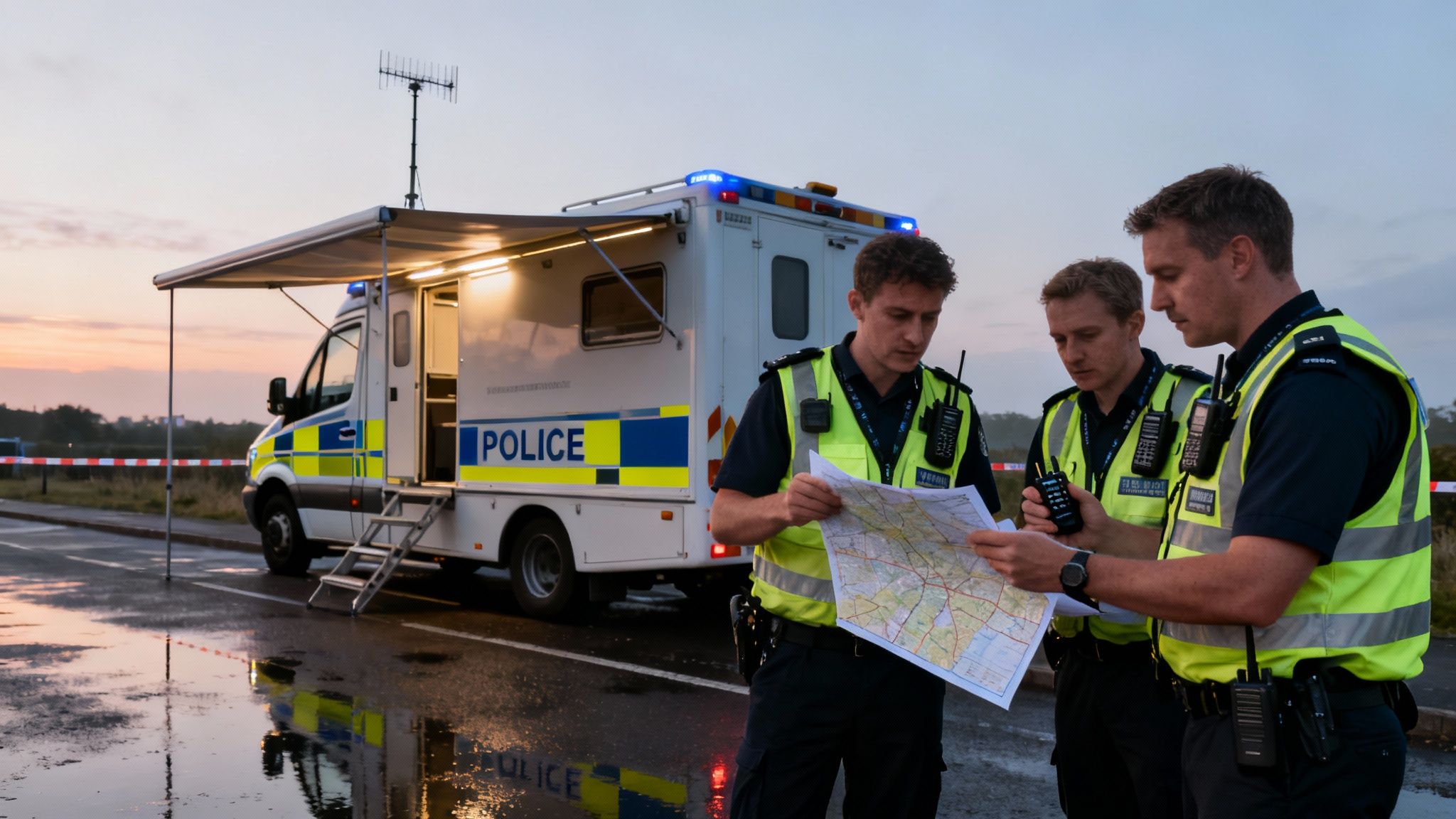
During a critical incident like a multi-agency manhunt or a high-stakes hostage situation, a command vehicle is absolutely indispensable. It single-handedly creates a unified operational picture, giving commanders from different jurisdictions a secure, neutral ground to collaborate effectively.
Practical Example: Imagine a manhunt that bleeds across three different counties. The mobile command center can set up shop at a central point and start pulling in radio traffic from state police, local sheriff's offices, and city PDs. At the same time, commanders inside can watch live drone feeds and officer GPS locations on a massive map, letting them direct search teams with precision. This is how you prevent tragic blue-on-blue incidents and ensure no ground is left uncovered.
A fantastic real-world example is the New York City Police Foundation's Real Time Crime Center (RTCC) Emergency Mobile Response Van. Kitted out with 360-degree cameras and multi-agency radio bridges, it supports critical incidents by coordinating with FDNY and EMS right on scene. In 2022 alone, these mobile units helped resolve over 15,000 high-priority calls faster. It's a testament to how a police mobile command center can become a vital part of daily urban policing. You can learn more about the NYPD's innovative mobile unit and its impact.
This approach also has a direct impact on the bottom line. Instead of wasting precious hours on redundant searches or acting on fragmented radio chatter, commanders can make informed, instant decisions. This translates to reduced overtime costs and, most importantly, resolving dangerous situations faster.
Large-Scale Event Management
Public events—marathons, concerts, festivals—draw huge crowds, and with them come unique security and logistical headaches. A mobile command center essentially becomes the event's security nerve center, providing total oversight for the entire footprint.
- Proactive Monitoring: Staff can watch hundreds of CCTV feeds, track public safety personnel on a map, and manage traffic flow, all from one spot.
- Rapid Dispatch: If a medical emergency or security threat pops up, operators can dispatch the closest resources immediately without jamming up the primary 911 channels.
- Interagency Hub: It gives police, fire, event security, and EMS a central meeting point to coordinate their efforts without stepping on each other's toes.
Actionable Insight: For your annual events, pre-plan your command center deployment locations. Pinpoint spots with clear satellite views, easy access for support vehicles, and the best possible radio line-of-sight. Creating these pre-vetted "deployment kits" with maps and setup instructions can slash your on-scene setup time by up to 40%. You'll be operational before the first attendees even show up.
Natural Disaster Coordination
When a hurricane, wildfire, or tornado tears through a region, it often wipes out the very infrastructure that first responders depend on. Cell towers go dark, power lines are down, and even police stations can be damaged or destroyed. In these moments, a police mobile command center becomes a lifeline for the entire community.
Because it runs on its own power and connects via satellite, it can establish a command presence in the hardest-hit areas when nothing else works. It's the base of operations for coordinating search and rescue, managing emergency shelters, and directing the flow of mutual aid pouring in from other regions. This self-sufficiency means response efforts can begin immediately, saving lives and property when conventional systems have totally failed. Restoring order and communication this quickly provides the critical foundation for a community's long road to recovery.
Integrating Your Command Center with Digital Platforms
A police mobile command center is a serious piece of hardware, but its true power is only unlocked when you pair it with modern software. Think of the vehicle as the body; the digital platform is the brain connecting every officer and asset into one cohesive network. Integrating with a dispatch and management platform transforms the vehicle from a physical hub into a fully connected operational ecosystem.
This kind of integration creates a seamless link between command staff inside the vehicle and units out in the field. It’s about moving critical communications and tracking off crowded radio channels and onto a clear, visual interface that everyone can see.
Creating a Unified Operational Picture
At its heart, a modern police mobile command center is built to handle complex security system integration, pulling various technologies together into a single, unified view. When you layer the right software on top of the vehicle's hardware, commanders get a powerful common operational picture.
This digital dashboard brings all your resources together in one place. Instead of relying on a constant stream of voice check-ins over the radio, commanders can see everything happening in real time.
This screen capture shows what that looks like in practice—a typical digital interface displaying live unit locations and incident data right inside the command center.
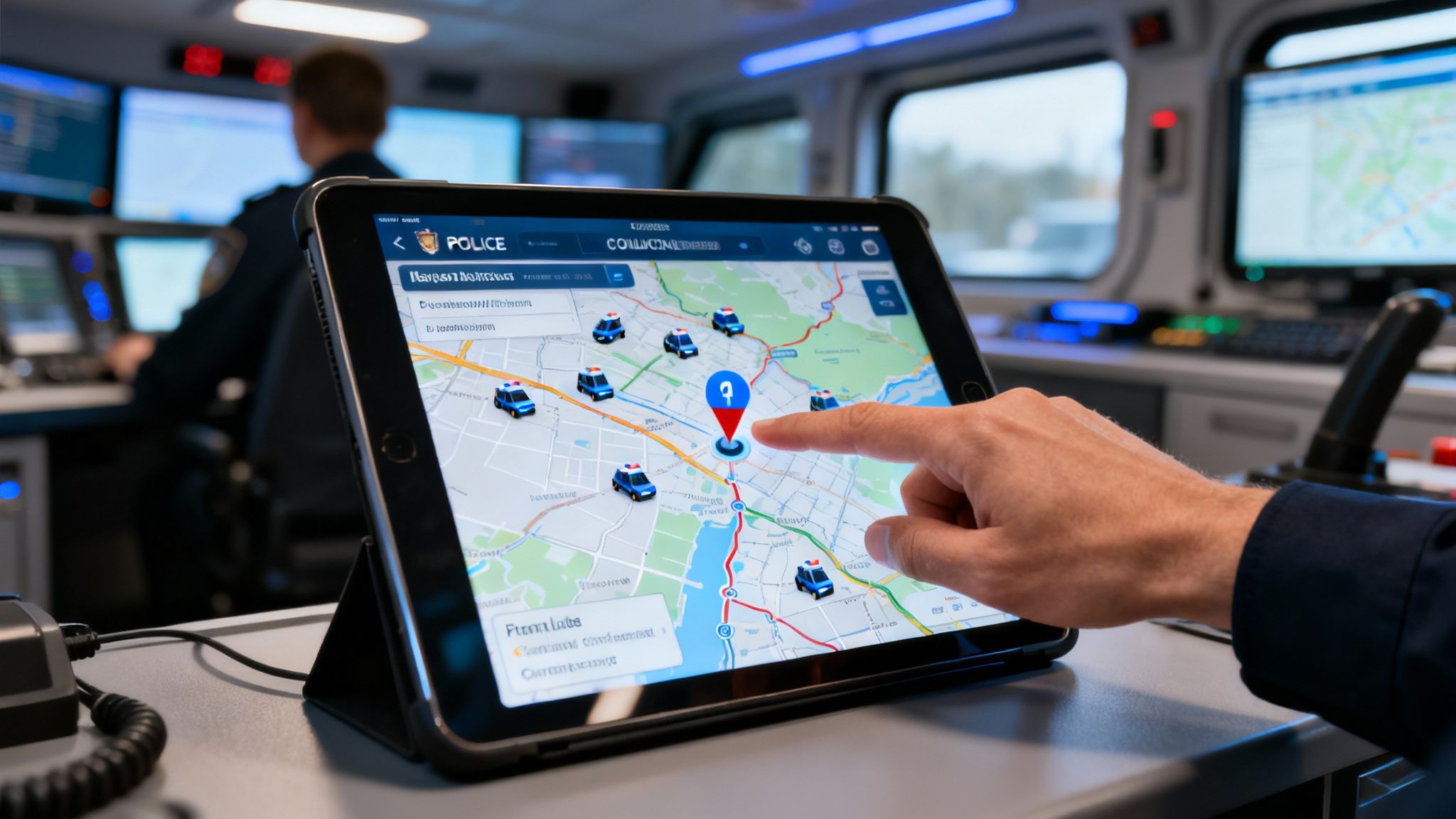
This kind of visual data allows commanders to make faster, more informed decisions because they can see exactly where their assets are in relation to an incident at a glance.
Actionable Integration and Cost Savings
Effective integration isn't just about seeing dots on a map; it's about making your entire operation smarter and more efficient, which translates directly into real cost savings.
Let's use a practical example: a large-scale search for a missing person across a wide urban area. Without an integrated platform, coordination is a logistical nightmare of constant radio calls, paper maps, and manual status updates. It's slow, inefficient, and prone to human error, leading to wasted hours and significant overtime costs.
With a digital platform, the police mobile command center becomes the central nerve center.
- Optimized Resource Allocation: Dispatchers can see the live GPS location of every single officer and vehicle. They can instantly assign tasks to the closest available units, drastically cutting down on travel time and fuel consumption.
- Reduced Radio Traffic: Secure, integrated messaging allows for quiet, instant communication for non-urgent updates. This keeps primary radio channels clear for actual emergencies, preventing critical information from getting lost in the noise.
- Automated Reporting: All actions, communications, and location data are automatically logged. This eliminates hours of manual report writing after an incident, freeing up personnel for other duties and saving thousands in administrative costs.
By linking physical assets to a digital backend, an agency can reduce manual coordination errors by over 70%. This efficiency gain means fewer resources are needed to manage the same incident, stretching taxpayer dollars further and improving outcomes.
Choosing the Right Platform
To achieve this level of coordination, the software you choose has to be just as robust as the vehicle itself. A platform like Resgrid is designed specifically for this kind of work, offering a suite of tools that plug directly into a command center's workflow. You can learn more about the specific personnel tracking and dispatching features at https://resgrid.com/features that make this possible.
When you're evaluating a digital platform, here are a few key capabilities to look for:
- Real-Time Personnel and Unit Tracking: Being able to see every asset on a live map is non-negotiable for effective command and control.
- Integrated CAD and Dispatch: You need a system that allows operators inside the command center to create calls, dispatch units, and monitor progress from a single screen.
- Secure Group and Direct Messaging: Instant messaging frees up radio channels and provides a clear, logged record of all communications, which is invaluable for after-action reviews.
- Cross-Platform Accessibility: The platform absolutely has to work seamlessly on workstations inside the vehicle, tablets in the field, and the smartphones individual officers carry.
By investing in the right digital tools, a police mobile command center evolves from a simple field office into a true force multiplier, maximizing the value of both the hardware and the personnel who operate it.
How to Procure and Budget Your Command Center
Let’s be honest: acquiring a police mobile command center is a huge investment. But a smart financial strategy can make it an achievable goal for agencies of any size. The trick is to look past the initial sticker price and build a complete budget that covers the vehicle’s entire lifecycle, from the day you buy it to its ongoing upkeep.
A forward-thinking approach can really take the pressure off. By focusing on smart buying strategies and the total cost of ownership, your agency can land this critical asset without blowing your budget. The first step is to explore every possible funding avenue, not just your standard capital improvement plan.
Finding Funding and Smart Procurement Options
Before you even start looking at vehicles, look for the money. Federal and state grant programs are the go-to source for many agencies. You’ll find that programs from FEMA and the Department of Homeland Security often have grants specifically for emergency response and command capabilities. Getting one of these can cover a huge chunk of the vehicle's cost.
Beyond grants, here are a few practical, money-saving tricks we’ve seen work wonders:
- Certified Refurbished Vehicles: A brand-new chassis and a fresh buildout can get expensive, fast. A certified refurbished vehicle, often with low mileage and a fully updated interior, can give you 80-90% of the capability for a fraction of the cost.
- Modular Design: Don't pay for technology you won't use right away. A modular design lets you build out the essential infrastructure now. Later, as your budget allows and your needs change, you can add advanced systems like drone integration or enhanced analytics.
- Regional Partnerships: This one’s a brilliant strategy, especially for smaller agencies. Team up with neighboring jurisdictions to co-purchase and share a command center. You split the initial cost and spread out the ongoing maintenance expenses, making a top-tier asset accessible to everyone involved.
Calculating the Total Cost of Ownership
That purchase price is just the tip of the iceberg. A realistic budget has to account for all the ongoing expenses that keep your police mobile command center ready to roll at a moment's notice. If you ignore these hidden costs, you could end up with a powerful asset that’s stuck in the garage because the maintenance fund is empty.
Your budget needs to have line items for these key areas:
- Specialized Maintenance: This isn’t your average patrol car. You’ll need certified mechanics for the chassis and specialized technicians for all the onboard IT, communications, and power systems.
- Insurance: A vehicle valued at over $500,000 needs a specific insurance policy. Make sure you have enough coverage for the high-value equipment packed inside.
- Technology Upgrades: Plan on a tech refresh every three to five years. Communications and IT gear evolves quickly, and budgeting for upgrades keeps the vehicle from becoming a museum piece.
- Fuel and Consumables: When you’re deployed for an extended incident, that command center can guzzle a lot of diesel. A key decision you'll make early on is figuring out what size generator for an RV, as that choice directly impacts your fuel costs down the line.
The global mobile command center market is on track to hit $9 billion by 2033, and law enforcement is expected to make up 40% of that. This massive growth is being driven by government modernization initiatives, which means more funding options are becoming available for agencies that plan ahead.
This trend highlights a crucial point: while it's a significant investment, the market is expanding to give agencies more options than ever. Smart planning, which includes understanding the total costs and looking at flexible software solutions, can make this vital tool a reality. You can check out the transparent Resgrid pricing structure to see how affordable, contract-free software can complement your hardware investment. This approach lets you scale your digital capabilities without a massive upfront cost, fitting perfectly with a modular procurement strategy.
Maintaining Peak Readiness Through Training and Upkeep
A police mobile command center is an incredible asset, but its value vanishes the moment it fails to start or a key system blinks offline. An idle, unmaintained unit isn't just a wasted investment; it's a guaranteed point of failure right when you can least afford one. The truth is, consistent upkeep and tough, realistic training are the twin pillars that ensure this vital resource is always ready to roll.
This readiness all comes down to a proactive maintenance schedule that treats the vehicle like the mission-critical system it is. Waiting for something to break is simply not an option. A disciplined approach to upkeep heads off expensive, last-minute repairs and guarantees the unit will perform when the pressure is on.
Proactive Maintenance Checklist
Routine upkeep has to cover every single core component of the vehicle. A simple checklist, run through weekly or bi-weekly, can catch those small issues before they snowball into mission-ending disasters. This preventative mindset saves a ton of money by avoiding emergency repair calls and stretching the life of the expensive gear on board.
- Vehicle and Mechanical Systems: This is the basic stuff—engine fluids, tire pressure, and actually running the vehicle for at least 30 minutes a week to keep the chassis and all the moving parts in good working order.
- Power Generation: You have to regularly fire up the generator and run it under load for 20-30 minutes. Check the fuel levels and get professional servicing on the calendar according to the manufacturer’s recommended hours.
- IT and Communications: Power up every computer, server, and communications array. Run your software updates, perform cybersecurity scans, and test the satellite and cellular connections to make sure they're active and giving you a stable link.
- Interior and Support Systems: Test all the HVAC units and interior lighting. And don't forget to extend any slide-outs or masts to ensure they operate smoothly without binding up.
Realistic Training for Rapid Deployment
Owning the hardware is only half the battle; your team has to be completely fluent in using it. Training needs to go way beyond just learning how to drive the truck. The goal is to build muscle memory so that setting up and operating the command center becomes second nature, even when chaos is erupting all around.
Scenario-based drills are, without a doubt, the best way to get there. These exercises simulate real-world incidents, forcing command staff and operators to practice rapid setup, troubleshoot systems on the fly, and manage an incident in a controlled environment.
Cost-Saving Insight: Team up with neighboring agencies for joint training exercises. Sharing the cost of staging a large-scale drill not only saves each department a significant chunk of change but also builds the regional interoperability that is absolutely crucial. When a real multi-jurisdictional incident kicks off, your teams will already have a feel for working together.
This is the kind of hands-on practice where you find the weak spots in your protocols and figure out what other support your team might need. When you have questions about getting the most out of your digital tools in these scenarios, you can often find great info in your software provider's knowledge base or by checking the comprehensive Resgrid support documentation for guidance.
At the end of the day, it's this combination of meticulous maintenance and practical, recurring training that transforms a police mobile command center from just a vehicle into a reliable, incident-command powerhouse.
A Few Common Questions
When you're looking at bringing a mobile command center into your agency, a lot of practical questions pop up. It's a big investment, not just in dollars but in operational planning. Getting a handle on the costs, deployment realities, and what's truly achievable for your department is step one. Let's tackle some of the things we hear most often.
What’s the Real Cost of a Police Mobile Command Center?
This is a tough one because the price tag can swing wildly depending on what you need. It really comes down to the size of the vehicle, the chassis it's built on, and how much tech you pack inside.
You might see a more basic unit, maybe built on a smaller van or truck chassis, starting around $250,000. For a mid-size, fully-equipped vehicle with solid communications gear and several workstations, you're usually looking at the $500,000 to $1 million range. The big, sophisticated rigs—the ones with satellite uplinks, multiple slide-outs, and a whole IT department on wheels—can easily push past $2 million.
Actionable Insight: Budget for the total cost of ownership, not just the sticker price. Things like annual maintenance, insurance, fuel, and tech upgrades will add up. A good rule of thumb is to expect those costs to be 10-15% of the initial price, every single year. Thinking about that from day one keeps your new asset from becoming a financial headache later on.
How Fast Can We Get One of These Things Up and Running?
For a team that has drilled on it, you can be fully operational within 15 to 30 minutes of pulling up to a scene. That’s a realistic window that includes all the essential steps: getting the vehicle level with hydraulic jacks, firing up the generator and all the onboard systems, pushing out any slide-outs or raising communication masts, and getting solid satellite and cell links locked in.
There's no shortcut here. The only way to get that deployment time down is through consistent, hands-on training. Regular drills are what build the muscle memory your team needs to nail the setup process quickly and without mistakes, especially when the pressure of a real emergency is on.
Are Mobile Command Centers Even Realistic for Smaller Agencies?
Absolutely. That initial price can be a real shock, but there are smart ways for smaller or budget-strapped agencies to make it happen. The key is to get creative and think about collaboration.
- Hunt for Grant Funding: Federal and state grants aimed at boosting emergency preparedness are a great place to start. They can often cover a huge chunk of the cost.
- Look at Refurbished Vehicles: Don't overlook a certified refurbished unit. You can get almost all the same capabilities as a brand-new vehicle but at a much lower price point.
- Team Up with Your Neighbors: This is probably the most powerful strategy. Partnering with nearby jurisdictions to co-purchase and share a command vehicle is a game-changer. You split the initial cost and all the ongoing expenses, giving multiple agencies access to a critical tool that none of you could afford alone. It's a huge win for strengthening regional response.
Think of a Resgrid system as the digital nervous system for your physical command post. It makes sure every piece of data, every unit, and every person is perfectly in sync. Check out our contract-free, scalable platform to see how we can amplify your operational command.