
What does p.i.o stand for in crisis communications and why it matters
When you hear the term P.I.O. in the world of public safety, it stands for Public Information Officer. This is the person whose entire job is to make sure clear, timely, and accurate information gets from an agency to the public, especially when things go sideways in a crisis.
The Critical Role of a Public Information Officer

When a chaotic event hits—a wildfire, a major pile-up on the highway, a public health emergency—information gets messy. Fast. The PIO steps in as the central hub for every official message going out the door. Their work is what stops dangerous rumors in their tracks and builds community trust when it's needed most.
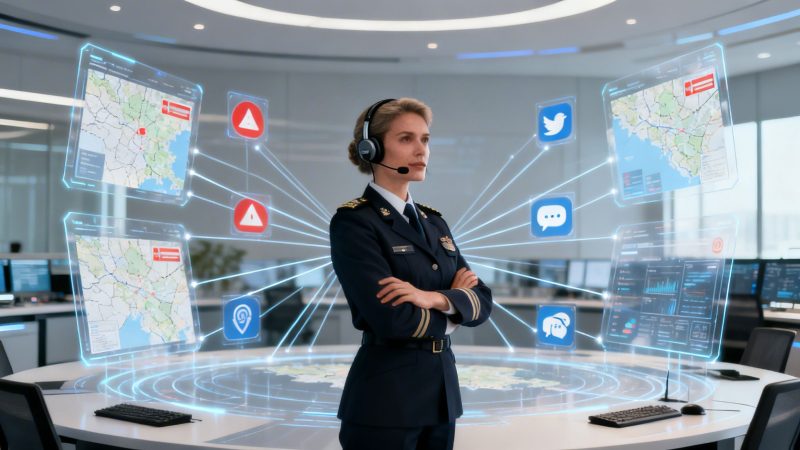
Think of a PIO as an incident's air traffic controller, but for information. They have to take in complex, often technical, updates from firefighters, police, and command staff on the ground. Then, they translate all of it into clear, actionable guidance for both the public and the media.
Without that single, trusted voice, you'd have conflicting reports causing panic, getting in the way of rescue efforts, and just plain eroding public confidence. A skilled PIO ensures everyone gets one unified, authoritative message.
Core Responsibilities of a PIO
A PIO wears a lot of hats, but their duties really boil down to managing the flow of information to keep people safe and calm. It’s a huge responsibility.
Here’s a quick look at some of the key things a PIO is tasked with in the middle of an emergency:
- Media Relations: Serving as the main point of contact for journalists, setting up press conferences, and pushing out official statements.
- Public Alerts: Writing and sending out emergency alerts, evacuation orders, and critical safety instructions across every channel imaginable—from TV to social media.
- Misinformation Management: Keeping a close eye on social media and news reports to squash inaccuracies and shut down harmful rumors before they spread.
- Internal Communication: Making sure every responder and partner agency knows what the public message is, so everyone stays on the same page.
This organized approach to communication is a game-changer for any operation. In fact, the PIO role has become so essential that it’s now a formally recognized part of most government emergency frameworks. The position really gained traction after 9/11, which led to a massive 112.5% increase in dedicated PIO jobs within state emergency agencies between 1995 and 2005.
When verified information gets out strategically, first responders can do their jobs more effectively. This is the same principle behind the integrated messaging and dispatch tools built into platforms like Resgrid. Having a single source of truth saves precious time and, at the end of the day, a lot of taxpayer money by making sure resources aren't wasted chasing false leads or misdirected efforts. Explore the Resgrid platform's communication tools to see how technology supports this mission.
PIO Core Functions at a Glance
To put it all together, here’s a simple table summarizing the essential duties of a Public Information Officer during an active incident.
| Function | Description | Impact in an Emergency |
|---|---|---|
| Media Coordination | Acts as the primary liaison for all news media, organizing briefings and distributing press releases. | Ensures accurate, consistent reporting and prevents media from interfering with response operations. |
| Public Alerting | Crafts and disseminates critical information, such as evacuation orders or shelter-in-place instructions. | Provides the public with clear, life-saving guidance, reducing panic and confusion. |
| Rumor Control | Actively monitors social media and other channels to identify and correct misinformation. | Stops the spread of dangerous falsehoods that could endanger the public or hinder the response. |
| Internal Briefings | Keeps all internal stakeholders and partner agencies aligned with the official public message. | Guarantees a unified front and prevents conflicting messages from different agencies. |
Ultimately, a PIO is the bridge between the responders on the scene and the community they serve, making sure the right information reaches the right people at the right time.
A Day in the Life of a Public Information Officer
It’s a Tuesday morning, pretty standard stuff. Our Public Information Officer, we'll call her Sarah, is sifting through media clippings and mapping out a community outreach plan for Fire Safety Week. Everything's calm, proactive, and routine. Then, an alert screams across her screen: a dam has breached. A flash flood warning is now active for a low-lying neighborhood.
Just like that, her entire role flips. She goes from planner to crisis communicator in a heartbeat.
The first thirty minutes are a controlled chaos. Sarah gets to the emergency operations center where the incident commander lays out the hard facts. Water is rising at three inches per minute. 500 homes are sitting directly in the evacuation zone.
Translating Chaos into Clarity
Sarah’s job isn't just to be a parrot for the incident commander. She has to take technical, operational details—things like water flow rates and where rescue teams are staging—and turn them into simple, urgent instructions for the public. Her first message is blunt and to the point: "MANDATORY EVACUATION for all residents in the Green Valley area. Go now. Head to high ground. The community center at 123 Main Street is the designated shelter."
At the same time, her phone is blowing up with calls from local news stations. She quickly schedules a press briefing for an hour from now. That gives her team just enough time to get their facts straight and verify everything. This one move is critical—it stops reporters from scrambling for unofficial sources, which is how panic and bad information spread like wildfire.
A PIO's primary goal during a crisis is to be the single source of truth. By controlling the narrative with accurate, timely updates, they prevent misinformation from taking root and causing more harm than the emergency itself.
The Digital Front Line
While official alerts are pushing out, a whole new battle is kicking off online. A rumor starts circulating on social media that a second dam failed. It's completely false, but it's spreading fast.
Sarah and her team immediately push out a "RUMOR CONTROL" graphic, debunking the claim with a clear, authoritative statement. This isn't just about calming nerves; it's a massive money-saver. Quick action like this stops a "shadow evacuation" of people who aren't in danger, which would waste fuel, clog up critical evacuation routes, and pull first responders away from the actual threat.
Throughout the day, Sarah is plugged into a unified command platform. Instead of tying up the radio to ask dispatch for every little update, she can see real-time data on where personnel are and the incident's status. This direct access is a game-changer. She spends less time hunting for information and more time getting it out to the people who need it.
With tools like the powerful mobile apps from Resgrid, a PIO has a live, verifiable data feed right in their hands. It ensures every single statement they make to the public is built on a solid foundation of fact, not guesswork.
Understanding the Key Differences: PIO vs. PR Manager vs. Spokesperson
On the surface, the roles of a Public Information Officer (PIO), a Public Relations (PR) Manager, and a Spokesperson seem to bleed into one another. It's a common mix-up, but it's one that can be a costly mistake for any organization. Hiring the wrong person for a critical communication job can hamstring your entire operation.
Getting these distinctions right isn't just about job titles; it's about building a lean, effective communications team where every role has a purpose.
A PIO is almost always found in a government or public safety setting, working within rigid frameworks like the Incident Command System (ICS). Their mission is crystal clear: ensure public safety by delivering accurate information during an emergency. For a PIO, success isn't a glowing news story—it's how quickly and clearly the public gets the information they need to stay safe.
A PR Manager, on the other hand, lives in the corporate world of private companies and non-profits. Their entire focus is on building and defending the organization's brand and reputation. They're tied to marketing goals, stakeholder relationships, and positive press, where success often looks like better sales numbers or improved public sentiment.
Then you have the Spokesperson. This is a much more specific function. This individual is the designated "face" or "voice" of an organization for a particular event or announcement. While a PIO or a PR Manager can act as a spokesperson, it’s just one hat they might wear. A spokesperson’s core job is simply to deliver the message, whether that's at a press conference or in a one-on-one interview.
Comparing the Core Functions
Think of the PIO as the central hub during a crisis, managing the flow of information between the command post, the media, and the public. They're the filter and the translator.

This diagram really shows how the PIO takes complex operational details and turns them into clear, actionable directives for the public. It's a unique and demanding position.
To nail down the differences even further, let’s put these roles side-by-side.
Role Comparison: PIO vs. PR Manager vs. Spokesperson
It's easy to see how these roles get confused, but when you break them down by their primary goals, work environments, and how they measure success, the lines become much clearer.
| Attribute | Public Information Officer (PIO) | Public Relations (PR) Manager | Spokesperson |
|---|---|---|---|
| Primary Objective | Ensuring public safety through accurate and timely information. | Building and protecting brand reputation and image. | Delivering an approved message to an audience. |
| Typical Environment | Emergency operations centers, government agencies (fire, police, public health). | Corporate offices, marketing departments, non-profits. | Press conferences, interviews, public events. |
| Success Metric | Public compliance, accuracy of disseminated information, rumor control. | Positive media mentions, brand sentiment, meeting marketing goals. | Clarity of message delivery, audience reception. |
Knowing these distinctions isn't just an academic exercise. An agency that needs a crisis-hardened PIO but hires a brand-focused PR Manager might find itself completely unprepared when an emergency hits, leading to public confusion and dangerous operational delays. Getting the right person in the right seat is everything.
The Modern PIO Toolkit: Skills and Technology
The days of a Public Information Officer simply standing behind a podium at a press conference are long gone. Today's PIO is a digital Swiss Army knife, expected to be skilled in everything from social media sentiment analysis to graphic design and video editing—often while working under extreme pressure. Their effectiveness is now a blend of classic communication skills and a deep mastery of technology.
To keep information flowing during an emergency, a PIO has to be comfortable with a whole range of real-time crisis communication tools. These are the platforms that get accurate information out quickly. The best PIOs think digitally first, understanding how a single message will land on different platforms and how to squash misinformation the second it appears.
Technology as a Force Multiplier
Technology has become a powerful force multiplier for any PIO, turning raw, messy data into clear, confident public statements. Having access to live, verifiable data feeds isn't a luxury anymore; it's a core requirement of the job. It's also a massive cost-saver for any agency.
By tapping into real-time data from a central platform, a PIO can cut the staff hours spent on manual information gathering and verification by up to 40%. This not only minimizes the risk of costly errors but also frees up personnel for other critical response tasks.
Take a look at this dashboard. It’s a perfect example of how a PIO can track personnel status and locations in real time.

With a single source of truth like this, a PIO can confirm resource deployments without clogging up the dispatch radio, ensuring every single public statement is grounded in fact.
This direct line to operational data has a real, measurable impact on public safety. For instance, data from the National Incident Management System (NIMS) shows that PIOs contribute to 30% faster public compliance with evacuation orders. We saw this in action during California's 2018 wildfires, where PIO-led briefings successfully reached 92% of at-risk populations, a crucial factor in reducing casualties.
Platforms that pull all these functions into one place are absolutely invaluable. You can see how different systems stack up by checking out a comparison of first responder platforms to get a feel for how various features align with a PIO’s day-to-day needs.
PO? CIO? Let's Clear Up the Acronym Soup
When you first dive into the world of public safety, the jargon can feel like a whole other language. You'll hear "PIO" thrown around, but you might also hear "PO" and "CIO." They sound similar, but mixing them up is an easy way to cause some serious confusion—and waste a ton of time and money.
Getting these roles straight is crucial. It ensures the right person is handling the right job, preventing costly project delays or hiring the wrong expert for a critical task. Think of it this way: a PIO manages public information, a PO manages projects, and a CIO manages technology. Each one is a specialist in their own right.
The Role of a Project Officer (PO)
A Project Officer, or PO, is the boots-on-the-ground leader for a specific initiative. They are the logistical backbone that keeps a project moving forward.
Imagine your agency is rolling out a new dispatch system. The PO is the one making sure it gets done on time and within budget. Their world revolves around execution, resources, and deadlines. It's a high-stakes job, and the demand for skilled POs is skyrocketing—projected to grow by 35% globally between 2015 and 2025. These pros manage everything from risk analysis to deadline enforcement on projects that often average $1.2 million in budget. For a deeper dive, ProjectManager.com has some great info.
The Role of a Chief Information Officer (CIO)
The Chief Information Officer, or CIO, is playing a completely different game. They operate at the 30,000-foot level, overseeing the entire technological landscape of an organization. The CIO is responsible for the systems, security, and data that everyone else relies on to do their jobs.
This is the person making the big-picture strategic decisions. A CIO approves the purchase of new tech and ensures it aligns with the agency's long-term goals for efficiency and public safety.
Putting It All Together: A Real-World Workflow
Let's see how these roles collaborate. Say a fire department is upgrading its communication system.
- The CIO researches and greenlights the budget for a platform like Resgrid, recognizing its strategic value for the whole department.
- A PO gets assigned to the Resgrid deployment. They're in charge of coordinating training, setting up hardware, and making sure every single station is online by the go-live date.
- A few weeks later, a major wildfire breaks out. The PIO jumps into action, using the now-fully-implemented Resgrid platform to pull real-time data and push out accurate evacuation orders to the public.
Common Questions About Public Information Officers
Even after you get the basic idea of what a Public Information Officer does, some specific questions almost always pop up. Let's get into some of the most common ones to give you a clearer picture of the role, whether you're thinking of becoming a PIO or working with one.
You'll find quick answers to the most frequently asked questions about the Public Information Officer role below. We dig into everything from what it takes to get the job to how the role functions on a day-to-day basis.
| Question | Answer |
|---|---|
| What qualifications do you need to become a PIO? | Most PIOs have a background in communications, journalism, or public relations, often with a bachelor's degree. Experience in a high-pressure environment and specific training certifications from organizations like FEMA are highly valued. |
| Does a PIO only work during emergencies? | No, a PIO's role is crucial during 'blue sky' days too. They manage community outreach, run public safety campaigns, handle routine media inquiries, and build the relationships and trust that are essential when a crisis does occur. |
| How has technology changed the PIO's job? | Technology, especially social media and real-time data platforms like Resgrid, has transformed the role. The job is now 24/7, requiring PIOs to monitor digital channels constantly, combat misinformation instantly, and leverage data to provide faster, more accurate public updates. |
| Can a smaller department afford a dedicated PIO? | While a dedicated PIO is ideal, smaller departments can cross-train an existing staff member. Actionable Insight: The cost of one poorly handled incident (e.g., wasted resources from a false rumor, overtime from inefficient communication) often exceeds the annual cost of training or a part-time PIO role. The return on investment is public trust and operational efficiency. |
Hopefully, that clears a few things up. The PIO isn't just a talking head for emergencies; they're a strategic part of any public safety operation, working year-round to keep the community safe and informed.
At the end of the day, a prepared PIO is a massive asset for any public safety agency, especially when they have the right tools. Resgrid delivers the kind of real-time data and unified communication systems that let PIOs cut through the noise and deliver clear, accurate information when every second counts.