
The Top 12 Best Apps for EMS in 2026: A Comprehensive Guide
In today's fast-paced emergency services landscape, efficiency and accuracy are non-negotiable. The right mobile applications can be the difference between a chaotic scene and a coordinated, life-saving response. With app stores flooded with options, choosing the tools that truly empower your crews, streamline workflows, and respect your agency's budget is a critical task. This guide is designed to cut through the noise and provide a clear path forward for any emergency management team evaluating apps for EMS.
We will dive deep into 12 of the most impactful solutions available, moving beyond marketing claims to provide practical, real-world analysis. You will find actionable insights that can save your agency money and honest assessments of each platform's strengths and weaknesses. We'll explore everything from all-in-one dispatch platforms and ePCR solutions to specialized communication and resource management tools, helping you build a tech stack that enhances patient care and operational readiness.
This comprehensive resource includes detailed descriptions, core features, pricing models, and specific implementation tips for each application. The information is structured to help you directly compare options and identify which tools solve your specific operational challenges. We will also touch upon how the pre-hospital environment is changing. Beyond apps for direct operational tasks, the integration of consumer health technology, as explored in a comprehensive cardiologist's guide to smartwatch ECG, is increasingly influencing patient assessment and data collection. Each entry in our list includes screenshots and direct links, so you can immediately begin your evaluation.
1. Resgrid, LLC
Resgrid stands out as a powerful and exceptionally flexible all-in-one dispatch, communication, and management platform. It's designed not just as another application but as a complete ecosystem for agencies that need a reliable Computer-Aided Dispatch (CAD) and personnel management system without the typical vendor lock-in or prohibitive costs. Its open-source foundation is a key differentiator, offering an unparalleled level of control and transparency for tech-savvy organizations.
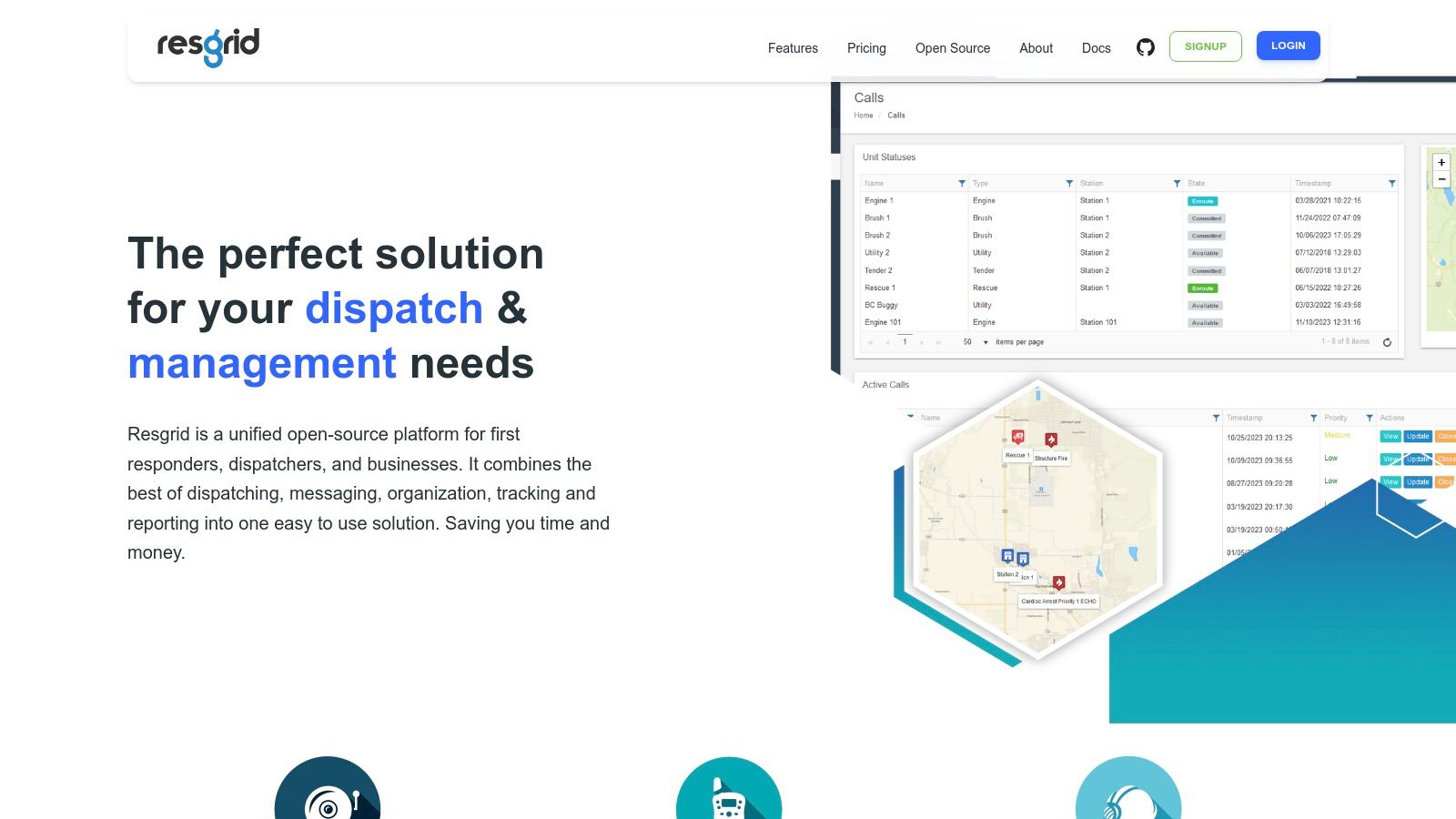
This platform consolidates critical functions into a single interface, enabling teams to manage everything from call dispatch and real-time unit tracking to personnel scheduling and robust reporting. The self-service model is a significant advantage, allowing an agency to sign up and begin configuring its system in minutes, a stark contrast to the lengthy sales cycles and implementation fees common with enterprise CAD software. Resgrid's modular design, featuring over 14 modules and a family of dedicated mobile apps, makes it one of the most versatile apps for ems available. You can learn more about Resgrid's suite of applications on their official apps page.
Key Strengths & Use Cases
Resgrid excels for agencies seeking a customizable command center. Whether used as a primary CAD for a volunteer fire department or as a supplemental tool to a larger, existing system, its flexibility is its core strength.
- Practical Example: A rural EMS agency can use the free, self-hosted version to set up a full-featured dispatch system, saving tens of thousands in initial software costs. They can manage volunteer schedules, dispatch calls via push notifications, and track responder locations on a live map, all without a dedicated dispatcher.
- Actionable Insight for Cost Savings: By leveraging Resgrid's robust API and webhooks, an agency can integrate it with their existing ePCR or billing software. This avoids the need to pay for expensive, custom integrations from their primary CAD vendor, potentially saving thousands annually on system modifications.
Platform Breakdown
| Feature | Details |
|---|---|
| Core Functionality | Dispatch/CAD, personnel & unit tracking, ePCR, mapping, real-time messaging (push-to-talk voice & chat), scheduling, reporting. |
| Platform / OS | Web-based (all browsers), with dedicated apps for iOS, Android, and Windows. |
| Pricing Model | Free Plan available. An open-source version allows for free self-hosting. Hosted plans with premium support are available by contacting them directly. |
| Integration | Highly extensible via a comprehensive API and webhook system. Can integrate with external CAD systems, phone systems, and other third-party software like Resgrid. |
| Recommended For | EMS agencies, fire departments (career & volunteer), public safety agencies, and security firms seeking a cost-effective, customizable, and scalable dispatch solution. |
Pros:
- Open-Source & No Lock-In: Provides complete control and avoids dependency on a single vendor.
- Cost-Effective: A robust free plan and self-hosting option make it accessible for any budget.
- Unified Platform: Consolidates numerous essential functions, reducing the need for multiple disparate apps.
- Rapid Deployment: The self-service model allows for immediate setup without implementation fees or contracts.
Cons:
- Technical Overhead: Self-hosting and deep customization require internal IT knowledge or paid support.
- Opaque Premium Pricing: Details for hosted plans and enterprise support are not publicly listed.
2. Apple App Store (iOS/iPadOS)
While not a single EMS app, the Apple App Store is the primary ecosystem where agencies using iPhones and iPads will procure, deploy, and manage their software tools. It serves as a centralized and secure marketplace for a vast catalog of specialized apps for ems, from CAD-integrated dispatch and alerting tools like Active911 to standalone ePCR clients and clinical reference guides. The platform's strength lies in its standardized, secure environment and powerful management capabilities.
For agencies, the key advantage is deploying apps at scale using Apple Business Manager and a Mobile Device Management (MDM) solution. This allows administrators to push required apps, revoke access from former employees' devices, and ensure every field unit is running the correct software version, which is crucial for operational consistency and HIPAA compliance. Developers wishing to publish their own tools can follow a well-documented process; a helpful guide to app submission on the App Store details the necessary steps.
Core Features & Use Cases
| Feature | Practical Example for EMS Agencies |
|---|---|
| Centralized App Discovery | Quickly find and evaluate competing ePCR, dispatch, or telehealth apps by reading user reviews and checking version update frequency. |
| Mobile Device Management (MDM) | Silently install the agency’s official ePCR app on all 50 department iPads simultaneously, preventing crews from using outdated versions. |
| App Privacy Labels | Before downloading, review how an app handles patient or location data to ensure it meets agency privacy and security policies. |
| Vetted & Reviewed Apps | Reduces the risk of installing malicious or unstable software on mission-critical devices thanks to Apple's mandatory review process. |
- Pros: Highly secure ecosystem, standardized deployment via MDM simplifies IT management, transparent app privacy details.
- Cons: Many apps are useless without a paid backend service subscription, and some critical apps may lack robust offline functionality.
3. Google Play Store (Android)
As the central hub for Android devices, the Google Play Store offers a flexible and expansive ecosystem for sourcing apps for ems. It is the primary marketplace for agencies using Android tablets and smartphones, whether they are agency-issued or part of a Bring Your Own Device (BYOD) program. The platform hosts a wide variety of essential tools, including CAD-integrated alerting systems, comprehensive ePCR suites, telehealth clients, and clinical reference guides, making it indispensable for Android-based operations.

The key strength for agencies is its powerful enterprise management capabilities through Managed Google Play. When paired with an Enterprise Mobility Management (EMM) solution, administrators can privately distribute custom or public apps, enforce security policies, and remotely install or update software across the entire fleet. This ensures that every field provider has the correct, secure, and updated applications, which is vital for maintaining operational integrity and HIPAA compliance. The wider range of hardware options often presents significant cost savings for budget-conscious agencies.
Core Features & Use Cases
| Feature | Practical Example for EMS Agencies |
|---|---|
| Managed Google Play | Distribute a specific, approved version of your ePCR app to all agency-owned devices while making it invisible to the public. |
| Broad Device Support | Equip crews with ruggedized, lower-cost Android tablets for patient care reporting, saving thousands compared to premium alternatives. |
| App Review System | Evaluate potential dispatch or communication apps by filtering reviews for keywords like "offline" or "sync issues" to identify reliability concerns. |
| Frequent App Updates | Developers can push bug fixes and security patches rapidly, ensuring critical software vulnerabilities are addressed without lengthy delays. |
- Pros: Flexible and often lower-cost hardware choices, strong enterprise deployment and private app distribution options.
- Cons: The fragmented device ecosystem can affect app performance and updates, and many apps require paid organizational subscriptions or back-end systems.
4. FirstNet App Catalog (AT&T FirstNet)
For public safety agencies operating on the FirstNet network, the FirstNet App Catalog is an essential, curated portal. It isn't a direct app store but rather a vetted directory of mission-critical software, ensuring that the apps for ems listed meet rigorous standards for security, reliability, and relevance. The catalog's primary value is its verification process, which designates apps as "FirstNet Listed" or "FirstNet Certified," giving administrators confidence that the tools they deploy have been optimized for the high-availability public safety network.
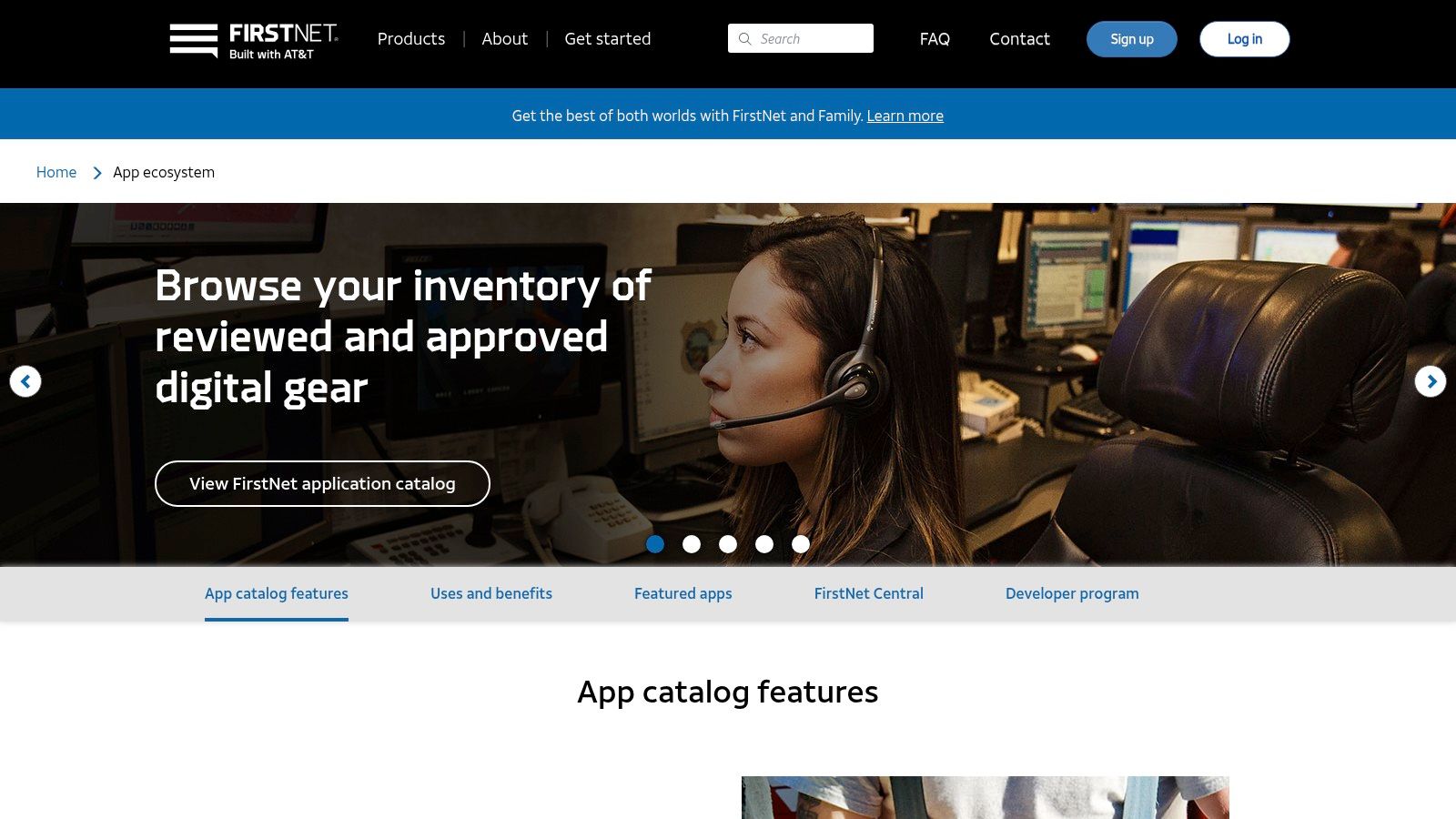
The platform helps agencies sidestep the noise of consumer app stores, focusing exclusively on tools for first responders. Administrators can browse categories like situational awareness, ePCR, and secure communications, then import approved app selections directly into their Mobile Device Management (MDM) or Enterprise Mobility Management (EMM) systems for seamless deployment. This streamlined vetting and deployment workflow saves significant IT time and resources, preventing crews from using unvetted or potentially insecure applications on their FirstNet devices.
Core Features & Use Cases
| Feature | Practical Example for EMS Agencies |
|---|---|
| FirstNet Certified Apps | Selecting a "FirstNet Certified" ePCR app ensures it has passed the highest level of testing for network security and data priority, preventing connection drops when documenting patient care during a major incident. |
| Curated App Discovery | Instead of searching generic app stores, an EMS captain can quickly find and compare three different HIPAA-compliant telehealth platforms specifically vetted for first responder use. |
| MDM/EMM Integration | An IT administrator can add a newly approved mass notification app from the catalog to the agency's MDM profile, making it instantly available for self-service download on all agency-issued devices. |
| Security & Reliability Vetting | Reduces agency liability and protects patient data by ensuring any selected app has undergone a thorough review process for stability and security vulnerabilities before it reaches field personnel. |
- Pros: Rigorous security and performance vetting is ideal for compliance-minded agencies, centralized discovery is tailored specifically to first responders, simplifies MDM deployment.
- Cons: Catalog benefits are exclusive to FirstNet subscribers, not a direct storefront as many listings link out to vendor sites or other app stores.
5. ESO
ESO represents a comprehensive suite of public safety software, moving beyond a single app to offer an integrated ecosystem for electronic patient care reporting (ePCR), fire records management, and hospital data exchange. For EMS agencies, ESO’s key differentiator is its powerful focus on data interoperability, particularly between prehospital crews and receiving facilities. It offers a family of apps for ems that work together to streamline documentation and improve patient outcomes through data insights.
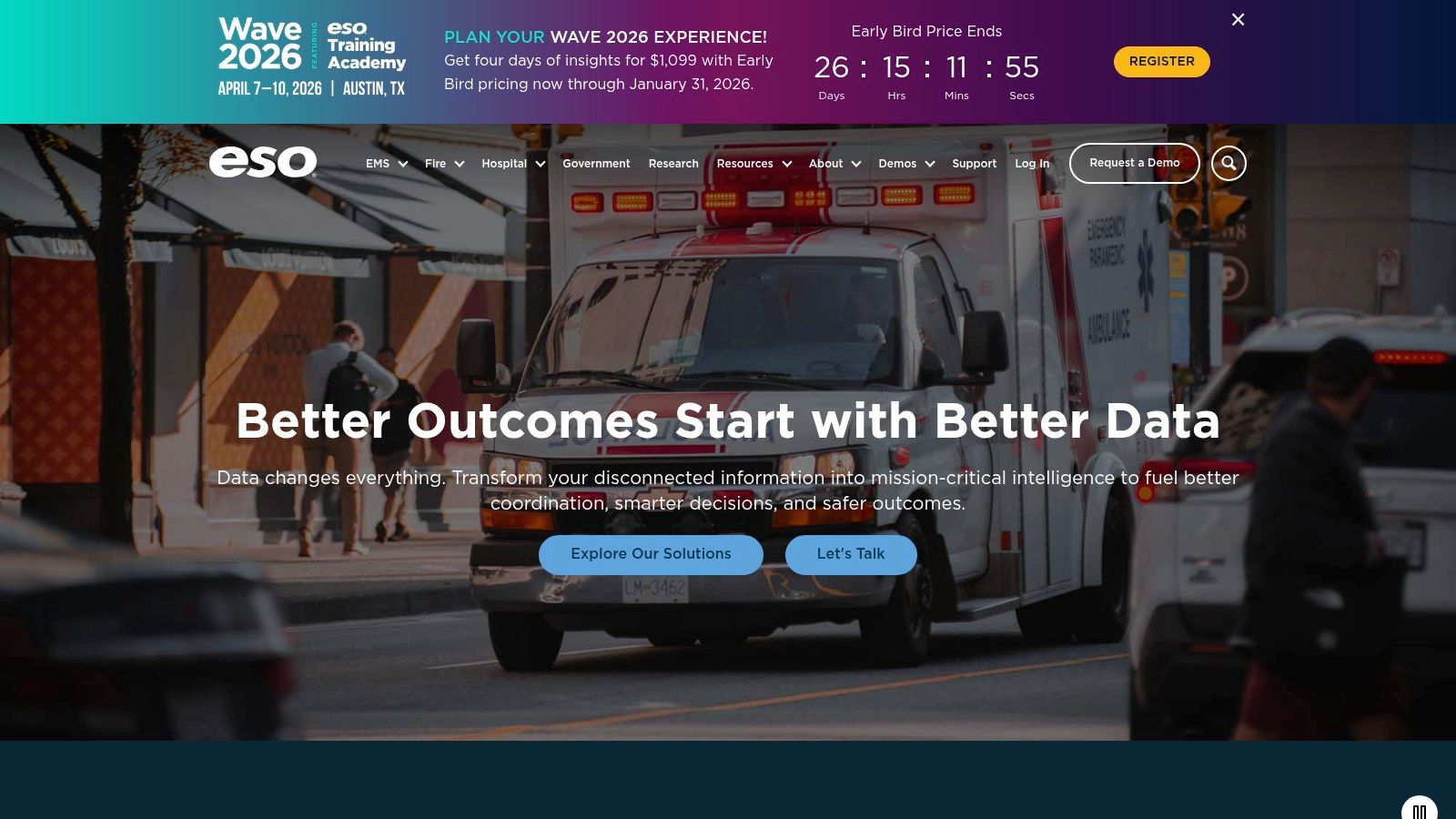
The platform is designed for agencies seeking to close the feedback loop between the field and the hospital. Through its mobile components, crews can transmit patient data, including photos and videos, directly to the emergency department ahead of arrival. This enhances situational awareness for hospital staff and can significantly improve handoff efficiency. An actionable insight for saving money is to clearly define your required modules upfront before engaging with sales. This allows you to negotiate a package that avoids paying for unused features, like fire-specific NFIRS reporting, within a larger software bundle.
Core Features & Use Cases
| Feature | Practical Example for EMS Agencies |
|---|---|
| Hospital Data Exchange (HDE) | A paramedic receives a follow-up notification that their septic shock patient had a positive outcome, confirming the effectiveness of their prehospital treatment protocol. |
| ESO Alerting | A medic sends a 12-lead EKG, photos of a mechanism of injury, and an ETA directly from their device to the destination STEMI center's charge nurse. |
| Integrated ePCR/EHR | A crew completes a patient chart on a ruggedized tablet, and the data automatically populates state reporting forms and internal QA/QI dashboards, reducing manual entry. |
| CAD & Billing Integration | Dispatch information from the CAD system pre-fills the ePCR, and once the chart is finalized, it is automatically sent to the agency’s billing partner, accelerating the revenue cycle. |
- Pros: Strong hospital connectivity and patient outcomes feedback, an established vendor with a broad U.S. footprint, and a highly integrated data ecosystem.
- Cons: Pricing and licensing are quote-based and not publicly listed, and some modules may favor Windows devices for full offline charting capabilities.
6. ZOLL Data Systems — emsCharts NOW and ZOLL Respond
As a major player in the EMS software space, ZOLL Data Systems provides a tightly integrated ecosystem for agencies already using their products. Their mobile apps for ems, specifically emsCharts NOW and ZOLL Respond, extend the functionality of their core ePCR and dispatch platforms directly to field devices. This creates a seamless workflow, allowing crews to begin patient care reports on-scene and manage trip status from their phones or tablets, with robust offline capabilities.
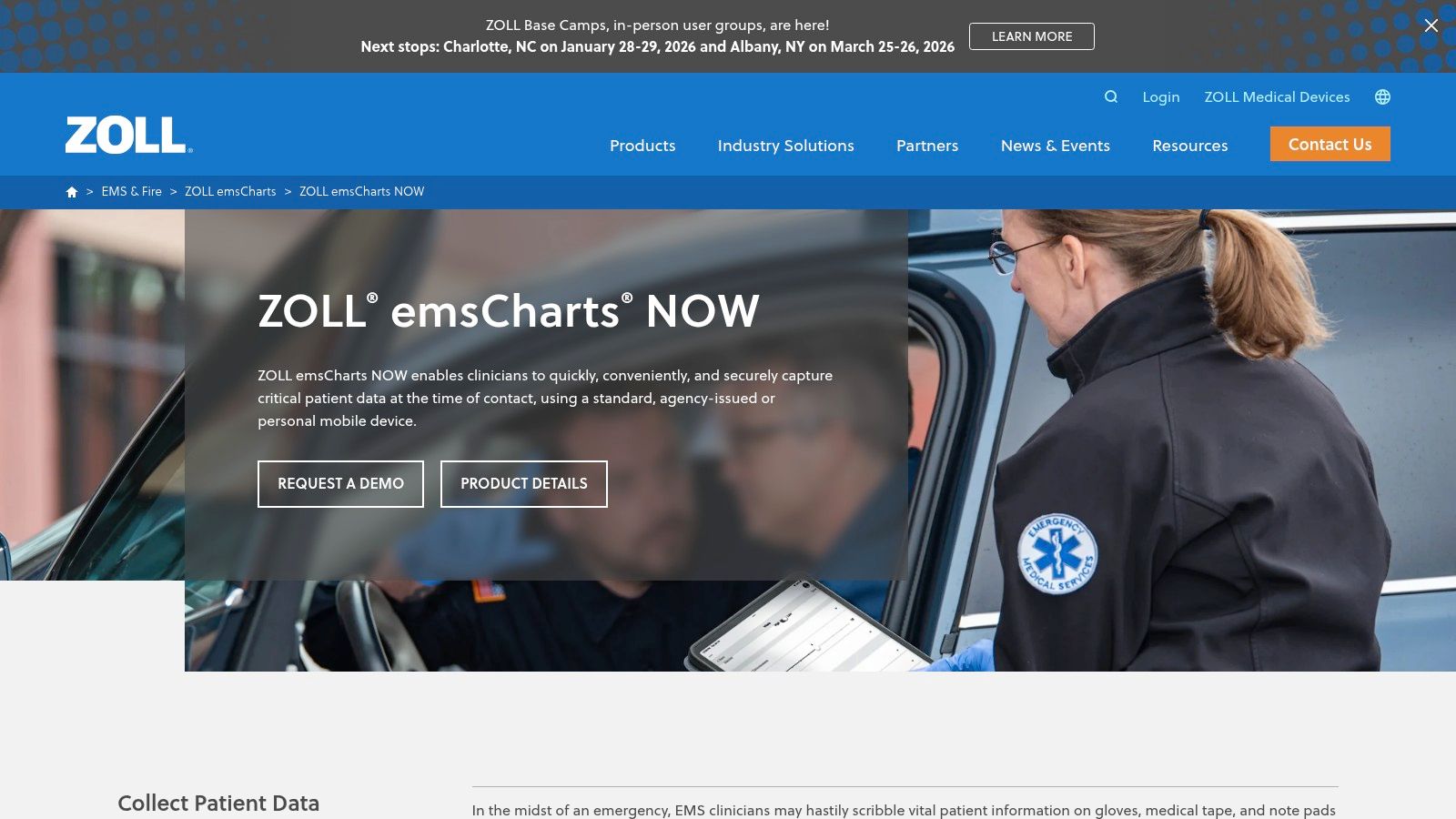
The key benefit for agencies is the reduction in duplicate data entry and charting time. Data flows directly from a ZOLL CAD into ZOLL Respond for trip management, then into emsCharts NOW for clinical documentation. An actionable insight for cost savings is leveraging the offline mode on standard smartphones. This can reduce or eliminate the need for expensive, ruggedized specialty hardware, as crews can securely complete most of their chart on a personal or department-issued cell phone even without a connection, saving thousands on hardware purchases.
Core Features & Use Cases
| Feature | Practical Example for EMS Agencies |
|---|---|
| Offline-Capable Charting | A medic documents a full patient assessment and interventions in a rural area with no cell service; the chart auto-syncs upon returning to the station. |
| CAD Data Import | Dispatch information, including patient demographics and location, automatically populates the ePCR, saving several minutes of manual entry per call. |
| Voice-to-Text Dictation | The paramedic dictates the patient narrative directly into the app while the EMT is driving, speeding up report completion en route to the hospital. |
| DL Barcode Scanning | Instantly and accurately capture a patient's demographic information by scanning the barcode on their driver's license, reducing clerical errors. |
- Pros: Designed to reduce charting time using mobile devices, offline support on standard smartphones/tablets reduces specialized hardware needs.
- Cons: Some complex ePCR tasks may still require the full web version, and pricing is quote-based which can vary significantly by organization.
7. ImageTrend
ImageTrend offers a mature and widely adopted ecosystem centered around its Elite ePCR platform, designed for robust data collection and state-level reporting. While Elite forms the core, the company provides several integrated mobile apps for ems that extend its functionality into the field, focusing on operational efficiency and crew management. Their strength lies in deep NEMSIS compliance and a suite of tools that address more than just patient care reports.
The platform is designed for agencies requiring a comprehensive solution that handles everything from field data entry to credential tracking and exposure reporting. The Aware mobile app, for instance, acts as a companion utility for notifications and license visibility, while Elite Field ensures crews can complete NEMSIS v3.5-compliant charts with or without an internet connection. An actionable insight for saving money is to use the included credential tracking in the Aware app to automate expiration reminders for certifications like CPR and ACLS. This proactive management can prevent costly fines or having to pull a unit from service due to a lapsed certification. The full suite is available via a sales demo at imagetrend.com.
Core Features & Use Cases
| Feature | Practical Example for EMS Agencies |
|---|---|
| NEMSIS v3.5 Compliance | Ensure every ePCR completed in the field meets the latest national and state data submission standards, avoiding costly reporting errors. |
| Elite Field Offline Mode | A medic completes a full patient chart in a rural area with no cell service; the app syncs the data automatically once connectivity is restored. |
| Aware Mobile App | A paramedic receives an instant push notification about an expiring certification and can view their continuing education credits directly on their phone. |
| Mobile Utilities (Scanning) | Speed up patient intake by scanning a driver's license to auto-populate demographic fields, reducing manual typing and potential errors. |
- Pros: Mature ePCR platform with strong state reporting adoption, mobile add-ons that speed data entry and credential management.
- Cons: Full pricing is not publicly listed and requires a sales demo; some mobile components are companion utilities rather than full ePCR replacements.
8. Pulsara
Pulsara is not a standalone field tool but a comprehensive clinical communication platform that bridges the critical information gap between EMS crews and hospital care teams. It functions as a unified patient channel, enabling paramedics to transmit vital patient data, ECGs, photos, and live video directly to the emergency department and relevant specialists before arrival. This real-time coordination makes it one of the most impactful apps for ems in managing time-sensitive emergencies like STEMI, stroke, and trauma.
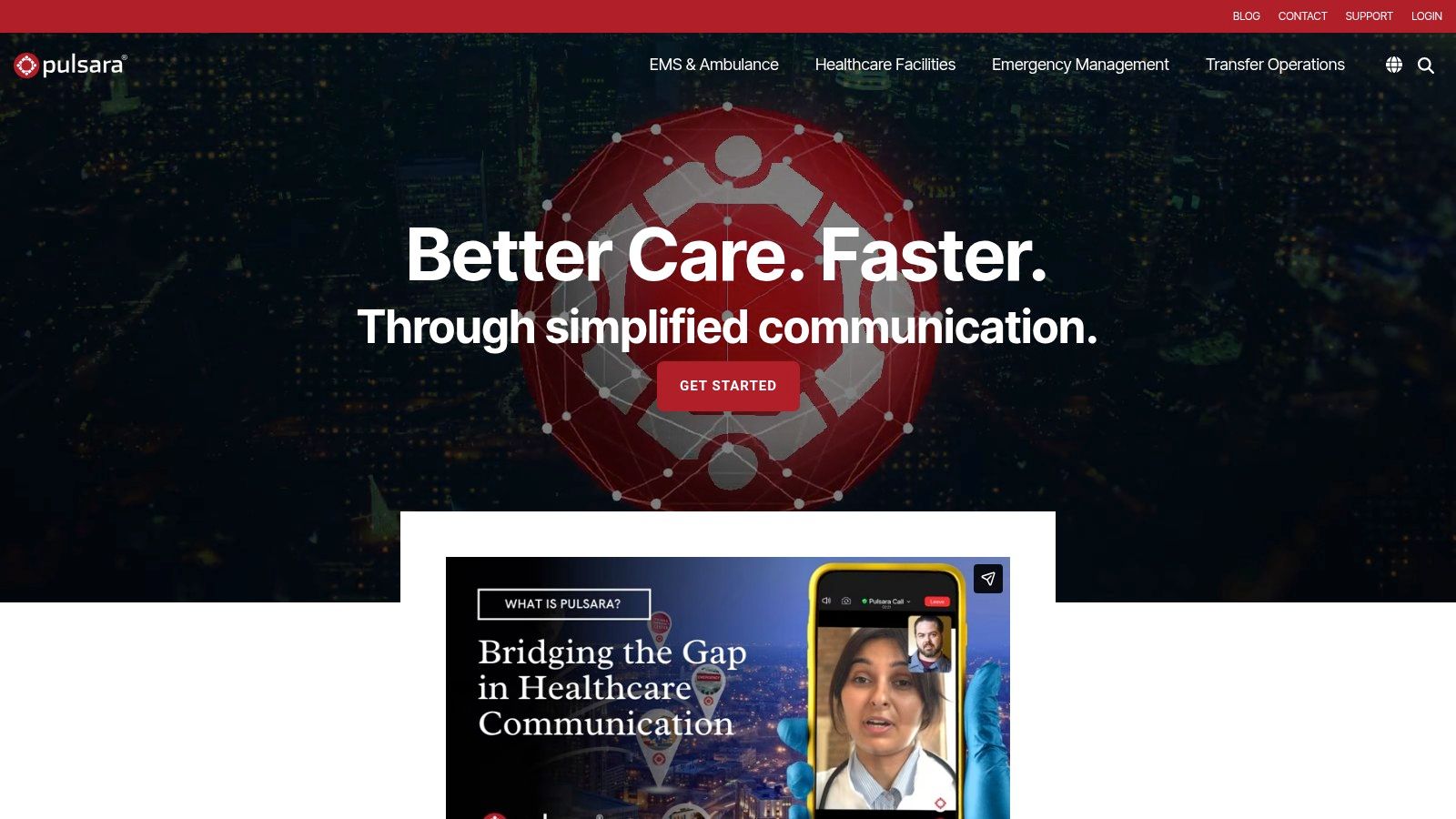
The platform’s strength is its ability to replace fragmented radio reports, phone calls, and faxes with a single, secure, and data-rich communication stream. For an EMS agency, implementing Pulsara with a partner hospital can drastically reduce door-to-treatment times, a key metric that directly impacts patient outcomes and can enhance the agency's value proposition within its healthcare system. An actionable insight to save money is to use Pulsara to reduce ambulance turnaround times at the hospital. By pre-registering patients and streamlining handoffs, crews spend less time at the ED, allowing units to get back in service faster and potentially reducing the need for additional peak-load ambulances.
Core Features & Use Cases
| Feature | Practical Example for EMS Agencies |
|---|---|
| Configurable Clinical Pathways | Activating a "STEMI Alert" instantly notifies the ED, on-call cardiologist, and cath lab team, sharing the prehospital 12-lead ECG with all parties. |
| Secure Messaging & Video | Paramedics use live video to consult with an ED physician on a complex medical case, receiving guidance directly at the patient's side. |
| ECG & Image Sharing | A crew transmits a photo of a severe trauma mechanism from the scene, giving the trauma team a visual context before the patient even arrives. |
| Real-Time Team Alerts | Upon identifying a stroke, the EMS crew taps a button to alert the entire hospital stroke team, who can view patient ETA and prehospital data. |
- Pros: Accelerates prehospital notification and care team assembly, HIPAA-compliant and modular for different clinical needs, improves patient outcomes for time-sensitive conditions.
- Cons: Pricing is custom and tied to facility volume (demo/quote required), and its value depends heavily on adoption by partner hospitals and receiving facilities.
9. Active911 (ActiveAlert, ActiveTeam, ActiveComms)
Active911 is a comprehensive alerting, mapping, and communication platform widely adopted by volunteer, combination, and career EMS agencies. It integrates directly with Computer-Aided Dispatch (CAD) systems to push real-time incident notifications to personnel via iOS and Android apps. This system excels at providing critical information en route, including turn-by-turn directions, scene pre-plans, hydrant locations, and real-time mapping of other responding units.
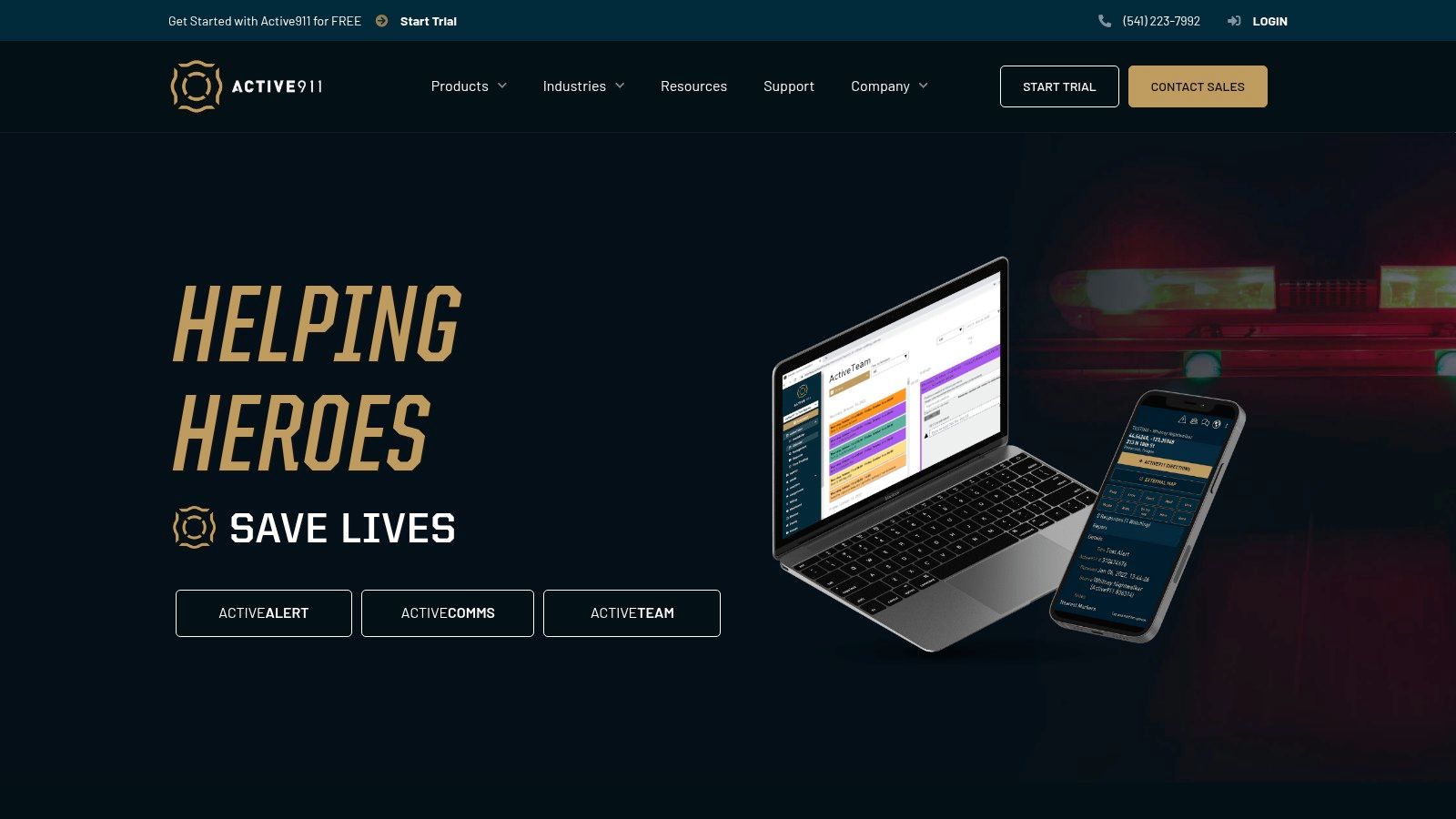
The platform's strength lies in its transparent, per-device pricing model, which makes it an accessible and scalable solution. Agencies can start small and expand without facing prohibitive upfront costs. For organizations looking to save money, a key insight is to leverage Active911's core alerting and mapping features first, which often replace the need for more expensive, dedicated mobile data terminals (MDTs) in every apparatus. This makes it one of the most cost-effective apps for ems when upgrading from traditional pager-only systems.
Core Features & Use Cases
| Feature | Practical Example for EMS Agencies |
|---|---|
| CAD-Integrated Alerting | An alert for a cardiac arrest is received from dispatch, instantly pushing the address, nature of call, and cross-streets to all on-duty crew phones. |
| Real-Time Mapping | A paramedic can see the real-time location of the responding engine and a mutual-aid ambulance on the same map while en route to a multi-vehicle accident. |
| Response Intent Buttons | Volunteer EMTs indicate they are "Responding to Station" or "Responding to Scene," giving the incident commander an immediate headcount of available personnel. |
| Pre-Plan & Hydrant Data | Tapping an icon on the map displays gate codes, hazardous material information, or patient history for a known address, improving scene safety and efficiency. |
- Pros: Transparent and affordable per-device pricing, U.S.-based support, robust mapping with critical data overlays, and a strong user base among volunteer agencies.
- Cons: Integration with some CAD systems can require technical adjustments, and advanced radio-over-cellular features necessitate purchasing proprietary ActiveBridge hardware.
10. IamResponding
IamResponding is a comprehensive incident response and agency management system that consolidates alerting, mapping, and resource tracking into a unified platform. It excels in environments requiring robust mutual-aid coordination, allowing agencies to see who is responding, from where, and with what apparatus in real-time. More than just a simple pager app, it integrates powerful apps for ems with features like scheduling, NFIRS reporting, and records management, making it a central operational hub.
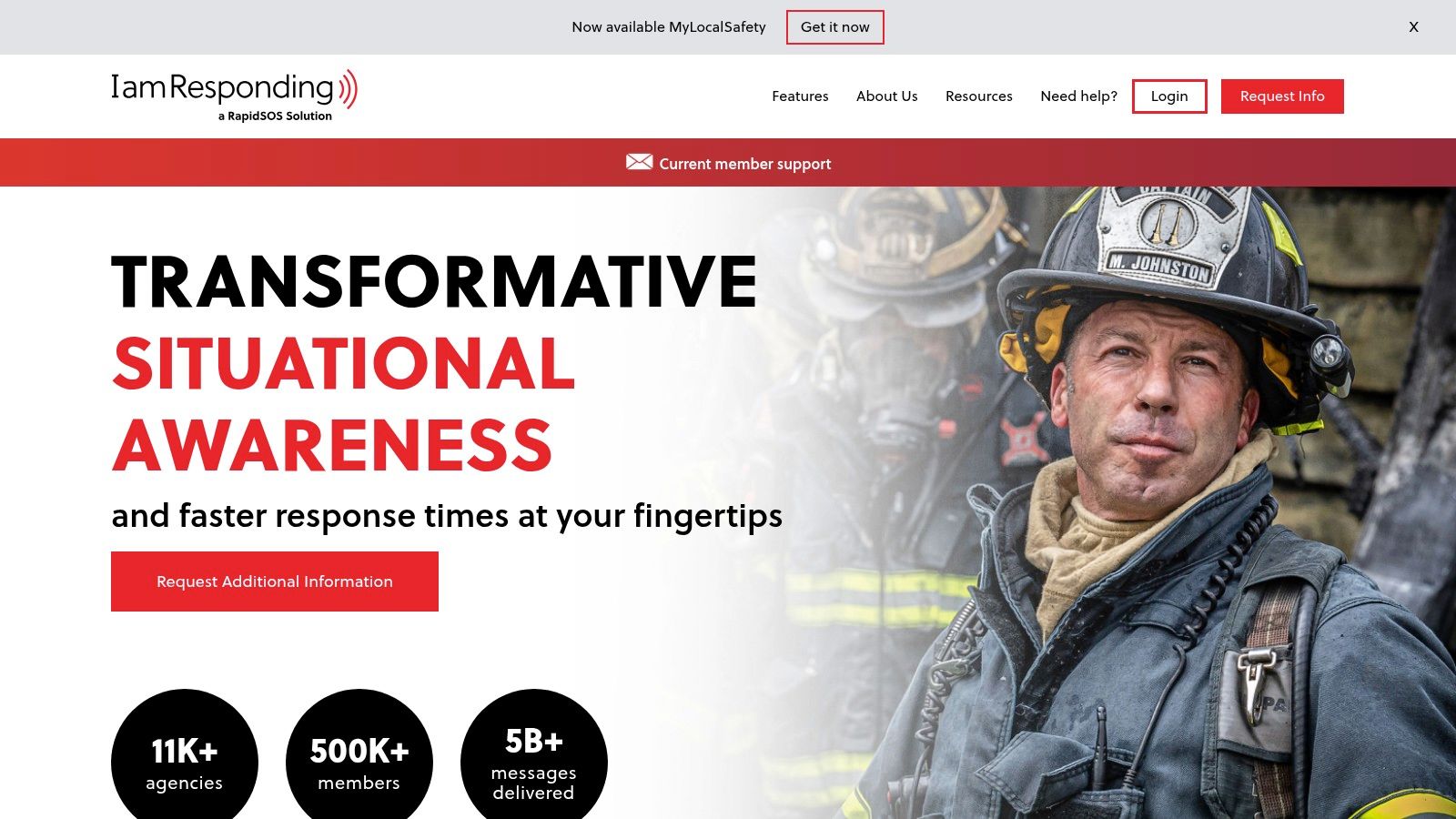
The platform’s strength lies in its two-way communication, which provides dispatch and command staff with immediate visibility into personnel availability before and during a call. An actionable insight for cost savings is to leverage the integrated training and records management modules. By consolidating these functions, agencies can potentially eliminate separate software subscriptions for tracking certifications and training hours, reducing overall IT expenses. While pricing requires a direct quote, this feature consolidation offers a clear path to a stronger return on investment.
Core Features & Use Cases
| Feature | Practical Example for EMS Agencies |
|---|---|
| Two-way Availability/Response | A volunteer paramedic marks themselves as responding to a cardiac arrest call, allowing the dispatcher to confirm a qualified provider is en route instantly. |
| Mapping with RapidSOS Data | During a 911 call, crews can view the caller's precise device location on the map, saving critical minutes when an address is vague or incorrect. |
| Real-time Unit Tracking | Command can track the location of mutual-aid ambulances on the same map as their own units, improving scene coordination for a multi-vehicle accident. |
| Scheduling & Records Mgmt. | An administrator runs a report to identify all providers whose CPR certification expires in the next 30 days, ensuring compliance without manual tracking. |
- Pros: Broad feature set covering alerting through records and scheduling, designed to support multi-agency and mutual-aid coordination.
- Cons: Pricing details require contacting sales (not publicly listed), and the interface and feature breadth can require onboarding and training to leverage fully.
11. Traumasoft
Traumasoft is an all-in-one EMS and NEMT operations platform designed to consolidate nearly every facet of an agency's workflow, from initial dispatch to final billing. Rather than being just one of many apps for ems, it functions as a comprehensive ecosystem with integrated mobile components for field crews. Its key differentiator is offering a single-vendor solution for CAD, ePCR, scheduling, HR, and billing, which can significantly reduce data entry duplication and integration headaches between disparate systems.
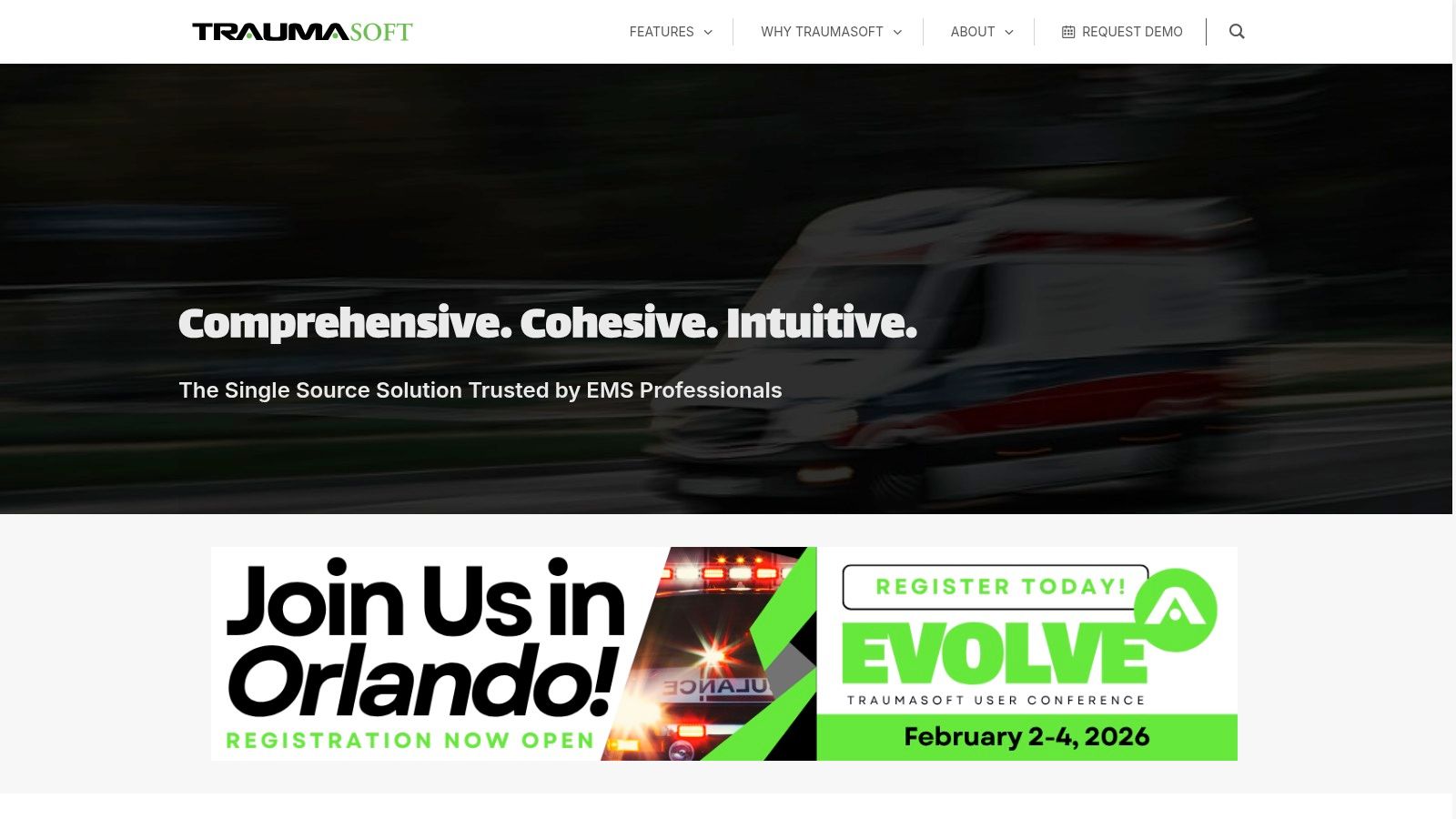
For agencies looking to streamline operations and potentially lower total cost of ownership, Traumasoft presents a compelling case. By replacing multiple software subscriptions with one unified platform, an agency could save money on licensing fees and reduce the IT overhead required to maintain separate systems. The mobile apps are included with the core platform, providing crews with a "mobile office" to manage schedules, view assignments, and complete patient care reports directly from the field.
Core Features & Use Cases
| Feature | Practical Example for EMS Agencies |
|---|---|
| Integrated CAD & ePCR | Dispatch information automatically populates the ePCR, eliminating the need for crews to re-enter call details like location and patient demographics. |
| Unified Workforce Management | A paramedic can view their schedule, submit a time-off request, and clock in for their shift, all from the same mobile app used for patient care. |
| End-to-End Billing | Once an ePCR is completed and QA-approved, it flows directly into the billing module, accelerating the revenue cycle and reducing claim errors. |
| Secure Internal Communication | Crews can use the built-in messaging and social-style feed to communicate securely about operational matters, reducing reliance on unsecured personal apps. |
- Pros: Consolidates dispatch, field, and back-office workflows under one vendor; mobile apps are included with platform implementation.
- Cons: Pricing is quote-based and not publicly listed; the comprehensive feature set can add complexity and require significant training during rollout.
12. Resgrid
Resgrid offers a unique and powerful dispatch, communication, and management system, standing out with its open-source core. This provides unparalleled flexibility for agencies, especially volunteer, mixed, or smaller departments, who can choose between a managed SaaS subscription or a self-hosted deployment. It serves as a comprehensive logistics and CAD platform, integrating personnel and resource tracking with robust communication tools, making it one of the most adaptable apps for ems available.
The primary advantage is its economic and technical flexibility. An agency with IT expertise can self-host the core system on their own servers, significantly reducing long-term subscription costs. For those without the technical resources, the hosted SaaS plans provide an affordable, turnkey solution. Resgrid's ecosystem includes dedicated mobile apps for responders and units, along with a "BigBoard" display for station dashboards, all connecting back to the central system. For agencies interested in its full capabilities, you can explore Resgrid’s features on their official features page.
Core Features & Use Cases
| Feature | Practical Example for EMS Agencies |
|---|---|
| Open-Source & Self-Hosting | A volunteer fire/EMS department with a tech-savvy member can deploy Resgrid on their own hardware, eliminating recurring subscription fees for core CAD/dispatch functionality. |
| Integrated Personnel Tracking | Dispatch can see which responders are on-duty, view their qualifications (e.g., Paramedic, EMT), and check their real-time location and status via the Responder app. |
| Multi-App Ecosystem | Use the Unit app on in-vehicle tablets for AVL and status updates, the Responder app on personal phones for alerts, and the BigBoard in the station for at-a-glance situational awareness. |
| API & Customization | An agency can use the public API to build custom integrations, such as automatically logging run data into a third-party records management system or triggering station lighting on a new call. |
- Pros: Highly flexible with self-hosted and SaaS options, cost-effective for smaller or volunteer agencies, customizable via open APIs and an available OSS core.
- Cons: Self-hosting requires significant technical expertise (Linux/Docker), and some features like SMS messaging are limited or cost extra depending on the plan.
Top 12 EMS Apps Comparison
| Solution | Core features ✨ | UX & quality ★ | Value & pricing 💰 | Target audience 👥 |
|---|---|---|---|---|
| Resgrid, LLC 🏆 | ✨ Open-source CAD/dispatch, messaging, real‑time personnel & equipment tracking, scheduling, API/modular apps | ★★★★★ Mature, active dev cadence, frequent updates | 💰 Free plan & self‑host; hosted + premium support available; no contracts | 👥 Volunteer/mixed agencies, dispatch centers, orgs needing customization |
| Apple App Store (iOS/iPadOS) | ✨ Large EMS app catalog, MDM support, privacy labels | ★★★★ Standardized review process, easy updates via MDM | 💰 Marketplace free; many apps require paid back‑ends | 👥 Agencies deploying iPhone/iPad fleets |
| Google Play Store (Android) | ✨ Wide EMS app selection, Managed Google Play for private distro | ★★★★ Broad device support; fragmented ecosystem may affect UX | 💰 Marketplace free; apps often tied to subscriptions | 👥 BYOD/Android-managed agencies |
| FirstNet App Catalog (AT&T FirstNet) | ✨ Curated, FirstNet Listed/Certified apps with high‑availability badges | ★★★★ Vetted for reliability/security, tailored discovery | 💰 Catalog listing; vendor pricing links out | 👥 FirstNet subscribers, compliance‑focused agencies |
| ESO | ✨ ePCR/EHR, Alerting, Hospital Data Exchange (HDE) | ★★★★ Strong hospital connectivity and outcomes feedback | 💰 Quote-based enterprise pricing | 👥 Agencies needing hospital integration & outcome loops |
| ZOLL Data Systems — emsCharts NOW & ZOLL Respond | ✨ Offline-capable mobile ePCR, CAD import, barcode & voice‑to‑text | ★★★★ Mobile-first, reduces charting time on devices | 💰 Quote-based; varies by org | 👥 Agencies requiring robust offline mobile charting |
| ImageTrend | ✨ Elite ePCR (NEMSIS), cross‑platform support, credential/messaging add‑ons | ★★★★ Mature state reporting & compliance tooling | 💰 Sales/demo required (quote) | 👥 Agencies focused on NEMSIS/state reporting |
| Pulsara | ✨ Secure video, ECG/image sharing, configurable care pathways | ★★★★ HIPAA‑compliant; accelerates field→hospital coordination | 💰 Custom pricing by volume/partners | 👥 Agencies needing real‑time clinical coordination |
| Active911 (ActiveAlert/ActiveTeam/ActiveComms) | ✨ CAD‑fed alerts, routing, scheduling, optional radio bridging | ★★★★ Easy to pilot; popular with volunteers | 💰 Transparent per‑device pricing | 👥 Volunteer & mixed‑model agencies |
| IamResponding | ✨ Two‑way response/status, mapping (RapidSOS), scheduling & NFIRS | ★★★★ Broad feature set; onboarding recommended | 💰 Contact sales for pricing | 👥 Multi‑agency / mutual‑aid coordination |
| Traumasoft | ✨ All‑in‑one CAD, ePCR, billing, HR/scheduling, mobile office | ★★★★ Consolidated workflows but rollout complexity | 💰 Quote‑based enterprise pricing | 👥 Agencies wanting single‑vendor operations |
Making the Right Choice for Your Agency's Future
Navigating the crowded market of apps for EMS can feel overwhelming, but making an informed choice is a critical investment in your agency's operational efficiency, your crew's safety, and the quality of patient care you deliver. As this guide has demonstrated, there is no single "best" app; the right solution is entirely dependent on your organization's unique context. The needs of a small, rural volunteer squad will differ vastly from a large, urban, multi-jurisdictional service.
The journey to digital transformation doesn't start with downloading an app. It begins with a thorough internal audit of your current workflows and a brutally honest assessment of your most significant pain points. Is your primary challenge the lag time between dispatch and crew acknowledgment? Are you losing valuable time and creating compliance risks with cumbersome paper-based patient care reports? Or is the communication gap between your transport units and receiving hospitals causing critical care delays? Identifying this core problem is the most important first step.
Key Takeaways for Strategic Selection
After pinpointing your primary need, the next step is to evaluate potential solutions against a clear set of criteria. Reflecting on the tools we've explored, from comprehensive platforms like ZOLL and ImageTrend to specialized communication hubs like Pulsara, several key themes emerge for making a smart, cost-effective decision.
- Integration is Non-Negotiable: A standalone app that doesn't communicate with your existing CAD, ePCR, or billing software will create more problems than it solves. Prioritize solutions that offer robust APIs or pre-built integrations with your current systems. This avoids creating data silos and the costly, error-prone task of manual data entry.
- Scalability is Financial Prudence: Your agency will evolve. The app you choose today must be able to grow with you tomorrow. Consider solutions that offer tiered pricing or modular features. This allows you to start with a core package that solves your immediate problem and add functionality as your needs and budget expand, preventing a costly "rip and replace" project in a few years.
- User Adoption Determines ROI: The most feature-rich, expensive app is worthless if your crews refuse to use it. A clunky interface or a steep learning curve can doom implementation from the start. Always involve frontline personnel, paramedics, and EMTs in the trial and selection process. Their buy-in is the single greatest predictor of a successful rollout and achieving a positive return on your investment.
A Practical Framework for Implementation
Once you have narrowed down your choices, a structured approach to implementation is vital. Don't simply purchase a subscription and hope for the best.
- Pilot Program First: Before a full-scale deployment, select a single station, shift, or unit to pilot the new software. This creates a low-risk environment to identify bugs, refine training protocols, and gather invaluable feedback from a core group of users.
- Champion Your Champions: Identify the tech-savvy, enthusiastic members of your team and empower them to become super-users and trainers. Peer-to-peer learning is often far more effective than top-down mandates, especially within the tight-knit culture of emergency services.
- Define and Measure Success: How will you know if the app is working? Establish clear key performance indicators (KPIs) before you go live. This could be a reduction in response times, improved ePCR completion rates, or fewer communication errors with hospitals. Tracking these metrics provides concrete data to justify the expenditure and guide future improvements.
Ultimately, the best apps for EMS are those that fade into the background, becoming a natural and indispensable extension of your team's skills. They should reduce cognitive load during high-stress calls, streamline administrative burdens, and facilitate the seamless flow of critical information. By focusing on your core needs, prioritizing integration and user experience, and implementing strategically, you can equip your agency with a digital tool that not only modernizes your operations but tangibly enhances your ability to save lives.
Ready to take control of your agency's operations with a flexible, powerful, and cost-effective solution? Explore what Resgrid, LLC can do for you. As a comprehensive dispatch, management, and communication platform, Resgrid, LLC provides the customizable tools you need to streamline every aspect of your emergency response, saving you critical time and resources.