

10 Field Service Management Best Practices for First Responders in 2025
In the high-stakes world of emergency services, efficiency is not just a metric-it is a lifeline. Every second saved, every resource optimized, and every communication clarified can dramatically alter outcomes. For first responder organizations, dispatch centers, and businesses with critical field operations, adopting modern field service management best practices is no longer an option; it is a necessity.
Traditional methods of manual dispatch, paper-based reporting, and fragmented communication are giving way to integrated, data-driven systems that enhance situational awareness and operational command. These updated strategies directly address the core challenges of emergency response, such as minimizing travel time to critical incidents, ensuring personnel have the correct equipment, and providing transparent updates to all stakeholders.
This guide moves beyond theory to provide a prioritized roundup of actionable strategies tailored for the unique demands of emergency response. Each practice is broken down with practical examples and clear, actionable insights focused on a crucial goal: improving service delivery while significantly reducing operational costs. For instance, optimizing routes can slash fuel consumption and vehicle wear, while improved first-time fix rates reduce the need for costly secondary deployments.
From leveraging real-time tracking to optimizing dispatch with intelligent automation, these are the essential strategies to implement for a safer, more effective, and financially sustainable operation. Readers will gain a clear understanding of how to implement these practices to achieve measurable improvements in response times, team safety, and budget allocation.
1. Real-Time GPS Tracking and Route Optimization
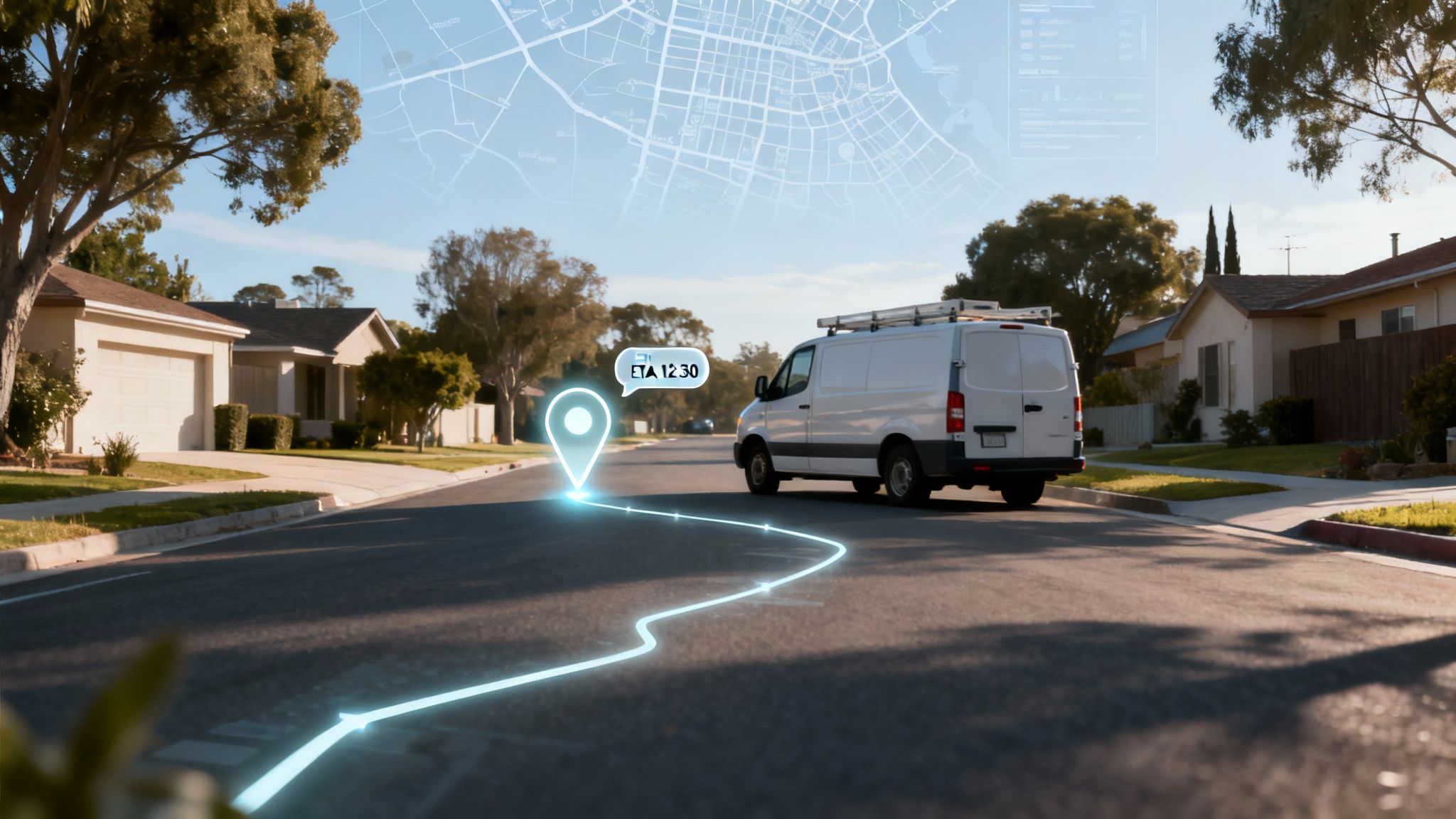
One of the most impactful field service management best practices is the adoption of real-time GPS tracking combined with intelligent route optimization. This involves equipping vehicles and technicians with GPS devices that continuously transmit their location to a central dispatch system. Sophisticated algorithms then analyze this data alongside job locations, traffic patterns, and technician availability to calculate the most efficient routes.
This technology provides dispatchers with a live, bird's-eye view of their entire field operations. Instead of relying on manual check-ins, they can see exactly where every team member is, identify the closest available technician for an emergency call, and provide customers with highly accurate estimated arrival times (ETAs).
Why It’s a Best Practice
Implementing this technology is crucial for organizations that need to minimize response times and maximize resource utilization. For first responders and emergency utility services, optimized routes can mean the difference between a minor incident and a major crisis. For commercial services, it translates directly into fuel savings, reduced vehicle wear, and the ability to complete more jobs per day. Companies like Verizon Connect have used this approach to manage over 15,000 technicians, demonstrating its scalability and effectiveness.
Actionable Insights for Implementation
To get the most out of GPS tracking and routing, focus on these practical steps:
- Establish Geofences: Create virtual boundaries around job sites, supply depots, and restricted areas. Practical Example: An ambulance service sets geofences around hospitals. When a unit enters the geofence, it automatically timestamps the patient drop-off, eliminating manual radio calls and paperwork. Money-Saving Insight: This automation reduces administrative labor costs and improves billing accuracy for private transport services.
- Analyze Historical Data: Use the collected GPS and traffic data to identify inefficiencies in your standard routes. Practical Example: A city's public works department analyzes a year's worth of data to find that a specific bridge consistently causes a 15-minute delay between 8-10 AM. They adjust morning dispatch routes to avoid it. Money-Saving Insight: Avoiding this one bottleneck across 20 vehicles can save hundreds of hours in paid labor and thousands in fuel costs annually.
- Integrate Weather and Traffic Feeds: For emergency response, integrating real-time weather and traffic data is non-negotiable. This allows the system to automatically re-route teams around accidents, road closures, or hazardous conditions, ensuring the fastest and safest path.
- Train for Adoption: Ensure technicians understand the benefits, such as improved safety, fairer job distribution, and reduced administrative tasks. Gaining their buy-in is essential for successful implementation.
By adopting these practices, organizations can achieve measurable outcomes like a 25% reduction in dispatch time, as seen with Sears Home Services, and significant cuts in fuel consumption and operational costs.
2. Mobile-First Field Service Applications
A foundational element of modern field service management best practices is the deployment of comprehensive, mobile-first applications. This strategy empowers technicians with a powerful tool in their pocket, allowing them to access detailed job information, update their status in real time, capture customer signatures, attach photos or videos of their work, and submit reports directly from the job site. This eliminates time-consuming trips back to the office for administrative tasks and creates a seamless flow of information between the field and dispatch.
This shift transforms a technician's mobile device from a simple communication tool into a central hub for all operational activities. Instead of juggling paper forms, making calls for information, and manually entering data at the end of the day, technicians can manage their entire workflow digitally. This increases accuracy, speeds up processes like invoicing, and ensures dispatch has an up-to-the-minute view of job progress.

Why It’s a Best Practice
Adopting a mobile-first approach is essential for any organization aiming to boost field productivity and improve data accuracy. For first responders, it means instant access to critical incident data and the ability to file reports from the scene, saving precious minutes. For commercial businesses like Comcast and countless plumbing companies using Housecall Pro, it translates directly into faster job completion, quicker invoicing cycles, and improved customer satisfaction. This digital transformation reduces administrative overhead, minimizes costly data entry errors, and provides management with real-time operational visibility.
Actionable Insights for Implementation
To maximize the impact of your mobile field service application, focus on these critical steps:
- Prioritize Offline Functionality: Ensure the app works seamlessly without an internet connection and automatically syncs data once a connection is re-established. This is non-negotiable for teams working in remote areas or basements with poor cellular service.
- Design for Field Realities: The user interface should be simple enough for one-handed operation. Practical Example: An HVAC technician working on a roof uses voice-to-text to add notes to a work order, keeping their hands free to safely manage tools. Money-Saving Insight: This feature speeds up documentation by over 50% and reduces the risk of accidents, which can lead to costly workers' compensation claims.
- Gather Technician Feedback Continuously: Before and after rollout, involve your field team in the design and improvement process. They are the end-users and their insights are invaluable for creating a tool that enhances, rather than hinders, their workflow.
- Implement Comprehensive Training: Don’t just hand over the devices. Conduct thorough training sessions that cover all features and demonstrate how the app directly benefits the technicians by reducing their administrative burden and streamlining their day. You can explore a variety of mobile-first field service applications on resgrid.com to see what features are available.
By implementing a well-designed mobile application, organizations can see tangible results, such as a 30% increase in technician productivity and a significant reduction in billing errors, directly impacting the bottom line.
3. Predictive Maintenance and Asset Management
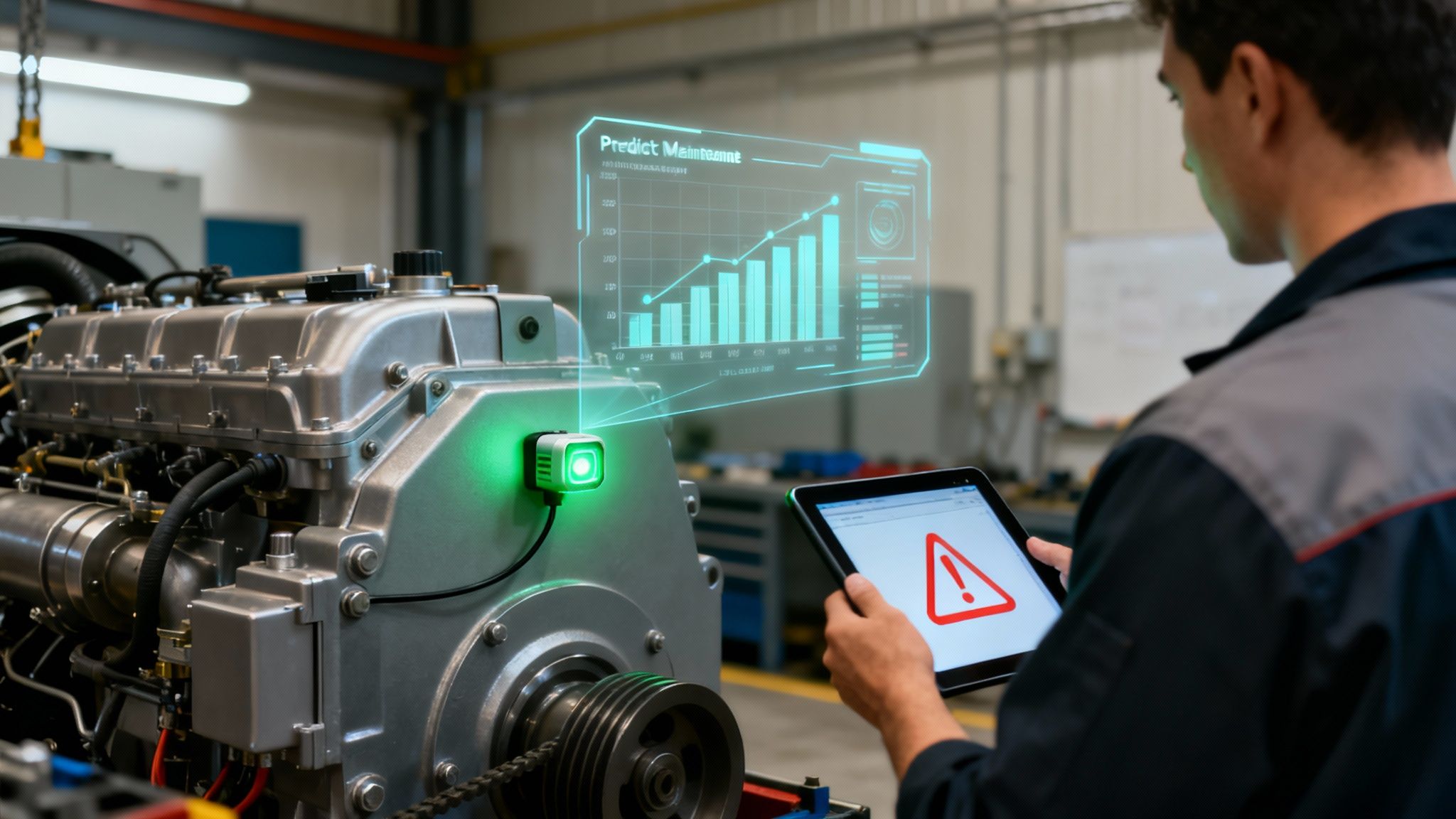
A transformative field service management best practice involves shifting from reactive repairs to proactive, predictive maintenance. This advanced approach uses IoT sensors, historical data analysis, and machine learning to forecast equipment failures before they happen. By monitoring real-time asset performance data, organizations can schedule maintenance precisely when needed, rather than waiting for a costly breakdown.
This strategy empowers field service teams to address potential issues during planned service visits, armed with the right parts and information. It minimizes unexpected downtime for critical infrastructure, such as power grids or public transit systems, and extends the operational life of valuable assets, directly impacting the bottom line.
Why It’s a Best Practice
Predictive maintenance is essential for organizations where equipment uptime is non-negotiable. For emergency services, this could mean ensuring a fleet of ambulances or fire trucks is always mechanically sound. For utilities, it prevents widespread service outages by identifying failing transformers or pumps ahead of time. Companies like Rolls-Royce use this model to service aircraft engines, and elevator company Otis optimizes its maintenance schedules globally, proving its effectiveness in mission-critical environments. This proactive model can reduce unplanned maintenance by over 35%, a significant saving in both cost and operational disruption.
Actionable Insights for Implementation
To successfully integrate predictive maintenance, focus on a data-driven, phased approach:
- Start with Critical Assets: Don't attempt an enterprise-wide rollout at once. Begin by deploying IoT sensors on your most critical or failure-prone equipment to demonstrate ROI and refine your process.
- Establish Data Quality Standards: Before building predictive models, ensure the data from sensors, work orders, and technician reports is clean, consistent, and accurate. Poor data quality will lead to unreliable predictions.
- Combine Sensor Data with Technician Feedback: Your most valuable asset is your experienced technicians. Practical Example: An IoT sensor on a city water pump flags a minor vibration anomaly. An experienced technician reviews the alert and, recalling a similar past event, correctly identifies it as an early sign of bearing failure, not a sensor glitch. Money-Saving Insight: This human-in-the-loop approach prevents a catastrophic pump failure, which would cost tens of thousands in emergency repairs and cause a service outage, versus a few hundred for a planned bearing replacement.
- Create Actionable Alerts: Configure the system to send specific, actionable alerts to dispatchers and technicians. For example, an alert should say "Compressor on Unit 123 is vibrating at a critical frequency; schedule replacement within 7 days" instead of just "High vibration detected."
By implementing these strategies, organizations can turn maintenance from a cost center into a strategic advantage, ensuring reliability and maximizing asset value.
4. Dynamic Scheduling and Automated Dispatch
Moving beyond manual assignments, dynamic scheduling and automated dispatch represent a significant leap forward in field service management best practices. This approach uses intelligent software to automatically assign jobs to the best-suited technician based on a complex set of variables, including skills, certifications, location, availability, and existing workload. The system considers all factors in real time to make optimal decisions, replacing the often-biased and time-consuming process of manual dispatch.
This automation ensures that the right person is sent to the right job at the right time, every time. For instance, a complex hazardous material incident would be automatically assigned to a certified HAZMAT specialist who is nearby and available, rather than a general first responder who happens to be closer but lacks the necessary training. This increases first-time fix rates and enhances safety and compliance.
Why It’s a Best Practice
Automated dispatch is crucial for eliminating human error and maximizing operational efficiency. It directly impacts an organization's bottom line by increasing the number of jobs a technician can complete per day and improving customer satisfaction through faster, more competent service. Companies like Verizon have demonstrated the power of this approach by reducing their dispatch time by 40%, allowing them to respond more quickly to network outages. Similarly, HVAC companies have used this technology to increase jobs per technician by 20%, significantly boosting revenue without increasing headcount.
Actionable Insights for Implementation
To successfully implement dynamic scheduling and automated dispatch, focus on these critical steps:
- Build Accurate Technician Profiles: Meticulously document each team member's skills, certifications, and proficiency levels. An automated system is only as good as the data it has to work with.
- Establish Business Rules and SLAs: Define your service level agreements (SLAs) and business priorities within the system. Practical Example: An internet service provider sets a rule that any business customer outage is a "P1" priority. The system will automatically pause a lower-priority residential install to dispatch the nearest qualified technician to the business outage. Money-Saving Insight: This prevents SLA penalty fees (which can be thousands of dollars per incident) and protects high-value customer relationships, avoiding churn.
- Allow for Manual Overrides: No system is perfect. Empower dispatchers to manually override automated assignments for unique edge cases, emergencies, or specific customer requests, ensuring flexibility.
- Integrate with Technician Feedback: Combine automated scheduling with technician input. Allowing technicians to confirm availability or provide status updates directly within the system creates a more accurate and responsive dispatch environment. Learn more about the components of a comprehensive dispatch system on resgrid.com.
By adopting these practices, organizations can ensure equitable work distribution, reduce fuel costs through smarter routing, and dramatically improve their first-call resolution rates.
5. Customer Communication and Transparency
A cornerstone of modern field service management best practices is establishing proactive and transparent communication with the customer or citizen you are serving. This goes beyond a simple booking confirmation; it involves a continuous flow of information, including real-time status updates, technician arrival notifications, and diligent post-service follow-ups. The goal is to manage expectations, build trust, and empower the end-user with knowledge.
This proactive approach transforms the service experience from a passive waiting game into an interactive and reassuring process. When a customer receives a text with their technician's photo and exact ETA, or a citizen is notified that a public works crew is 15 minutes away from addressing a reported issue, it drastically reduces inbound calls to dispatch centers and improves overall satisfaction.
Why It’s a Best Practice
Transparent communication is crucial for building trust and reducing operational friction. For public safety and utility services, keeping citizens informed during an outage or non-emergency response can prevent anxiety and misinformation. For commercial services, it directly impacts the bottom line by minimizing missed appointments and costly "no-access" situations, where a technician arrives to an empty site. Companies like Comcast have implemented customer portals that provide real-time tracking, similar to popular delivery services, which has significantly improved their customer satisfaction scores.
Actionable Insights for Implementation
To implement a robust communication strategy, focus on automation and personalization:
- Automate Key Touchpoints: Set up automated SMS or email alerts for appointment confirmations, 24-hour reminders, and "on-the-way" notifications. Practical Example: A plumbing company's system automatically sends an "On My Way" text with a GPS tracking link when the technician is 30 minutes out. Money-Saving Insight: This simple automation can reduce no-shows by over 20%. Each avoided "no-access" truck roll saves an average of $150-$300 in wasted fuel, labor, and opportunity cost.
- Provide Technician Details: Include the technician's name, photo, and even their vehicle information in the arrival notification. This enhances safety and provides a personal touch, making customers feel more secure.
- Offer a 30-Minute Arrival Window: Instead of a vague 4-hour block, use your GPS tracking data to provide a precise 30-minute arrival window. This level of accuracy respects the customer's time and demonstrates operational efficiency.
- Implement Post-Service Feedback: Immediately after a job is completed, send an automated request for feedback. This shows you value their opinion and provides immediate data for quality control and technician performance reviews. Platforms like Twilio and ServiceTitan offer the tools to build these automated workflows seamlessly.
6. First-Time Fix Rate Optimization
A critical metric for operational efficiency and customer satisfaction is the First-Time Fix Rate (FTFR), which measures the percentage of service calls resolved completely on the first visit. Optimizing this rate is a cornerstone of effective field service management best practices. It requires a holistic approach that integrates comprehensive job information, precise inventory management, and continuous technician training to eliminate costly and frustrating repeat visits.
For organizations like utility services or emergency responders, a high FTFR means restoring critical infrastructure faster and resolving public safety issues without delay. For commercial services, it directly impacts profitability by reducing travel costs, freeing up technician schedules for new revenue-generating jobs, and boosting customer loyalty.
Why It’s a Best Practice
Maximizing your FTFR is fundamental to running a lean and effective field operation. Each return visit represents a failure in the initial process, whether in diagnostics, parts availability, or technician skill. These failures compound costs through additional fuel, labor, and administrative overhead, while simultaneously eroding customer trust. By focusing on resolving issues on the first attempt, organizations can significantly improve resource allocation. For example, some HVAC companies have achieved an FTFR above 85% by ensuring trucks are stocked with parts for the most common failures, a strategy directly informed by data analysis.
Actionable Insights for Implementation
To improve your organization’s FTFR, concentrate on these strategic initiatives:
- Analyze Repeat Visit Patterns: Dive into your service data to identify the root causes of repeat visits. Are they linked to specific equipment types, common misdiagnoses, or particular parts that are often out of stock? Use this analysis to create targeted solutions.
- Empower Technicians with Knowledge: Ensure technicians have mobile access to a comprehensive knowledge base, including equipment service histories, technical schematics, and detailed problem-solving guides for common issues. This prevents guesswork in the field.
- Implement Pre-Call Triage: Train dispatchers or use automated systems to gather detailed symptom information from the customer before dispatch. Practical Example: An appliance repair company uses an online booking form that asks customers to select their appliance model and choose from a list of common problems (e.g., "ice maker not working," "fridge not cooling"). Money-Saving Insight: This data automatically ensures the technician's truck is stocked with the most probable replacement parts (like an ice maker assembly or a specific thermostat), increasing the FTFR and preventing a non-billable second trip just to retrieve a part.
- Align Incentives with FTFR: Track and reward individual technicians and teams for achieving high first-time fix rates. This creates a culture of accountability and encourages thorough, high-quality work on every call.
By systematically addressing the reasons for repeat visits, telecom companies have been able to reduce callbacks by 40%, directly translating to lower operational costs and enhanced service reliability.
7. Technician Training and Certification Programs
A cornerstone of effective field service management is a commitment to structured, ongoing technician training and certification. This involves creating formal programs that ensure every team member possesses up-to-date knowledge, develops specialized skills, and maintains required certifications for equipment and industry regulations. This practice moves beyond basic onboarding to foster a culture of continuous professional development.
By investing in robust training, organizations ensure that technicians are not just qualified but are true experts. This leads to higher first-time fix rates, improved safety compliance, and increased customer confidence. For first responders or utility technicians, proper certification on new equipment can be a matter of public safety, ensuring they can handle critical situations effectively and without error.
Why It’s a Best Practice
This practice is essential for any organization where technical proficiency directly impacts safety, compliance, and customer outcomes. A well-trained technician is less likely to make costly mistakes, require a return visit, or cause an accident. Investing in skills development also boosts employee morale and retention by showing a clear path for career advancement. Leading manufacturers like Lennox and Carrier offer extensive training programs, recognizing that expert technicians are their best brand ambassadors.
Actionable Insights for Implementation
To build an effective training and certification program, consider these practical steps:
- Implement Tiered Certification Levels: Create a structured career path with clear milestones (e.g., Apprentice, Certified Technician, Master Technician). Tie these levels to pay increases and greater responsibilities to incentivize participation and skill acquisition.
- Partner with Equipment Manufacturers: Leverage the expert training offered directly by manufacturers like Bosch or Carrier. This ensures your team is certified on the specific equipment they service, reducing diagnostic time and parts wastage.
- Create Blended Learning Paths: Combine online, self-paced modules for theoretical knowledge with mandatory hands-on workshops for practical skills. Practical Example: A fire department uses an online learning platform for annual HAZMAT refresher courses, followed by a mandatory in-person drill to practice skills. Money-Saving Insight: The online portion reduces the need for costly overtime to cover shifts during classroom training, saving thousands in payroll expenses while maintaining critical readiness.
- Track and Gamify Training: Use your FSM software to track completed training hours and certifications. Introduce a rewards system or a leaderboard to recognize top performers and encourage friendly competition, driving engagement.
By implementing these training-focused field service management best practices, organizations can significantly reduce repeat visits, which cost an average of over $300 per truck roll, while improving service quality and team expertise.
8. Data-Driven Performance Analytics and KPIs
Shifting from reactive management to proactive improvement requires a commitment to data-driven decision-making. This best practice involves implementing comprehensive analytics and tracking key performance indicators (KPIs) to measure every facet of your field service operations. This includes technician utilization, first-time fix rates, job profitability, response times, and customer satisfaction scores.
By systematically collecting and analyzing this data, organizations gain a clear, objective understanding of what is working and where bottlenecks exist. This moves beyond anecdotal evidence and empowers managers to make strategic adjustments based on hard numbers. For emergency services, this means analyzing response times to different incident types; for commercial businesses, it means identifying the most and least profitable service calls.
Why It’s a Best Practice
This practice is fundamental for continuous improvement and maintaining a competitive edge. It allows organizations to pinpoint inefficiencies that drain resources, such as repeat visits or excessive travel time, and identify top-performing technicians or processes that can be replicated across the team. For example, an HVAC company can track first-time fix rates by technician and equipment type to identify training needs or recurring product faults, directly impacting profitability and customer loyalty.
Actionable Insights for Implementation
To effectively leverage analytics and KPIs, integrate these practical steps into your operations:
- Select Strategically Aligned KPIs: Don't track everything. Focus on metrics that directly reflect your core business goals, such as Mean Time to Repair (MTTR) for emergency response or Job Profitability for commercial services.
- Create Visual Dashboards: Use tools like Power BI or Tableau to transform raw data into intuitive, at-a-glance dashboards. This makes it easy for dispatchers and managers to monitor performance in real-time and spot trends quickly.
- Share Metrics with Technicians: Promote accountability and motivation by sharing relevant performance data with your field teams. Practical Example: A manager displays a real-time dashboard in the breakroom showing 'Jobs Completed Per Day' and 'Average Travel Time Per Job' for each team. Money-Saving Insight: This transparency fosters friendly competition and self-correction. If a team sees their travel time is 20% higher than others, they are motivated to adopt more efficient routing, directly cutting fuel and labor costs without top-down pressure.
- Benchmark Against Industry Standards: Compare your performance against industry averages to understand where you stand. This context helps set realistic improvement targets and identifies areas where you are lagging or leading the competition.
- Incorporate Customer Interaction Data: Beyond field operational metrics, understanding customer interactions through advanced call analytics can offer valuable insights into service efficiency and satisfaction, feeding into comprehensive performance analytics.
9. Inventory and Parts Management Optimization
A critical, yet often overlooked, field service management best practice is optimizing inventory and parts management. This involves implementing robust systems to track, manage, and distribute the parts, tools, and materials technicians need to complete jobs. The goal is to ensure the right part is in the right place at the right time, minimizing stockouts and eliminating unnecessary trips back to a warehouse.
Effective inventory management provides a real-time, unified view of all stock, whether it's in a central depot, a regional warehouse, or on a technician's truck. By integrating this system with scheduling and dispatch, organizations can automatically verify part availability before assigning a job, drastically improving the chances of a first-time fix and boosting customer satisfaction.
Why It’s a Best Practice
For any service organization, from HVAC companies to utility providers, a failed first visit due to a missing part is a direct hit to profitability and reputation. It means wasted fuel, lost labor hours, and a frustrated customer. Optimizing inventory management directly addresses this by using historical data and predictive analytics to forecast demand. Companies like ServiceTitan have shown that by managing truck stock effectively, plumbing services can reduce costly stockouts by as much as 50%, saving significant money and time.
Actionable Insights for Implementation
To transform your parts management from a cost center to a strategic advantage, implement these steps:
- Perform ABC Analysis: Categorize your inventory into three groups. 'A' items are high-value, critical parts that require tight control. 'B' items are of moderate importance, and 'C' items are low-cost, high-volume parts. This prioritization focuses your management efforts where they matter most.
- Establish Real-Time Mobile Stock Visibility: Equip technicians with mobile apps that allow them to see and manage their vehicle inventory. This empowers them to check stock levels, transfer parts between vehicles, and order replacements directly from the field, saving administrative time and reducing errors.
- Set Automated Reorder Points: For critical components, configure your system to automatically trigger a purchase order when stock falls below a predetermined threshold. Practical Example: A medical device repair company sets an auto-reorder point for a specific, crucial circuit board. When a technician uses the last one on their truck and logs it in the app, the system automatically adds it to the next bulk purchase order. Money-Saving Insight: This prevents expensive, last-minute expedited shipping fees for critical parts and avoids downtime for essential medical equipment, preserving high-value service contracts.
- Use Historical Data to Forecast Demand: Analyze past consumption data to predict seasonal needs. An HVAC company, for example, can proactively stock up on specific capacitors and refrigerant types before the summer peak, ensuring they can meet demand without delays.
By implementing these inventory management best practices, organizations can achieve a higher first-time fix rate, reduce carrying costs associated with excess stock, and ultimately deliver a faster, more reliable service.
10. Customer Self-Service Portals and Knowledge Bases
Empowering customers with the tools to solve their own problems is a cornerstone of modern field service management best practices. This involves creating customer-facing online portals and comprehensive knowledge bases where they can independently find answers, schedule appointments, track technician ETAs, and manage their accounts without needing to contact a support agent.
This strategy shifts the dynamic from reactive support to proactive empowerment. Instead of tying up dispatcher phone lines with routine inquiries like "Where is my technician?" or "How do I reset my device?", organizations can direct customers to a centralized, 24/7 accessible resource. This frees up critical personnel to focus on high-priority emergencies and complex dispatching tasks.
Why It’s a Best Practice
Implementing self-service options directly reduces operational overhead by deflecting a significant volume of inbound support calls. For utility companies, a customer portal that allows users to report an outage or pay a bill is far more efficient than staffing a call center for these common tasks. Companies like Comcast Xfinity leverage their customer portals to manage millions of accounts, demonstrating immense scalability. The result is a dual benefit: lower support costs for the organization and a more convenient, immediate experience for the customer.
Actionable Insights for Implementation
To build a self-service ecosystem that delivers real value, focus on these key strategies:
- Structure Content Around User Needs: Analyze your most common support tickets and structure your knowledge base to answer these questions first. Use clear categories, FAQs, and a powerful search function.
- Incorporate Video Demonstrations: For complex procedures, like setting up equipment or performing basic troubleshooting, short video tutorials are far more effective than text-based articles. Practical Example: An internet provider creates a 60-second video titled "How to Reboot Your Modem and Router" and makes it the top result in their support portal. Money-Saving Insight: If this video helps 1,000 customers per month solve their own issue, it prevents 1,000 support calls. At an average cost of $10 per support interaction, this single video saves the company $10,000 per month in call center operational costs.
- Provide a Clear Escalation Path: When self-service isn't enough, make it easy for customers to create a service ticket or initiate a live chat directly from the portal. This prevents frustration and keeps the experience seamless. For an example of how a well-structured support hub works, see the Resgrid support page.
- Monitor Usage and Gather Feedback: Use analytics to see which articles are most helpful and where users are struggling. Include a simple "Was this article helpful?" feedback mechanism to continuously improve content quality and relevance.
By adopting these practices, organizations can dramatically reduce call volume, improve first-contact resolution rates, and boost overall customer satisfaction by giving users control over their service experience.
10-Point Field Service Best Practices Comparison
| Solution | Implementation complexity (🔄) | Resource requirements | Expected outcomes (⭐📊⚡) | Ideal use cases |
|---|---|---|---|---|
| Real-Time GPS Tracking and Route Optimization | 🔄 Medium–High — GPS integration, routing engine, legacy connectors | Vehicle GPS devices, routing software, traffic/weather data feeds, training | ⭐ High — 20–30% travel time reduction; ⚡ faster dispatching; 📊 improved ETA accuracy & fuel savings | Fleet-based field service, utilities, emergency response, HVAC |
| Mobile-First Field Service Applications | 🔄 Medium — app development, offline sync, MDM | Rugged smartphones/tablets, mobile app, backend integration, device management | ⭐ Medium–High — faster job completion & billing; ⚡ real-time updates; 📊 improved data accuracy | Technicians working remote or offline, home services, utilities |
| Predictive Maintenance and Asset Management | 🔄 High — sensors, data pipelines, ML model lifecycle | IoT sensors, cloud analytics/ML, data engineers, integration with CMMS | ⭐ Very High — 45–50% downtime reduction; 📊 longer asset life (20–40%); proactive cost avoidance | Critical assets, manufacturing, fleets, large HVAC/elevator portfolios |
| Dynamic Scheduling and Automated Dispatch | 🔄 Medium–High — AI matching, SLA logic, real-time availability | Scheduling/dispatch platform, accurate tech skill/availability data, integrations | ⭐ High — scheduling from hours→minutes; 📊 +15–25% utilization; ⚡ faster assignments | High-call-volume services, telecom/cable, large technician pools |
| Customer Communication and Transparency | 🔄 Low–Medium — workflow setup, opt-in/privacy handling | Messaging platform (SMS/push), templates, customer portal, opt-in management | ⭐ High — reduces no-shows 30–40%; 📊 fewer status calls; ⚡ better customer responsiveness | Consumer appointments, home services, companies needing customer ETAs |
| First-Time Fix Rate Optimization | 🔄 Medium–High — KM, inventory links, training & processes | Knowledge base, parts visibility, inventory integration, training resources | ⭐ High — fewer repeat visits; 📊 higher customer satisfaction & revenue per call | Repair services, HVAC, appliance, telecom where parts & info matter |
| Technician Training and Certification Programs | 🔄 Medium — curriculum design, certification tracking | Training content/platform, instructors, time investment, tracking tools | ⭐ High — improved service quality & compliance; 📊 better retention & safety | Regulated industries, complex equipment service, safety-critical roles |
| Data-Driven Performance Analytics and KPIs | 🔄 Medium–High — data ingestion, dashboarding, governance | BI tools, data engineers/analysts, integrated data sources, dashboards | ⭐ High — identifies inefficiencies quickly; 📊 supports evidence-based decisions | Scaling operations, continuous improvement programs, executive reporting |
| Inventory and Parts Management Optimization | 🔄 Medium — tracking systems, supplier integrations, forecasting | Inventory/ERP system, barcode/QR scanners, forecasting algorithms, supplier links | ⭐ High — reduces stockouts & carrying costs; 📊 improves first-time fixes | Field services with frequent parts usage (plumbing, HVAC, appliances) |
| Customer Self-Service Portals and Knowledge Bases | 🔄 Medium — content creation, UX, search & integration | Portal/KM platform, content team, chatbot/search tools, analytics | ⭐ Medium–High — cuts support costs ~30–40%; 📊 24/7 access & fewer support tickets | Consumer-facing services, SaaS, companies aiming to reduce contact volume |
From Theory to Action: Implementing Your New Field Service Strategy
Navigating the landscape of modern field service operations requires more than just good intentions; it demands a strategic, data-informed approach. Throughout this guide, we've explored ten critical field service management best practices, from leveraging real-time GPS tracking for unparalleled route efficiency to implementing mobile-first applications that empower your personnel on the ground. We have seen how dynamic scheduling can slash response times and how focusing on first-time fix rates directly translates into significant cost savings and heightened public trust.
The common thread connecting these strategies is a commitment to proactive, rather than reactive, management. By adopting these principles, your organization moves beyond simply responding to incidents and begins to anticipate needs, optimize resources, and systematically eliminate operational friction. This transformation is not an overnight switch but a continuous journey of improvement, driven by the powerful insights locked within your operational data.
Your Path to Implementation: A Phased Approach
The sheer number of improvements available can seem daunting, but the key is to start small and build momentum. Adopting a comprehensive framework of field service management best practices is most successful when executed in deliberate, strategic phases.
1. Identify Your Biggest Bottleneck:
Begin by conducting a frank assessment of your current operations. Where do you lose the most time, money, or community trust?
- Is it response time? Prioritize implementing real-time GPS tracking and automated dispatching. Shaving even a minute off each response can save thousands in fuel and labor costs over a year, while also improving outcomes in critical situations.
- Are repeat visits draining your budget? Focus on optimizing your first-time fix rate through better technician training, mobile access to information, and streamlined inventory management. Eliminating just one unnecessary truck roll per technician per week can result in massive savings.
- Is communication fractured? Implement a unified, mobile-first communication platform to ensure dispatchers, field personnel, and command staff are always in sync.
2. Secure an Early Win:
By targeting your most significant pain point first, you can demonstrate tangible value quickly. This early success is crucial for building buy-in from your team and securing the resources needed for further initiatives. For example, showing a 15% reduction in fuel consumption after implementing route optimization provides a powerful, data-backed case for continued investment.
3. Involve Your Team:
Your field personnel and dispatchers are the experts on your day-to-day reality. Involve them in the selection and rollout of new technologies and processes. Their feedback is not just helpful; it is essential for ensuring new tools are practical, adopted enthusiastically, and configured to solve real-world problems.
The True Value of Excellence in Field Service Management
Mastering these concepts is about more than just operational efficiency. For first responders, public safety agencies, and security firms, it is about enhancing the safety and well-being of both your personnel and the communities you serve. Faster response times, better-informed technicians, and seamless communication can literally be the difference in a life-or-death scenario.
By embracing these field service management best practices, you are not just optimizing workflows; you are building a more resilient, reliable, and respected organization. You are creating an environment where your team can perform at its peak, supported by technology that removes obstacles instead of creating them. The end result is a leaner, more effective operation that delivers superior service, maximizes every dollar of its budget, and ultimately, fulfills its mission with unparalleled excellence.
Ready to put these best practices into action with a single, unified platform? Resgrid, LLC provides a comprehensive dispatch, communication, and management system designed for the unique needs of first responders and field service organizations. See how you can streamline your operations and improve response times by exploring our solutions at Resgrid, LLC.