
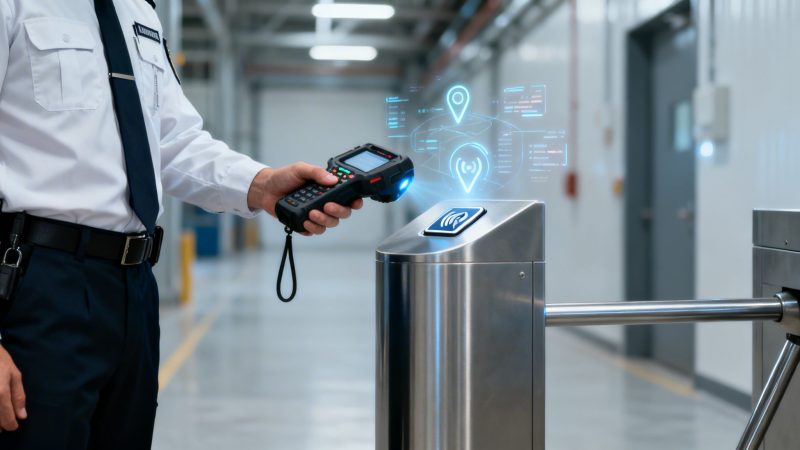
Maximize Security & ROI: Top Guard Tour Systems for 2026
A guard tour system is your answer to a fundamental question: are my security patrols actually getting done, and are they being done right? It's a digital solution that swaps out flimsy paper logs for a concrete, tamper-proof record of a guard's route and actions, all tracked with tools like GPS, NFC tags, and simple mobile apps. This isn't just about checking boxes; it's a critical layer for accountability, officer safety, and running a tight operation.
What Are Guard Tour Systems and Why Do They Matter
For years, securing a large property often came down to just hoping your guards were making their rounds. The whole system was built on trust and paper logs that were incredibly easy to fake. Modern guard tour systems completely change that game, replacing hope with hard data.
Think of it as a digital breadcrumb trail. Every time a guard taps a checkpoint, you get a verifiable record of who was there and when. It’s no longer a manual, trust-based task. Instead, you have a data-driven operation that gives you real certainty about what's happening on the ground, protecting both your assets and your people far more effectively.
From Manual Logs to Real-Time Certainty
The old way of tracking patrols was a headache. You had clipboards, handwritten logs, and the "detex" key system, which was little more than a mechanical clock puncher. It was a step up from nothing, but it was clunky, easy to manipulate, and offered zero real-time information.
To give you a better idea of how far we've come, here’s a quick look at the evolution of patrol tracking:
Evolution of Guard Tour Technology
| Era | Technology Used | Key Limitation | Primary Benefit |
|---|---|---|---|
| Traditional | Pen, Paper, Clipboards | Easily falsified; No real-time data | Extremely low cost |
| Mechanical | "Detex" Clocks & Keys | Data only available after patrol | Provided a basic timestamped record |
| Early Digital | Handheld "Wands" & Barcodes | Required manual data download | Digital, tamper-resistant data |
| Modern | Smartphones, NFC/QR, GPS | Requires connectivity/battery | Real-time tracking, incident reporting |
Today's systems are a world away from those clunky origins. With a modern guard tour platform, you get a live feed of patrol progress, instant alerts for missed checkpoints, and rich data that proves compliance without anyone having to haul a device back to the office for a data dump.
The Real-World Impact on Accountability and Safety
At its core, a guard tour system is all about accountability. When a guard scans a checkpoint tag on a remote fence line or a fire exit, a time-stamped, location-verified record is created instantly. That simple action eliminates "ghost patrols" and ensures you're getting the service you’re paying for.
Actionable Money-Saving Insight: By eliminating "ghost patrols" where guards might skip rounds, you stop paying for incomplete work. For a facility paying $2,000/week for patrols, even a 10% rate of skipped rounds amounts to over $10,000 in wasted spending per year. A guard tour system provides undeniable proof of service, ensuring you only pay for patrols that are actually completed.
But it goes way beyond just making sure patrols happen. These systems are a lifeline for officer safety. A lone worker can hit a panic button on their device to send an immediate alert, or they can report a hazard like a broken lock or a suspicious vehicle in real time. Managing a team of officers in the field is a complex job, and understanding the broader principles of mobile workforce management solutions offers great insight into how technology can streamline these kinds of operations.
Why Demand for Patrol Efficiency Is Skyrocketing
The push for verifiable security is driving huge growth. The global guard tour systems market, valued at USD 3.493 billion in 2025, is on track to hit USD 8.856 billion by 2035. This isn't just about feeling more secure; it’s about a real need for efficiency. We're also seeing innovations like AI analytics being adopted by security firms and first responders, with some studies showing these systems can slash response times by up to 30%.
This shift toward data-driven security brings very real cost savings. A single manager can oversee multiple sites from a dashboard, cutting down on supervision overhead. Patrol routes can be optimized based on historical data, which reduces fuel costs and wasted time. After all, knowing the real-time status of your team is everything. Having a solid system for managing your personnel availability and assignments is a cornerstone of any effective security or response operation.
Understanding the Core Components
When you really break it down, a modern guard tour system is a partnership. You’ve got the physical tools out in the field and the smart software back at the command center. Each part has its own job, but it's how they work together that turns a simple patrol into a goldmine of operational data.
Think of it like this: the hardware is your officer on the ground, making the rounds and seeing what's what. The software is the dispatch center, tracking their progress, logging their reports, and flagging anything that needs immediate attention.
The Hardware Deployed in the Field
The hardware bits are the physical items your people interact with on their patrols. These are the "boots on the ground" tools that prove someone was where they were supposed to be, when they were supposed to be there. They have to be tough, reliable, and dead simple to use.
The main pieces of hardware include:
- Checkpoints (NFC Tags or QR Codes): These are small, unassuming tags you place at critical locations—think a server room door, a fire exit, or a spot on a perimeter fence. When a guard scans one, it creates an undeniable record of their presence at that exact point.
- Scanning Devices: Gone are the days of expensive, proprietary "wands." Most modern guard tour systems run on standard smartphones. This is a huge win for budgets, as you're not locked into single-purpose hardware, and your team gets to use a device they already know how to operate.
- GPS Tracking: The phone's built-in GPS adds another layer of verification. It logs the device's location when a checkpoint is scanned, which helps prevent someone from trying to scan a tag from their car across the parking lot. It also creates a "breadcrumb trail" of the entire patrol route.
Of course, this hardware operates within a larger physical security setup. Things like dedicated Guardian Booths are a key part of the landscape, giving guards a secure base of operations for themselves and their equipment.
The Software That Drives the Operation
While the hardware is out there collecting data points, it's the software that turns all that raw data into something you can actually use. It’s the brains of the whole operation, organizing everything and showing managers what’s happening right now.
You're mainly dealing with two software elements:
- The Mobile App: This is the guard's interface. It’s what they use to scan the checkpoints, but it's also where they can file incident reports, complete with photos and notes. For example, a guard can scan a fire extinguisher tag, tap a button in the app to report it "Needs Service," and snap a photo of the low-pressure gauge to send with the report.
- The Command Dashboard: This is the web-based hub for supervisors and managers. It gives you a live, bird's-eye view of all patrol activity, even across multiple sites. You can track patrol progress, read incident reports as they come in, and get instant alerts for big problems like a missed checkpoint or a panic button activation.
This flowchart really lays out the benefits you get when the hardware and software are working in sync.

As you can see, it's a direct line from the system's features to better accountability, safer officers, and real data you can use to make smarter decisions.
On-Premise vs. Cloud Solutions: A Key Financial Decision
When you're looking at systems, you’ll hit a big fork in the road: on-premise versus a cloud-based (SaaS) model. This choice really impacts your bottom line. An on-premise system means you have to buy and maintain your own servers. That’s a big chunk of cash upfront, not to mention the ongoing IT headaches.
Actionable Money-Saving Insight: A cloud-based (SaaS) guard tour system turns a massive capital expense into a predictable operational cost. Instead of a $15,000+ upfront investment in servers and software licensing, a SaaS model might cost a few hundred dollars per month. This frees up your capital and eliminates surprise maintenance bills, making budgeting far more predictable and ROI easier to calculate. You only pay for what you use, which makes it way more flexible and easier on the budget.
Frankly, for most organizations today, the SaaS model is the clear winner. It turns a massive capital expense into a predictable operational cost, it frees up your IT team to work on other things, and you're always on the latest version of the software without having to lift a finger.
What's the Real-World Payoff? Savings and Key Benefits
The hardware and software are cool, but let's be honest, the real value of a guard tour system is how it affects your budget and your day-to-day operations. This is where the rubber meets the road, turning theoretical features into real money saved and actual risks avoided. The payoff isn't just about tracking; it creates a cascade of savings that touches almost every part of your security program.

Think about it this way: better accountability isn't just a nice-to-have. It’s a direct fix for "ghost patrols," where guards might skip rounds or cut corners. By making sure every single checkpoint gets scanned, you stop paying for work that was never done. That cost alone can quietly bleed thousands from your budget over time.
From Catching Problems Early to Saving on Insurance
The financial logic behind guard tour systems really clicks when you look at how incidents are handled. An old-school paper and pen system is totally reactive. You find out about a problem hours, maybe even days, after the fact—long after the damage is done. A modern system flips that script, giving your team the power to get ahead of issues before they blow up.
Practical Example: Stopping a Flood and Saving Thousands
A guard on a late-night patrol finds a water leak in a basement utility room. Instead of a garbled radio call, they pull out their phone, create an incident report on the spot, and attach a photo of the leak with its exact GPS location. The facility manager gets an instant alert and calls an emergency plumber. That simple action just prevented tens of thousands of dollars in water damage and avoided a major operational shutdown. This is a direct, measurable ROI.
This kind of immediate reporting completely changes the game. It transforms your security officers from just guards into your first line of defense against all kinds of operational headaches, not just theft or trespassing. Those detailed, time-stamped, and tamper-proof logs also hit your bottom line in another big way: insurance.
Actionable Money-Saving Insight: Contact your insurance provider and ask about discounts for implementing a verifiable guard tour system. Many carriers offer reduced liability premiums—potentially saving you 5-20% annually—because the digital records prove due diligence and proactive risk management, lowering your overall risk profile.
A Quick Case Study in Efficiency
Just optimizing patrol routes is another area where these systems deliver big savings. By looking at the patrol data over weeks and months, managers can spot wasted time, inefficient paths, and redundant checks. This ensures guards are covering the most critical ground without burning through time and fuel.
Take a regional logistics company that rolled out a guard tour system across its three warehouse facilities. Before the system, their patrol routes were all over the place, leading to sky-high fuel bills for their patrol trucks and a ton of overtime.
- The Problem: The company was getting hammered by rising fuel costs and unpredictable overtime, which was eating away at their profits.
- The Fix: They put in a guard tour system with GPS tracking and checkpoint data to see what was actually happening. The software helped them design smarter routes that hit every critical access point, loading dock, and fence line in the most efficient order.
- The Outcome: Within six months, the company saw a 15% reduction in fuel costs for its vehicles. Even better, the smarter routes cut the need for overtime, slashing those labor costs by almost 20% and giving their bottom line a direct boost.
Getting an Edge With Data
In the security world, guard tour systems are turning what used to be a manual chore into a data-driven operation that cuts labor costs and makes surveillance far more effective. As things like automated robotic patrols become more common, their ability to work without fatigue-related errors and spot things faster is setting a new bar. Some studies show up to a 40% improvement in incident detection speeds in certain environments. For anyone running a mission-critical operation, that’s not just an improvement; it’s a source of massive cost savings. You can find more on this trend and its impact by looking into the security market and its cost-saving measures.
At the end of the day, all the benefits of a guard tour system build on each other. Better accountability drives better performance, which prevents expensive incidents. Good data helps you optimize routes, which cuts fuel and labor costs. And all of that documented activity can lead to cheaper insurance. It’s a cycle of continuous improvement, both for your operations and your budget.
How to Choose the Right Guard Tour System
Picking the right guard tour system isn't just about buying software; it's a big decision that locks you into a path for years to come. With a ton of options out there, it’s easy to get overwhelmed. The goal here is to help you cut through the noise and find a platform that actually fits your operation and your budget.
A mistake we see all the time is getting fixated on the upfront price. A cheap system can turn into a money pit real fast with hidden fees, unreliable tech, and lost productivity from frustrated guards. You're looking for genuine value, not just the lowest number on a quote.
The True Cost of a Guard Tour System
The single most important thing to wrap your head around is the Total Cost of Ownership (TCO). The sticker price is just where the story begins. A system that looks like a great deal today can become a real financial headache if you don't dig a little deeper.
To get the full picture, you need to pin vendors down on these points:
- Subscription & Licensing: How do they charge? Is it per user, per site, or per device? You need to know how the costs will change as your team grows or your needs evolve.
- Hardware: A lot of modern systems run on standard smartphones, which is great. But some still require you to buy their proprietary wands or devices. You have to factor in not just the initial purchase but also the cost of replacing them when they inevitably get dropped, soaked, or broken in the field.
- Support & Maintenance: Is 24/7 support included, or is that an extra line item on the invoice? What about software updates and getting your team trained? These "little" costs add up.
- Implementation: Are you on the hook for a one-time setup fee? A system that needs a ton of IT help or weeks of training isn't just a hassle—it has a high hidden cost.
Looking at these factors shifts the conversation from a simple price-off to a real value analysis. It's the only way to make sure you don't get hit with surprise bills six months down the road.
Don't Buy Features, Buy a Solution for Your Environment
The market is packed with a huge range of tech, from simple QR code scanners to advanced platforms with AI and real-time GPS. To get the best return, you have to match the technology to the reality of your patrol environment. It’s not about having the most features; it’s about having the right ones.
For instance, we've seen organizations in public transport and real estate management boost their efficiency by 25-35% just by implementing systems with a smart mix of RFID and GPS checkpoints. To get a better sense of where the industry is heading, you can explore detailed market analysis on guard tour systems.
Actionable Insight: Always, always, always insist on a live demo that mirrors your actual work. Don't let them show you a polished video. Practical example: make them walk you through a real-world scenario, like a guard trying to report an incident from a concrete parking garage with spotty cell service. This is where you see if a system really works, potentially saving you from investing thousands in a solution that fails in your specific environment.
Usability and Durability Will Make or Break Your Investment
Here’s a hard truth: the most advanced system on the planet is completely useless if your team finds it too complicated or annoying to use. Usability is everything, both for the guards walking their routes and for the supervisors back in the office.
Before you commit, ask these simple questions:
- Is the mobile app actually easy to use? A guard should be able to scan a checkpoint, file a quick report, and snap a photo without fumbling through menus. If it’s not intuitive, they just won’t use it consistently.
- Is the management dashboard clear? A supervisor needs to see patrol status, get alerts, and pull reports without needing a PhD in computer science. The data should be at their fingertips.
- How tough is the hardware? If you're opting for dedicated devices, find out if they are rated for drops, water, and extreme temperatures. When hardware fails in the field, your entire operation grinds to a halt.
Your Guard Tour System Selection Checklist
To help you put all this together, we've created a straightforward checklist. Use this table to organize your thoughts and compare different vendors on the things that truly matter for your long-term success and ROI.
| Evaluation Criteria | Key Questions to Ask | Why It Matters for ROI |
|---|---|---|
| Total Cost of Ownership | What are the all-in costs for subscriptions, hardware, support, and implementation? How does pricing scale? | Prevents surprise expenses and ensures the system remains affordable as your organization grows. A low TCO directly improves your financial return. |
| Technology & Features | Does the technology (e.g., GPS, RFID, NFC) match our patrol environments? Are the features solving our specific problems, or are they just bells and whistles? | The right tech improves efficiency and data accuracy. Paying for features you don't need is a waste of money and kills ROI. |
| Software Usability | How many taps does it take to file a report? Can a new guard be trained in under 30 minutes? Is the management dashboard intuitive? | High usability drives user adoption. If your team uses the system consistently, you get the data you need to prove compliance, improve security, and justify the investment. |
| Hardware Durability | Are the devices ruggedized (IP-rated, drop-tested)? What is the warranty and replacement process like for broken hardware? | Durable hardware minimizes downtime and replacement costs. Every hour a device is out of commission is an hour you're not getting value from your system. |
| Integration Capability | Can the system's API connect with our other tools, like dispatch or incident management software? Is the integration well-documented and supported? | Integration multiplies the value of your data. Connecting your guard tour system to other platforms creates a more unified, efficient, and responsive security operation. |
| Vendor Support & Roadmap | What are the support hours and response times? Is training included? What new features is the vendor planning to release in the next 6-12 months? | Good support keeps your operation running smoothly. A forward-looking vendor ensures your system won't become obsolete, protecting your investment for the long term. |
The best way to get honest answers is to run a small pilot program. Before you sign a big, multi-year contract, buy a few licenses and test the system at one or two of your sites for a month. It’s a small investment that can save you from a massive, expensive mistake.
As you weigh your options, it's also smart to compare various dispatch and management platforms to see how different solutions stack up on key features, pricing, and overall capability. Finding the right fit is about more than just a guard tour—it's about building a more effective and accountable operation.
Integrating Systems for Maximum Operational Efficiency
A standalone guard tour system is a huge step up, but its real magic is unlocked when you start connecting it with your other operational platforms. When you integrate your systems, you create a single, unified command center where data flows on its own. This kills off dangerous information silos and can slash your response times.
This isn't just about some slick tech upgrade; it's a fundamental change in how your security and response teams get work done.

Think of it like a relay race. Without integration, each runner—or department—has to stop, search for the next person, and physically hand off the baton. It's clumsy and slow. With integration, that handoff is instant and perfect, keeping the momentum going. This is where you find serious operational advantages and cost savings.
From Detection to Dispatch in Seconds
Let’s walk through a real-world scenario that shows you where the money is saved. Imagine a guard patrolling a massive logistics warehouse late at night. They stumble upon a broken perimeter fence and see signs of a break-in.
Without Integration: The guard radios their supervisor, who might be off-site or juggling multiple locations. The supervisor then has to manually call or dispatch another unit for backup, passing on second-hand information. The whole process is slow and full of opportunities for miscommunication. Every wasted minute jacks up the risk of major theft or damage.
With Integration (Practical Example): The guard just pulls out their phone, opens the guard tour system app, and logs a "High-Priority Security Breach" incident. They snap a photo of the fence and attach it. Because the guard tour system is connected to a dispatch platform like Resgrid, the report automatically triggers a critical alert.
Actionable Money-Saving Insight: The dispatch platform instantly pulls GPS data, finds the closest available patrol unit, and pings them with all the details—the location, the incident type, and the photo. The entire chain of events, from the guard spotting the issue to backup being dispatched, takes less than 30 seconds. That kind of speed is what stops a minor incident from becoming a catastrophic loss, saving potentially hundreds of thousands in stolen goods and damages.
This automated workflow completely cuts out the manual middlemen. It shrinks response times down to almost nothing and guarantees the right people get the right information, right now. The cost savings are obvious: a faster response means preventing theft, minimizing damage, and avoiding the chaos that always follows a security breach.
Unifying Your Security and Response Ecosystem
The value of hooking your systems together goes way beyond just that one scenario. By connecting your guard tour system to your other key platforms, you're essentially building a central nervous system for your entire operation. It lets you create some pretty sophisticated automated processes that make your team ridiculously efficient.
For example, you could set up connections to:
Automate Work Orders: A guard reports a leaking pipe or a busted security light during their tour. The integration can instantly create a maintenance ticket in your facility management software and assign it to the right team—no phone calls needed. This proactive work stops small problems from turning into expensive emergencies.
Enhance Access Control: You can link your guard tour system with your access control logs. If the system flags an unauthorized access attempt at a high-security door, it can automatically create a task for the nearest guard to investigate that specific spot on their next patrol.
Streamline Payroll and Billing: Patrol data—start times, end times, completed routes—can be fed directly into your accounting software. This kills manual data entry, ensures your guards are paid accurately, and gives your clients undeniable proof-of-service for billing. You can take a closer look at how automated workflows streamline operations to see how this can work across your entire organization.
At the end of the day, integrating your guard tour systems is about making your data actually work for you. It morphs the system from a simple accountability tool into the engine that drives a smarter, faster, and more cost-effective security operation.
Answering Your Most Common Questions
When you're looking at a new patrol solution, a few big questions always come up. It's the practical stuff—cost, security, setup—that decides if a new piece of tech will actually help or just become another headache.
Let's get right into it and give you the straightforward answers you're looking for.
How Much Does a Guard Tour System Actually Cost?
This is usually the first question out of the gate. The answer is, "it depends," but it's almost definitely cheaper than you think, especially when you look at the whole picture. The price isn't just one number; it's a mix of the software model, what hardware you need, and how big your operation is.
You'll run into two main pricing models:
- Perpetual License: This is the old-school way. You pay a big, one-time fee to "own" the software. The catch is you also have to host it on your own servers, which means you're on the hook for hardware costs, maintenance, IT staff, and any future upgrades. This model is getting rare for a reason—the upfront cost is high and the hidden costs keep coming.
- Software-as-a-Service (SaaS): This is the modern, subscription-based approach. You pay a predictable monthly or yearly fee, usually based on how many guards or sites you have. That fee covers everything: hosting, support, and all the software updates. No surprises.
Actionable Money-Saving Insight: For just about everyone, the SaaS model gives you a much lower Total Cost of Ownership (TCO). A perpetual license could set you back $20,000+ upfront for the software and servers. A SaaS plan for a team of 10 guards? That might only be a few hundred dollars a month, with zero server costs.
Practical Example: A security company with 20 guards at five properties could be staring at a $30,000 bill for a perpetual license and server. With a SaaS system, their cost might be closer to $500 per month. That frees up tens of thousands in cash that can go right back into the business for better training, new vehicles, or just growing the company.
Can Guards Cheat or Bypass the System?
This is a totally fair question, especially if you've ever dealt with paper logs that were easy to pencil-whip. The short answer is that with a modern system, cheating is incredibly difficult, if not flat-out impossible. These platforms are built from the ground up with verification in mind to stop fraud and give managers some peace of mind.
Here’s how they create a record you can actually trust:
- Unique Checkpoint Scans: Guards have to physically be there to scan an NFC tag or QR code. These tags aren't something you can just photocopy, and the system knows the unique ID of the exact tag that was scanned.
- GPS Verification: When a checkpoint gets scanned, the system grabs the device's GPS coordinates at the same time. If a guard tries to scan a tag from 50 feet away in their car, the GPS data will instantly show that something's off.
- Live Alerts for Missed Checkpoints: You don't have to wait until morning to find out a patrol was missed. The system can send an immediate alert if a checkpoint is skipped or a tour is late, so you can deal with it right then and there.
Practical Example: A supervisor gets an alert: "Checkpoint 3 – West Perimeter" was missed on the 2:00 AM tour. They pull up the live map and see the guard's GPS pin is sitting at the main gate. A quick call confirms the guard got tied up with an unexpected vehicle entry. The system gave them the real-time data to know what was happening, not just find a gap in the report the next day. This insight prevents false accusations and builds trust, while still ensuring accountability.
How Difficult Are Implementation and Training?
The idea of rolling out new tech can bring on a headache. You start picturing complicated installs and weeks of training that disrupt everything. But modern, cloud-based guard tour systems are built for speed and simplicity. The days of needing a whole IT department to get something running are over.
Getting set up is usually as simple as this:
- Set Up Your Account: The provider gets your online dashboard ready.
- Place Checkpoints: You stick the small NFC or QR code tags where you need them.
- Download the App: Guards download the mobile app on their smartphones.
Training is just as easy. Because most systems run on the smartphones everyone already knows how to use, the learning curve is basically flat. A typical training session just covers the basics: logging in, scanning a tag, and maybe filling out an incident report. Most guards get it in under an hour.
Actionable Money-Saving Insight: Go with a system that runs on standard smartphones. This completely gets rid of the cost of proprietary hardware wands (which can be $500-$1,000+ a pop) and slashes training time. For a 20-person team, this could represent an immediate hardware saving of $10,000-$20,000 and cut training-related labor costs by over 80%.
Resgrid provides a comprehensive and cost-effective dispatch platform that integrates seamlessly with your security operations, ensuring you can manage personnel, track activity, and respond to incidents with maximum efficiency. Learn more at resgrid.com.