
A Guide to Mobile Workforce Management Solutions
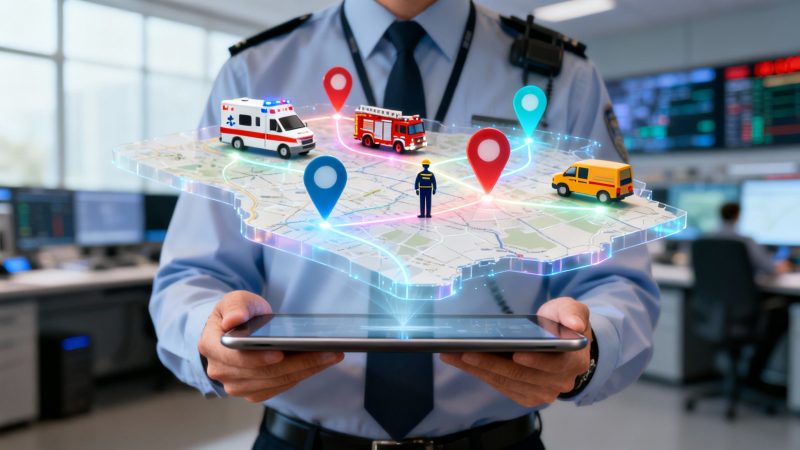
Mobile workforce management platforms are the digital answer to a very old problem: getting the right people to the right place at the right time, without all the chaos of manual coordination. They essentially replace the frantic phone calls, radio chatter, and scribbled notes with a single, unified command center that combines dispatching, tracking, and communication.
Understanding Mobile Workforce Management
Think about trying to run a city's emergency response during a hurricane using just paper maps and a phone tree. It sounds insane, right? It's slow, prone to errors, and downright dangerous. Mobile Workforce Management (MWM) takes that outdated mess and turns it into a streamlined digital operation.
The best analogy is an air traffic control system, but for your teams in the field. Instead of planes, you’re managing people, vehicles, and critical resources from a single screen. These platforms bring order to the inherent complexity of managing a distributed team, which is absolutely vital in sectors where every second is critical.
From Chaos to Coordinated Control
The jump from manual methods to a dedicated MWM platform is a huge one. For years, organizations have relied on a patchwork of disconnected tools—spreadsheets, group texts, and radio calls—that too often lead to miscommunication, wasted time, and costly mistakes. MWM systems cut through that noise by creating a single source of truth for the entire operation.
Practical Example: A volunteer fire department can see in an instant who is responding to a call, what their qualifications are, and their live ETA. This lets the incident commander know if they have enough personnel or if they need to request mutual aid immediately.
Actionable Money-Saving Insight: This real-time visibility prevents over-dispatching. Instead of calling in extra personnel "just in case," you can make a data-driven decision. Avoiding just one unnecessary call-out per incident can save thousands of dollars in stipend or overtime costs annually. For a deeper dive, this GPS fleet management guide is a great resource.
This need for operational clarity is what’s fueling the industry’s explosive growth. The global mobile workforce management market was pegged at around USD 7.2 billion in 2023 and is on track to hit USD 18.3 billion by 2032. This isn't just hype; it reflects a real, pressing need in public safety, security, and logistics to get a handle on increasingly complex field operations.
To see just how big the gap is between the old way and the new, let's break it down.
Manual Coordination vs Mobile Workforce Management
This table gives a high-level look at the operational and financial shift when moving from traditional methods to a dedicated MWM solution. It's a move from guesswork to informed decisions.
| Operational Area | Manual Method (The Old Way) | MWM Solution (The New Way) |
|---|---|---|
| Dispatching | Radio calls, phone trees, group texts. Slow and hard to track. | Instant, one-click dispatch to mobile devices with all job details. |
| Personnel Tracking | Relies on radio check-ins or "Where are you?" phone calls. | Live, map-based tracking of all personnel and vehicles. Full visibility. |
| Communication | Disconnected channels (radio, phone, text) create information silos. | Centralized, secure messaging and status updates within a single app. |
| Reporting & Data | Manual logs, paper forms, and spreadsheets. Time-consuming and error-prone. | Automated data capture, custom reports, and performance analytics. |
| Decision Making | Based on incomplete or outdated information. Often reactive. | Based on real-time data and complete situational awareness. Proactive. |
| Cost Control | Difficult to track overtime, fuel usage, and resource allocation accurately. | Optimized routes, reduced idle time, and accurate cost tracking save money. |
The bottom line is clear: while manual methods might seem "free," the hidden costs in wasted time, fuel, and inefficient resource use are enormous. MWM provides a clear path to getting those costs under control.
The Real-World Impact
Bringing an MWM solution into your organization fundamentally changes how you operate, shifting the entire team from a reactive posture to a proactive one. Instead of scrambling to find an available person or guessing at arrival times, managers get complete situational awareness. This visibility powers smarter, data-driven decisions that boost efficiency and slash operational costs.
A mobile workforce management solution acts as the central nervous system for field operations, connecting every person, vehicle, and asset to a shared, real-time picture of the situation. This integration is where the true value and cost savings are unlocked.
Practical Example: A public works department gets a call about a major water main break. With an MWM platform, the supervisor can instantly locate the nearest available crew that has the right skills and equipment, dispatch them with a single click including directions and job details, and monitor their progress in real-time.
Actionable Money-Saving Insight: This coordinated response gets the right team on-site 30% faster than manual methods. This reduces overtime costs by resolving the issue within standard work hours, minimizes property damage claims from prolonged water leakage, and cuts fuel waste by dispatching the closest, not just any, available crew.
Core Features That Drive Efficiency And Savings
Mobile workforce management solutions are a lot more than just digital maps and contact lists. They are the engine room of operational efficiency. The real value isn't in any single function, but in how a core set of features work together to create a smarter, more responsive organization. These tools are built to turn raw data into decisions that save you time and, more importantly, money.
At a high level, these platforms connect the pillars of any field operation—dispatching, tracking, and communication—into one cohesive system. This diagram shows how the central MWM platform becomes the hub for everything happening out in the field.
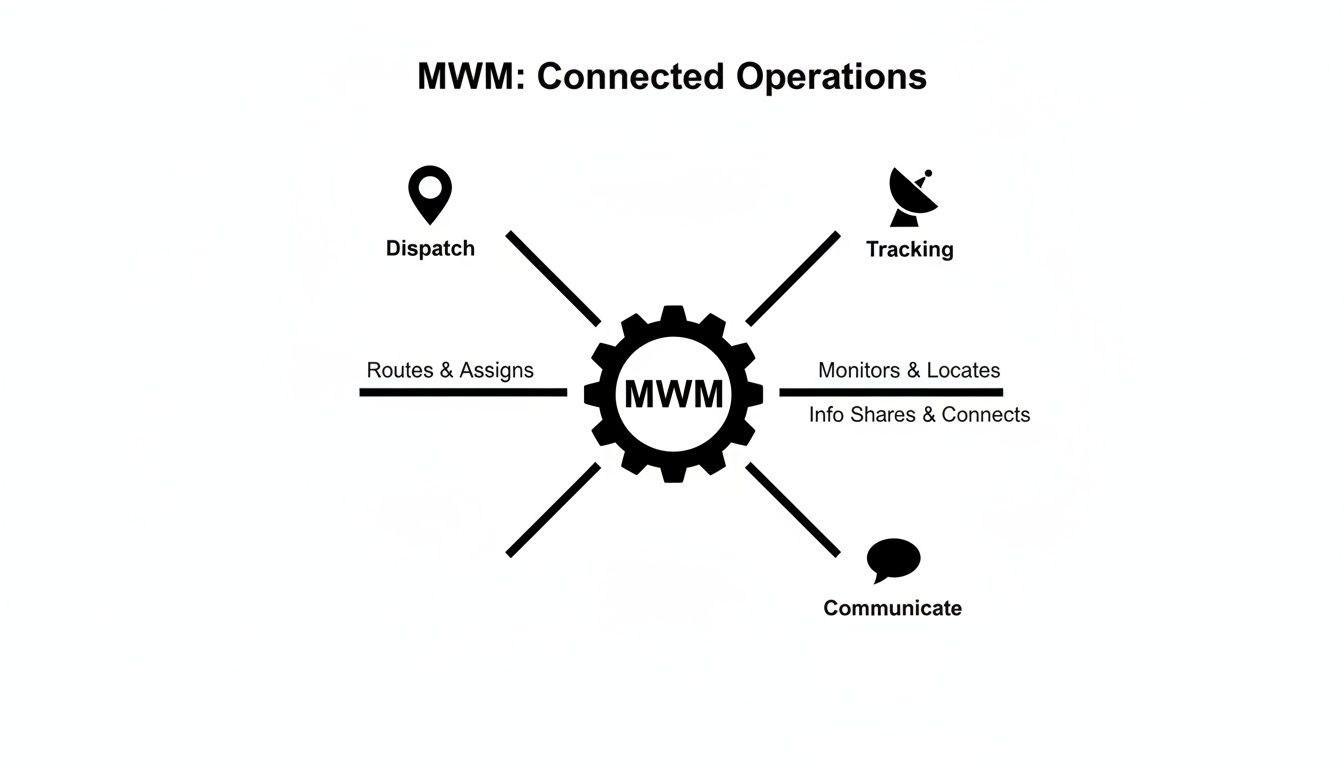
As you can see, nothing works in isolation. An effective mobile workforce management setup depends on how seamlessly these key functions are integrated to give you the complete picture of your operations.
Automated Dispatching And Scheduling
Doing dispatch manually is often a frantic puzzle of phone calls, radio chatter, and pure guesswork. It almost always leads to inefficient assignments and delays. Modern MWM platforms get rid of that chaos, replacing it with intelligent, automated systems that make sure the right person is sent to the right job, every single time.
This isn't just about being faster; it's about precision. The system can automatically pinpoint the closest available unit with the specific skills or equipment needed for a particular task.
Practical Example: An event security firm is managing guard placements for a huge music festival. Instead of supervisors manually building schedules and guessing at staffing needs, the MWM platform analyzes the event layout and predicted crowd flow to recommend the perfect staffing levels for each zone.
Actionable Money-Saving Insight: This kind of automation prevents overstaffing and cuts down on last-minute calls for overtime coverage. By matching personnel to actual needs with such precision, the firm reduces its overtime payroll costs by over 20% per event. That saving goes straight to the bottom line.
Real-Time Tracking And Geofencing
Knowing where your team is in real-time is the absolute foundation of effective management. Live GPS tracking gives you complete situational awareness, letting supervisors monitor progress, adjust routes on the fly, and verify that a job was done without constant radio check-ins.
Geofencing takes this a step further by letting you draw virtual boundaries around specific locations. When a team member enters or leaves a geofenced area, the system can trigger automatic notifications or log an action.
Practical Example: An Emergency Medical Services (EMS) agency sets up geofences around all its major hospitals and common incident scenes. When an ambulance crosses the hospital's geofence, the system automatically logs its arrival time. When it leaves, it logs the departure. No manual entry needed.
Actionable Money-Saving Insight: This automated time-stamping frees up dispatchers from having to manually log unit statuses over the radio, letting them focus on higher-priority calls. More importantly, it creates a perfect, indisputable record of response and on-scene times, ensuring 100% compliance with regional reporting standards and avoiding potential fines from inaccurate manual logs.
Integrated Messaging And Alerts
Solid communication is the lifeblood of any field operation. MWM platforms pull all communication out of messy, fragmented text message groups and into a secure, central system. Every message is logged and tied directly to a specific job or incident.
This makes sure everyone is working from the same information and creates a clear record for any after-action reviews or liability questions. A unified platform brings alerts, notifications, and direct messages into a single, reliable channel. For those exploring what a full-featured system looks like, you can review a comprehensive list of capabilities for mobile workforce management.
Practical Example: A city's public works department gets hit with a sudden snow emergency. Using the MWM platform’s alert feature, a supervisor instantly blasts a mass notification to every single plow driver, calling them into action and giving them initial route assignments.
Actionable Money-Saving Insight: This instant, all-at-once notification saves critical time compared to a manual phone tree, which could easily take over an hour. Getting plows on the road 30-45 minutes faster not only makes the public safer but also reduces the chance of accidents and the associated liability costs for the city.
Reporting And Analytics
If you can't measure it, you can't improve it. The best mobile workforce management solutions collect data from every dispatch, every vehicle movement, and every message. Then, they turn all that raw data into actionable intelligence through powerful reporting and analytics dashboards.
This data gives you objective proof of performance, helps you spot operational bottlenecks, and lets you justify resource needs with hard evidence instead of just gut feelings.
Practical Example: A fire chief is fighting to get budget approval for a new substation in a part of the city that's growing fast. Using the MWM platform’s analytics, the chief generates a heat map showing incident locations layered with average response times.
Actionable Money-Saving Insight: The report clearly shows that response times in that neighborhood are 40% longer than the city-wide average. Armed with this undeniable data, the chief successfully justifies the $2 million investment for the new station by proving it will directly improve service and potentially reduce property loss damages—which can even impact the city's insurance premiums.
Who Really Needs MWM Solutions?
While just about any company with people in the field can see some upside from a mobile workforce management solution, their true value is most obvious in high-stakes environments. For some teams, these platforms aren't just a nice-to-have; they're the core of the entire operation. Let's break down exactly how different teams put MWM to work to solve tough problems and save serious money.
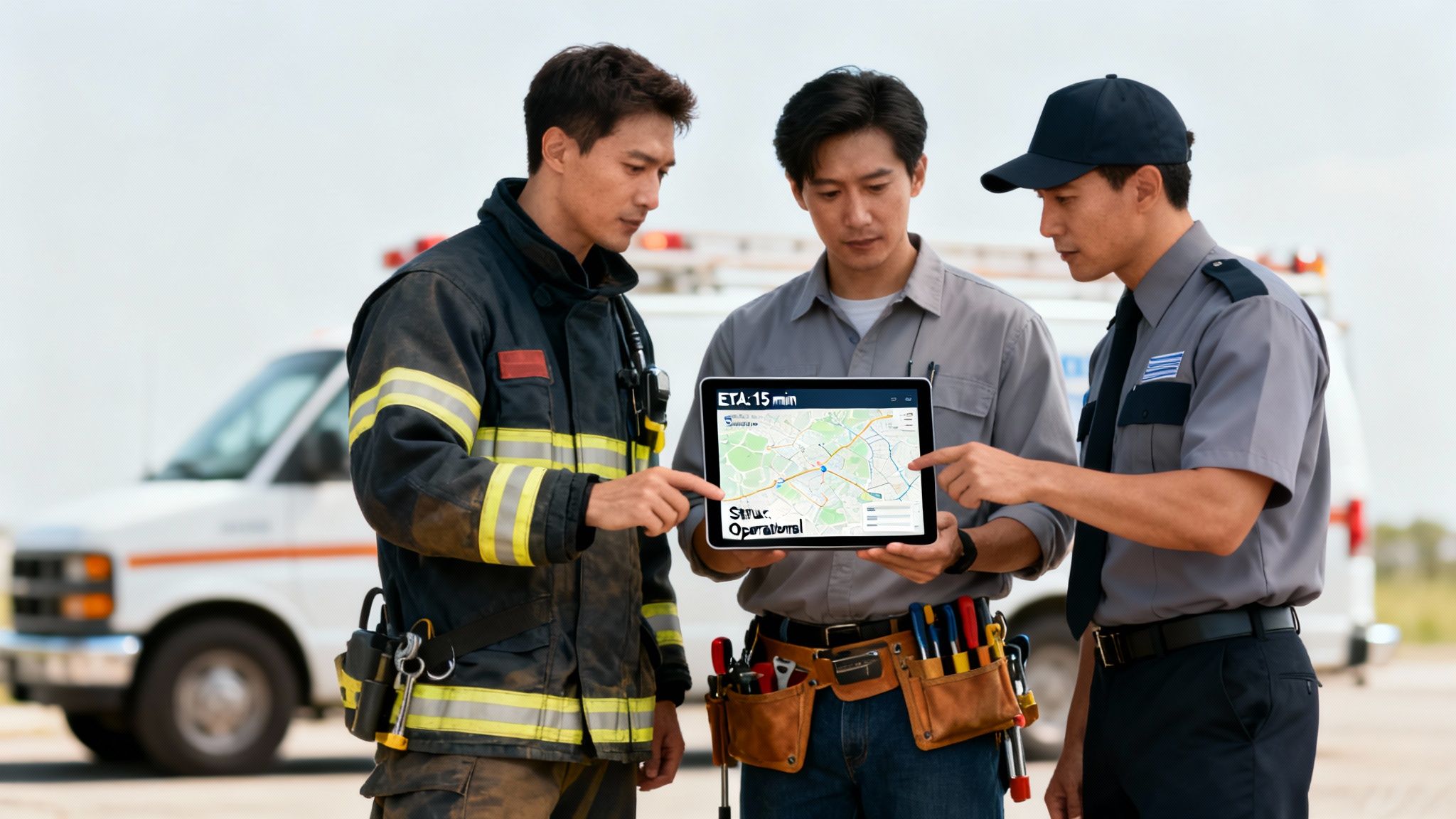
These tools shine brightest where time, location, and coordination are everything. Whether it's an emergency response or a massive event, the ability to see and direct every moving piece from one screen completely changes the game.
First Responders And Emergency Services
When you're a firefighter, paramedic, or police officer, every single second counts. MWM solutions have become the digital nervous system for modern emergency response, giving commanders the situational awareness they need to make life-or-death calls under incredible pressure. They make sure the right unit gets to the right place, right now.
Practical Example: A major pile-up happens on the interstate. Instead of a dispatcher guessing unit locations over the radio, the MWM platform’s GPS tracking instantly shows the closest paramedic crew with advanced life support (ALS) certification. With one click, they're dispatched.
Actionable Money-Saving Insight: This isn't just about better outcomes; it's about smarter spending. Sending the closest unit slashes fuel costs and vehicle wear-and-tear across the fleet. By tracking personnel status, you can also monitor fatigue and ensure people get their required downtime. This proactive management cuts down on burnout—a huge driver of expensive staff turnover and recruiting costs.
Security And Event Teams
Trying to manage security for a big concert, festival, or marathon is a logistical nightmare. You have to be ready to react to problems instantly, moving people across huge, crowded spaces to keep things safe and orderly.
Practical Example: At a music festival, a supervisor spots a bottleneck forming near a side stage on their tablet's live personnel map. Before it turns into a dangerous crowd crush, they use the platform's built-in messaging to pull three guards from a slow area and send them to the hotspot to manage the flow of people.
Actionable Money-Saving Insight: That quick, proactive move prevented a minor headache from becoming a major incident. By handling it in minutes, the event organizer dodges potential injuries and the massive liability costs and legal fees that come with them. Having a digital record of that decisive action can also lead to lower insurance premiums for future events.
Businesses With Field Operations
It's not just about public safety. Any business with a team on the road—think utility companies, public works crews, or delivery services—can get a direct return on their investment. The big wins come from optimizing routes, smart scheduling, and creating a paper trail that’s impossible to argue with.
Practical Example: A utility company handles hundreds of service calls for power line repairs every day. They used to rely on static, printed-out route sheets. Now, with an MWM solution, they have dynamic, real-time scheduling. The system constantly looks at technician locations and new calls, re-optimizing routes on the fly to cut down travel time.
Actionable Money-Saving Insight: By cutting out inefficient routes and wasted miles, the utility company saw a 15% drop in fuel consumption across its whole fleet. That’s tens of thousands of dollars in direct savings each year, not even counting the money saved on vehicle maintenance and getting a longer operational life out of their trucks.
At the end of the day, MWM solutions deliver the most bang for the buck to organizations where the cost of being inefficient—whether you measure it in dollars, time, or safety—is simply too high to ignore. By giving leaders a clear, live look at what's happening in the field, these platforms let them make smarter, faster, and more cost-effective decisions.
How To Choose The Right MWM Solution For Your Team
Picking the right mobile workforce management solution is a huge decision, one that will absolutely define how your team operates for years. This isn’t just about buying software; you’re choosing an operational partner. Get it wrong, and you’re stuck with frustrated users, a busted budget, and a system that creates more problems than it solves.
To sidestep those landmines, you have to look past the slick sales pitches and zero in on what actually matters for performance and your bottom line. Think of it like buying a vehicle for a specific job—you wouldn't bring a sports car to a construction site, and you wouldn't use a dump truck for a high-speed chase. It’s all about the right tool for the mission.
Prioritize Scalability And Flexible Pricing
Your organization isn't static, so why should your software be? A system that’s a perfect fit today could be way too small or ridiculously expensive tomorrow. That’s why scalability isn’t just a nice-to-have; it's a deal-breaker. You need a platform that can grow with you without hitting you with a massive bill just for adding a few more users or features.
Practical Example: A volunteer search and rescue team might have 20 active members for a routine call on a Tuesday. But when a major storm hits, they could suddenly need to onboard and manage 200 mutual aid responders by Friday.
Actionable Money-Saving Insight: A solution with a rigid, per-seat enterprise price tag would be a financial disaster in this scenario. Look for platforms with flexible tiers or, even better, open-source options like Resgrid. This strategy helps you avoid vendor lock-in and can save thousands in licensing fees that would otherwise be wasted on accounts that are only needed once in a while.
Demand An Intuitive User Experience
When the pressure is on, complexity is your worst enemy. The mobile app your team uses in the field has to be dead simple and intuitive, something they can pick up with almost no training. If a first responder has to tap through five different menus just to update their status during an emergency, the system has already failed them.
Practical Example: An experienced field technician is handed a tablet with a new MWM app for the first time. Without any instruction, they should be able to log in, see their assigned jobs for the day, and mark the first one as "en-route" in under 60 seconds.
Actionable Money-Saving Insight: An intuitive design drastically reduces training costs and speeds up adoption. Faster adoption means you start seeing operational efficiencies—and the resulting cost savings—from day one, rather than weeks or months down the line.
Ensure Seamless Integration Capabilities
An MWM solution shouldn't be another island of data. Its real power comes from connecting with the other systems you already depend on every day. This is where integration capabilities become a make-or-break factor.
Before you even think about signing a contract, make sure the platform can plug directly into your existing tools. This creates a single, unified view where information flows automatically between systems. It kills the need for manual data entry and slashes the risk of human error.
- CAD Systems: Integrating with your Computer-Aided Dispatch (CAD) system is critical. It ensures incident data flows right into the MWM platform, giving field units real-time updates without a dispatcher having to relay everything.
- Mapping Software: Connections to advanced mapping layers provide crucial geographical context—think property lines, utility infrastructure, or hydrant locations—right when your team needs it most.
- HR and Payroll: Linking to HR software can automate timesheets based on field activity. This is a massive time-saver that cuts down on administrative headaches and guarantees payroll is accurate.
Scrutinize Security And Compliance Standards
For any organization handling sensitive information—especially in public safety or security—data security is non-negotiable. The platform you choose must have rock-solid security protocols to protect operational data, personnel files, and every piece of communication. Look for essentials like end-to-end encryption, secure cloud hosting, and multi-factor authentication.
The solution also has to help you meet compliance standards, whether it's HIPAA for medical data or other industry-specific reporting rules. Many MWM solutions have moved to the cloud, which is a huge help for connecting dispersed teams while keeping costs in check. In fact, cloud-based platforms are expected to hold the largest deployment share in 2025 because they are scalable and offer secure remote access. The numbers show that software components are forecast to account for over 51% of the market in 2025, proving just how important feature-rich, secure platforms have become. You can learn more about these workforce management market trends.
Making the final call can feel overwhelming. To cut through the noise, we've put together a checklist to help you compare your options and focus on what truly delivers value.
MWM Solution Evaluation Checklist
| Evaluation Criterion | What to Look For | Why It Saves You Money |
|---|---|---|
| Scalability & Pricing | Flexible tiers, pay-for-use options, or open-source models. Avoid rigid per-user annual contracts. | Prevents overpaying for licenses you only need occasionally during large-scale incidents. |
| User Experience (UX) | A simple, intuitive mobile app. Can a new user figure out the basics in under 5 minutes? | Reduces training time and costs. Minimizes user errors that can lead to costly operational mistakes. |
| CAD Integration | Native, bi-directional integration with your specific CAD system. | Eliminates manual data entry, freeing up dispatcher time and preventing critical data-entry errors. |
| API & Customization | A well-documented, open API for connecting to other systems (mapping, HR, etc.). | Avoids expensive custom development work and allows you to build a truly unified system with tools you already own. |
| Offline Functionality | The app must function reliably in areas with poor or no cellular service. | Ensures continuity of operations, preventing mission failure and lost data when connectivity is lost. |
| Security Protocols | End-to-end encryption, multi-factor authentication (MFA), and compliance with standards like HIPAA or SOC2. | Protects you from costly data breaches, fines, and reputational damage. |
| Support & Onboarding | Responsive, expert support available when you need it. Clear documentation and training resources. | Reduces implementation friction and ensures your team actually uses the software, maximizing your ROI. |
Use this checklist as your guide. A system that checks these boxes is more than just a piece of software; it's a long-term investment in your team's efficiency, safety, and success.
Measuring The ROI Of Your MWM Investment
So, you're considering investing in a mobile workforce management solution. Eventually, the conversation always comes down to one thing: money. How do you prove that this technology is actually worth the cost? The answer is by tracking the right Key Performance Indicators (KPIs) and showing a tangible return on investment (ROI).
This isn't about guesswork. It's about drawing a straight line from the software's features directly to operational savings and efficiency gains. With a data-driven approach, you can transform what feels like an expense into a strategic investment with a clear payback period.

Key Metrics That Demonstrate Value
To build a compelling case, you need to focus on metrics that directly impact your bottom line. These aren't abstract ideas—they're hard numbers pulled right from the platform’s analytics that tell a story of financial improvement.
Here are the most impactful KPIs to keep an eye on:
-
Reduced Response Times: For emergency services, this is the ultimate metric. A 10% improvement in response time isn't just a number on a spreadsheet; it can translate into lives saved and less property damage, which has massive financial implications for a community.
-
Improved Asset Utilization: The platform’s reports can show you everything from vehicle mileage and travel routes to idle time. Use this data to prove direct savings in fuel and a reduction in vehicle wear and tear. Cutting down on unnecessary driving saves real money, period.
-
Reduced Administrative Overhead: Think about the hours your dispatchers and supervisors are spending on manual tasks. If automated scheduling and report generation free up 10 hours of administrative work per week, that’s a direct payroll saving you can easily calculate.
Calculating Your Return On Investment
The formula for ROI is pretty straightforward. It’s a simple gut check to see if the financial benefits are outweighing what you're spending on the platform.
ROI Formula: (Financial Gains + Cost Savings – Solution Cost) / Solution Cost
This calculation spits out a clear percentage. A positive ROI means the solution is paying for itself and then some. For a transparent look at what you might be spending, you can explore different MWM platform pricing models to find one that fits your budget.
Let's walk through a real-world example to see how this works.
ROI Example: An EMS Agency
An EMS agency invests $10,000 annually in a mobile workforce management solution. After six months, they dive into the data and find some concrete savings.
- Reduced Overtime Pay: Optimized scheduling and better unit balancing have cut overtime costs by $8,000 per year.
- Fuel Savings: Smart routing and reduced idle time have shaved $5,000 off their annual fuel bill.
- Administrative Savings: Automating reports and logs saves a supervisor 5 hours a week. That adds up to $7,800 in yearly labor costs ($30/hr * 5 hrs * 52 wks).
The total annual savings come out to $20,800.
Now, let's plug those numbers into our formula:
($20,800 in Savings – $10,000 Solution Cost) / $10,000 Solution Cost = 1.08 or 108% ROI.
This shows that for every dollar spent, the agency gets its money back plus an extra $1.08 in savings, hitting a positive ROI well within the first year. This isn't just a hypothetical, either. We're seeing a strong industry trend toward efficiency, with the use of shift optimization solutions growing by 21.3% in a single year in some sectors. It’s clear these data-driven tools are having a measurable effect. You can discover more insights about the rise of workforce management software.
Common Questions About Mobile Workforce Management
Bringing on a new operational platform is a big deal, and it's only natural to have some questions. Concerns about how long it will take to get running, how secure your data is, and—most importantly—whether your team will actually use it are completely valid. We've been there. Let's tackle the most common questions we hear about mobile workforce management solutions to give you clear answers so you can make a decision you're confident in.
Making the right choice goes way beyond a feature list. It's about figuring out how a system will actually slot into your day-to-day operations and building trust that the tech will be a genuine asset, not just another headache.
How Long Does Implementation Take?
There's a common fear that setting up a new system will be a long, drawn-out process, pulling your key people away from their real jobs for weeks or even months. While that can be true for some of the overly complex, old-school enterprise systems, most modern mobile workforce management platforms are built to get you up and running fast.
Honestly, the timeline all comes down to the platform's complexity and what you need it to connect to. A simple, out-of-the-box setup for a small volunteer team can be live in a matter of hours. But if you're a large municipal agency that needs to integrate with an existing CAD system and pull in years of data, you're probably looking at a few weeks to make sure everything is talking to each other flawlessly.
Practical Example: A rural volunteer fire department decides to adopt a new MWM solution. They can usually sign up online, invite their members through email, and have everyone download the app and log in that same afternoon. Core functions, like updating their status and responding to calls, can be live before the day is out.
Actionable Money-Saving Insight: Look for a platform with a self-service model. This gets rid of expensive on-site implementation fees and drawn-out sales cycles. When you can handle the setup internally, you can save thousands of dollars and get your team operational way faster, seeing a return on your investment much sooner.
How Secure Is Our Operational Data?
In public safety and security, data security isn't just a "nice-to-have" feature—it's everything. Handing over sensitive operational data, personnel files, and incident details to a third-party platform requires absolute trust. For many organizations, this is the biggest hurdle to clear.
Any MWM provider worth their salt treats security as their number one priority. They should be using multiple layers of protection to keep your information locked down tight.
- End-to-End Encryption: This is non-negotiable. It ensures all your data—from messages and GPS locations to personnel notes—is scrambled and unreadable to anyone without the right keys, both when it's moving across the network and when it's sitting on a server.
- Secure Cloud Infrastructure: Platforms hosted on major cloud providers like AWS or Azure get the benefit of world-class physical and digital security that would be nearly impossible for a single agency to replicate.
- Access Controls: You need the ability to set granular permissions. This makes sure team members can only see the information they need for their specific role, preventing a firefighter from accidentally viewing sensitive command-level data.
It's critical to partner with a provider who is completely transparent about their security measures. For a deeper dive into how your data is protected, you can review detailed info on mobile workforce management security protocols to ensure they meet your agency's standards.
How Do We Get Our Team to Actually Use It?
You can have the most powerful software in the world, but it's completely useless if your team won't touch it. Getting people on board is a huge challenge, especially when you're dealing with personnel who have been doing things a certain way for years. The secret to breaking through that resistance is to keep it simple and show them how it makes their job easier.
The mobile app has to be dead simple. If a team member can't figure out how to update their status or check a call's location in under a minute during a high-stress situation, they're going to fall back on their old habits—every time.
Practical Example: An event security company is rolling out a new MWM app. Instead of a thick, technical manual nobody will read, they create a one-page cheat sheet with screenshots showing how to do the five most common tasks. During the pre-event briefing, they run a quick 10-minute live demo, showing how the app means no more constant radio check-ins.
Actionable Money-Saving Insight: Frame everything around "what's in it for me?" for your people in the field. Show them how this new tool reduces their workload—less paperwork, clearer instructions, no more calling dispatch just to get an address. When they see it as a tool that helps them, adoption happens naturally. That saves you from having to spend a ton of money on endless, repetitive training sessions.
Can This Scale for Both Small and Large Teams?
Scalability is a big question for organizations of all sizes. A small volunteer CERT team worries about paying a fortune for features they'll never use, while a large city agency needs to know the system won't crash and burn during a major incident.
The right mobile workforce management solution has to be flexible enough to handle both ends of the spectrum. This is usually done through tiered pricing models or open-source platforms that let you deploy only what you need. A good platform should handle a 20-person team for a local parade with the same rock-solid reliability it uses to manage a 500-person response to a natural disaster. The technology underneath has to be tough enough to handle sudden spikes in activity without skipping a beat.
Ready to bring clarity and control to your field operations? Resgrid offers a powerful, flexible, and open-source mobile workforce management solution designed to meet the needs of first responders, security teams, and businesses. Start your free trial today and see the difference for yourself!