
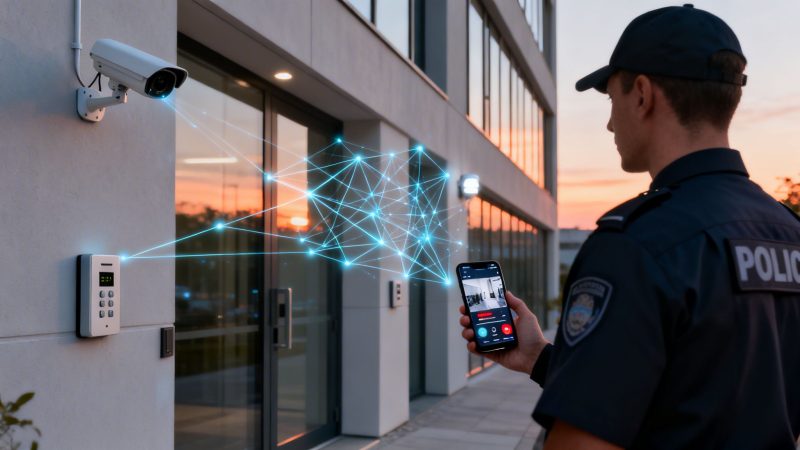
Your Guide to a Modern Physical Security Solution
When you think about security, what comes to mind? For a lot of people, it’s a few cameras here, a couple of locks there, and maybe a guard at the front desk. But that’s an outdated picture. A modern physical security solution is something else entirely—it’s a smart, interconnected defense system where every piece works in concert to stop threats before they happen.
What Are Physical Security Solutions?
Think of a modern physical security solution less as a collection of gadgets and more as a central nervous system for your property. It’s an integrated strategy built to protect your people, your assets, and your buildings.

Instead of just reacting after a break-in, this system can spot a threat at the edge of your property, track it with cameras, and automatically send the nearest guard to intercept—all before an incident even gets a chance to escalate. This proactive approach completely flips the script, turning security from a reactive cost into an operation that actively drives value.
By preventing incidents from occurring in the first place, you’re not just stopping a single theft. You’re saving serious money by cutting down on property damage, reducing losses, and making sure your security team is used as efficiently as possible. It's a critical shift, especially as the threats we all face get more sophisticated.
Why This Is More Than Just a "Nice-to-Have"
The need for real, robust security isn't just growing; it's accelerating. The global physical security market is projected to swell to $139.45 billion by 2026, which is a powerful compound annual growth rate (CAGR) of 8.6%. That’s not just a random number—it reflects a real-world response to rising crime and rapid urbanization.
A modern physical security solution moves your team from simply watching events unfold to actively preventing them. It’s the difference between reviewing footage of a theft and stopping the thief in the parking lot.
This kind of growth sends a clear message: old, disconnected systems just don’t cut it anymore. Organizations are waking up to the fact that investing in an intelligent, unified security solution is essential for survival.
The Foundation of Modern Protection
At its core, a strong security posture begins at the boundary of your property. Perimeter security is your first and most important line of defense, designed to stop or at least detect an intruder long before they get anywhere near your main building.
When you're designing a system, this is where you have to start. Thinking through the best commercial security gate solutions is a critical first step, as these systems form the backbone of a layered defense.
For instance, a smart gate doesn't just sit there. It’s tied into your access control and video surveillance. If an unauthorized car tries to force its way in, a truly integrated system can:
- Automatically deny access and sound a local alarm.
- Instantly tell nearby cameras to zoom in and record what's happening.
- Send a real-time alert with live video straight to a security officer's phone.
That seamless automation means you don't need a person watching a gate 24/7, enabling a faster, more precise response that can head off major losses.
Now, let's break down the core components that make up a system like this. Each one plays a unique role, but their true power is unlocked when they work together.
Core Components of a Physical Security Solution
| Component | Primary Function | Cost-Saving Benefit |
|---|---|---|
| Access Control | Manages who can enter specific areas and when. | Prevents unauthorized entry, reducing theft and vandalism. |
| CCTV Surveillance | Provides real-time visual monitoring and records events. | Deters crime and provides evidence, lowering investigation costs. |
| Intrusion Detection | Detects unauthorized entry using sensors and alarms. | Enables immediate response, minimizing potential damage and loss. |
| Perimeter Security | Secures the outer boundaries with fences, gates, and sensors. | Stops threats early, preventing larger and more costly incidents. |
| Security Personnel | Provides on-site presence, response, and decision-making. | Deters criminals and provides a rapid, intelligent response to alerts. |
These pillars don't operate in a vacuum. A well-designed physical security solution integrates them into a single, cohesive strategy. When a perimeter alarm is triggered, it's not just a siren—it's the first step in an automated workflow that brings all other components into play to neutralize the threat efficiently.
Understanding the Core Security Components
A truly effective physical security solution isn’t just one single product. It’s a combination of several key pieces, all working together. Each part handles a specific job, but their real power is unlocked when they’re integrated into a single, cohesive system. Let’s break down these essential layers and see how they actually protect your assets and save you money in the real world.
Access Control Systems
At its heart, access control is just about deciding who can go where, and when. It’s the digital gatekeeper for your entire facility. But we've moved way beyond a simple lock and key. Today's systems rely on keycards, mobile phone credentials, and even biometrics to grant or deny entry.
A data center is a perfect example. Instead of just a standard lock on the server room, they'll use biometric scanners. That one layer can single-handedly stop an unauthorized person from walking out with sensitive data—an event that could easily spiral into millions in fines, reputational damage, and recovery costs. Suddenly, the price of that scanner seems like a bargain.
CCTV Surveillance Systems
Modern CCTV (Closed-Circuit Television) is so much more than a camera recording to a dusty VCR in a back room. Today’s smart cameras are active players in your security plan. They're packed with AI-powered analytics that can spot specific events as they happen, shifting surveillance from a reactive tool for reviewing old footage to a proactive one for stopping incidents before they escalate.
For instance, a retail store can set up its cameras to detect if someone is loitering in a high-value stockroom after hours. When the system spots this, it can be configured to:
- Instantly flag the unusual behavior.
- Push a high-priority alert straight to a security officer's phone, complete with a live video feed.
- Trigger a local alarm to scare off the individual.
This kind of immediate, automated response can stop a theft of thousands of dollars worth of inventory before it ever happens. It turns a potential loss into a neutralized threat. When you're looking at the different parts of a security system, it's worth exploring specialized applications like commercial physical security solutions built specifically for business environments.
Intrusion Detection Systems
Think of intrusion detection systems as your digital tripwires. They’re built to scream the second a boundary is crossed. These systems use a whole network of sensors—door contacts, motion detectors, glass-break sensors—to identify any unauthorized entry into a protected zone.
An effective intrusion detection system doesn't just make noise; it initiates an immediate and intelligent response, transforming a simple alarm into actionable intelligence for your security team.
Imagine a massive manufacturing plant with a huge perimeter. Instead of just relying on guards to walk the fence line every so often, the plant installs fence-line vibration sensors. If someone tries to climb or cut the fence, a sensor triggers an immediate alert.
This is where smart integration becomes a huge money-saver. An advanced physical security solution connects this alert directly to a dispatch platform. The system can automatically create an incident, show the exact breach location on a map, and dispatch the closest security guard. This turns what was a slow, manual process into a lightning-fast, targeted interception, stopping thieves before they can get their hands on equipment worth hundreds of thousands of dollars. To see how this kind of automation can make your team more effective, you can learn more about what we do at https://resgrid.com/security.
Security Personnel
Finally, you have your security personnel. They’re the human element, the boots on the ground who make the tough calls and handle incidents face-to-face. Technology doesn’t replace these people; it makes them better, turning every officer into a force multiplier.
Instead of spending their shifts on costly and often inefficient patrol routes, technology feeds them real-time information. An alert from an integrated system tells them exactly what is happening, where it's happening, and when it started. This allows them to respond with precision. It transforms security from a reactive, guard-heavy operation into an efficient, intelligence-led one that gets the most value out of every single officer on duty.
Unlocking Power with Integrated Security Systems
Think of standalone security parts like individual musicians. One might sound okay on their own, but the real magic happens when the whole orchestra plays together. An integrated physical security solution is that orchestra, playing in perfect harmony to create something far more powerful than any single instrument. It’s the key to building a security strategy that’s both effective and saves you money.
Integration is what shifts your security from a bunch of passive tools into an active, smart defense network. It links every device—from door sensors to cameras—into a central hub that can make decisions and trigger actions on its own. This is where you get the real bang for your buck, creating automated workflows that save time, money, and headaches.
This diagram shows how individual security actions connect to form a complete response in a modern physical security system.

As you can see, an access control event can kick off a response from both surveillance and intrusion detection, which really shows the power of having everything connected.
How Integration Drives Down Costs
Let's look at a real-world example. Imagine someone tries to use an unauthorized keycard on a high-security server room door after hours. With a non-integrated system, all you get is a "denied" entry log. Your team might only discover it if they happen to be digging through logs days later—long after the person is gone.
But in an integrated system, the response is instant and automated:
- The access control system denies entry and immediately flags the event as high-priority.
- It tells the nearest camera to swivel, zoom, and lock onto that door.
- A high-priority alert, complete with a live video feed, gets pushed directly to the closest security officer's phone via a dispatch platform.
- The entire incident, from the card swipe to the video, is automatically logged for later review.
This automated chain of events cuts out human delay and makes sure you have a fast, informed response. More importantly, it directly slashes operational costs. You don't need as many people staring at monitors all day, and your guards can be sent exactly where they’re needed instead of just wandering on patrol.
An integrated physical security solution turns individual alerts into coordinated intelligence. It ensures that when one component detects a threat, every other component is prepared to respond, creating a system that is proactive, not reactive.
Knowing exactly where to send your team—and giving them live eyes on the scene—is a massive advantage for both their effectiveness and their safety. You can even see these events happening in real time on a central map, giving you a powerful overview of your entire property. You can see this in action and learn how to improve situational awareness with Resgrid mapping.
Why Different Industries Are Investing Heavily
The value of this connected approach is why some sectors are pouring serious money into physical security. The data is pretty clear: the Banking, Financial Services, and Insurance (BFSI) sector makes up about 25% of global spending, with government agencies right behind them at 20%. These industries get it—preventing a breach is way cheaper than cleaning up the mess afterward. Retail is next at 18%, which shows the obvious ROI in stopping theft before it happens.
Your Step-by-Step Implementation Checklist
Turning a grand idea for a physical security system into something that actually works on the ground takes a solid, step-by-step plan. If you rush it, you're just throwing money at problems without solving them and leaving massive security holes. But with a bit of thoughtful planning, you can make sure every dollar counts.
This isn't just a shopping list. It’s a guide to get you from the initial "what if?" stage all the way to a fully deployed system that works for you.

The journey doesn't start with buying fancy hardware. It starts with understanding exactly what you need. Think of this plan as your blueprint—it'll save you from costly mistakes and guarantee the final system actually fits how your team operates.
1. Conduct a Thorough Risk Assessment
Before you spend a single dollar, you have to know what you’re up against. A risk assessment is basically you walking the property, looking for every weak spot. It could be an unlit alley behind the building, a storage cage that’s easy to get into, or a server room door that doesn’t latch properly.
The real key is to map these weak spots against how likely a threat is and what the damage would be. A retail shop might be worried most about someone grabbing inventory from the stockroom. An office building’s biggest headache might be keeping unauthorized people out of their server farm.
A risk assessment is your financial guide. It tells you where to spend your money with surgical precision. You focus your budget on the high-risk, high-impact areas instead of spreading it thin everywhere else. It's the best way to stop yourself from overspending on gear you don't really need.
Once you categorize your risks—high, medium, and low—you’ve got a prioritized roadmap. This ensures you’re tackling the most expensive problems first, which means you’ll see real value right away.
2. Design a Scalable and Integrated Solution
Now that you know your risks, it's time to design the system. This is where you pick the actual gear—the cameras, the access card readers, the sensors—that will patch up the vulnerabilities you found. The most important money-saving move you can make here is to think about scalability.
Stay away from proprietary, closed-off systems. They're a trap. They lock you into a single brand’s expensive ecosystem, and you’re stuck. Instead, look for components built on open standards that can play nice with other platforms.
- Actionable Insight: Lean toward a cloud-managed physical security solution if you can. It dramatically cuts your upfront costs because you don't need to buy and maintain expensive on-site servers (like NVRs). You pay a subscription, which makes budgeting predictable and turns a huge capital expense into a manageable operating cost.
3. Select the Right Vendor
Picking a partner is every bit as critical as picking the technology. A bad vendor can lock you into a terrible long-term contract filled with hidden fees that bleed you dry. You're looking for someone who offers both great tech and honest, transparent pricing.
When you're talking to potential vendors, don't be shy. Ask tough questions about their pricing models and what's not included. Look for partners with self-service platforms, as they let you manage and grow your system on your own time without having to pay for a "professional services" call for every little change.
Just as important is how their system integrates with your response workflows. For example, knowing how to use AVL unit data for smarter dispatch can make your team's response to an alert exponentially more effective.
4. Plan a Phased Deployment
Look, you don't have to secure the entire facility overnight. In fact, you probably shouldn't. A phased deployment lets you roll out the new system in small, manageable chunks, starting with the highest-risk areas you found in step one.
For example, a logistics company could start by locking down its loading docks and high-value inventory cages in Phase 1. Once that's running smoothly and proving its worth, they can roll into Phase 2—maybe securing the main office entrances and the outer perimeter fence.
This approach keeps the project from becoming a massive headache. It also spreads the cost out over time and gives you a chance to learn and make adjustments as you go.
How to Measure Your Security ROI
It’s easy to look at security as just another expense, a line item that chips away at your bottom line. But that’s the wrong way to think about it. A good physical security solution is an investment, one that should be delivering a real, measurable financial return. To prove that value to the people holding the purse strings, you have to move beyond just feeling safer and get down to hard numbers.
This all starts by figuring out what to measure. You need Key Performance Indicators (KPIs) that act as a scorecard for your security program, showing exactly how and where that investment is paying off.
Key Performance Indicators to Track
To get to an ROI number, you need data first. And not just any data—you need metrics that connect what your security system is doing to your company's finances. Here are a few solid places to start:
- Reduction in Theft-Related Losses: This one is as direct as it gets. You track the value of stolen goods, equipment, or inventory before you install the new system and compare it to the numbers after.
- Decrease in Vandalism and Repair Costs: Keep an eye on how much you're spending to fix property damage. A few well-placed cameras can be a powerful deterrent for vandals, and the savings on repairs can be significant.
- Improved Incident Response Time: Measure the clock, from the second an alert fires to the moment your team is on-site. When automated dispatch gets your people moving faster, there's less time for damage or theft to happen, which shrinks the total cost of any incident.
- Lowered Security Labor Costs: Thanks to smart alerts, your guards can stop doing passive, mind-numbing monitoring and be reallocated to more important tasks. Calculate what you save on overtime or how you're able to use your existing team more effectively.
A Simple Formula for Calculating ROI
Once you’ve got your numbers, the math is pretty straightforward. You're just trying to prove that the money you saved (or the losses you prevented) is more than what you spent on the system in the first place.
ROI Formula: (Financial Gain from Investment – Cost of Investment) / Cost of Investment
Let’s run through a quick, real-world scenario. Imagine a warehouse puts down $30,000 for an integrated security solution—smart cameras, access control, all tied into their dispatch platform.
- In the first year, they stop $60,000 in product theft, which was what they were losing on average in previous years.
- They also cut $15,000 in security guard overtime by using automated alerts instead of having people on constant patrol.
The total financial gain here is $75,000 ($60,000 + $15,000).
Now, let's plug it into the formula: ($75,000 - $30,000) / $30,000 = 1.5
To get a percentage, just multiply that by 100. That’s a 150% ROI in the first year alone. That's the kind of concrete data that gets budgets approved, no questions asked.
The Growing Accessibility for Smaller Businesses
This level of security isn't just for giant corporations with massive budgets anymore. Small and medium-sized businesses (SMEs) are becoming a huge part of the market, making up 47.5% of the physical security spend in 2024. This shift is happening because affordable, cloud-based solutions are finally putting powerful tools within reach for teams on a tighter budget. You can learn more about these trends by reading the latest industry insights.
Modern platforms that have analytics dashboards built right in make tracking all these KPIs almost a non-issue. The system gathers the data for you, letting you pull reports that clearly show the financial impact your security program is having. This gives you the power to prove its worth and confidently make the case for future funding.
Answering Your Key Security Questions
You’ve seen how a modern physical security solution is really a connected, intelligent system—not just a pile of gadgets. But getting from concept to reality means making some tough decisions. To help you connect the dots, we're tackling the most common questions we hear from organizations trying to build a real-world security strategy.
How Can a Small Business Afford a Comprehensive Solution?
A lot of small business owners look at comprehensive security and see a price tag they think is out of reach. That’s just not the reality anymore. The trick is to be strategic. You don't need to secure everything all at once; you just need to secure what actually matters.
The first step is a simple, honest risk assessment. Walk your property and pinpoint your biggest vulnerabilities. Is it the stockroom door, the cash register, or that unlit alley out back? That process alone will tell you exactly where to put your money for the biggest, fastest impact.
From there, you can be smart about costs:
- Go for Scalable Systems: Look for cloud-based solutions that run on a subscription model (SaaS). This turns what used to be a huge upfront capital purchase into a predictable, manageable monthly operational cost.
- Take a Phased Approach: Start with your highest-risk areas. A small retail shop might begin with a couple of smart cameras on the front door and stockroom. As the business grows, you can add more layers.
- Find Self-Service Platforms: A vendor that lets you manage your own system is a game-changer. It helps you dodge expensive mandatory service contracts and professional installation fees that can add thousands to the long-term cost.
What Is the Real Difference Between Integrated and Non-Integrated Security?
Honestly, the difference is night and day. A non-integrated system is just a bunch of separate tools that happen to be in the same building. Your alarm panel beeps, your camera records, and your access log shows a card was denied—but none of them know the others exist. When a door is forced open, someone has to manually sift through hours of footage to figure out what happened.
An integrated physical security solution makes them work together.
With an integrated system, that same forced door automatically triggers the nearest camera to start recording, pushes a live video alert straight to a guard's phone, and logs the entire incident with all the data tied together. That synergy creates a response that is faster, smarter, and way more effective.
The cost savings here are real. You need fewer people staring at monitors because the system itself is doing the watching. Incidents get resolved much faster, which minimizes damage and loss. It’s the difference between reacting to a mess and getting ahead of it before it becomes one.
How Does a Physical Security System Connect to a Dispatch Platform?
The magic behind this connection is something called an API (Application Programming Interface). The easiest way to think of an API is as a universal translator that lets two completely different software programs talk to each other. Your physical security system and a dispatch platform can use APIs to automatically share information in real-time.
Here’s how it works in the real world:
- A motion sensor on your perimeter fence gets triggered after hours.
- Your security system sends out an event signal through its API.
- A dispatch platform like Resgrid is set up to "listen" for that exact signal.
- The moment it receives it, the platform instantly and automatically creates a new, high-priority call.
This new call isn't just a blank ticket. It’s pre-filled with all the critical details: the precise location of the breach on a map, the event type ("perimeter alarm"), and even a direct link to the live camera feed for that zone. That information is then pushed directly to the closest response team's mobile device. They arrive on scene knowing exactly what they're walking into, which saves critical seconds.
That level of automation is what drives real efficiency and cuts operational costs by getting rid of manual data entry and communication delays.
Which Compliance Standards Should I Worry About?
Compliance isn't a one-size-fits-all problem; it depends entirely on your industry and where you operate. Forgetting about these rules can lead to crippling fines and force you into expensive system overhauls you didn't budget for.
Just think about these common scenarios:
- Retail/Finance: If you handle credit cards, you have to follow PCI DSS. It has very strict rules for physically securing any area where cardholder data is stored or even just passes through.
- Healthcare: Facilities that work with patient data fall under HIPAA, which demands you protect physical access to records and server rooms.
- General Business: If you capture video of employees or the public, data privacy laws like GDPR or CCPA have a lot to say about how you can store and manage that footage.
The single most important, money-saving thing to know is this: address compliance during your planning, not after the fact. Picking a vendor who actually understands your industry's regulations from day one is critical. It will save you a massive headache and the expense of trying to retrofit a non-compliant system later.
Ready to build a smarter, more efficient security operation? Resgrid provides the dispatch and management platform you need to connect your team and technology into one unified system. See how Resgrid can transform your response at https://resgrid.com.