
Top 10 Resource Allocation Strategies for First Responders in 2026
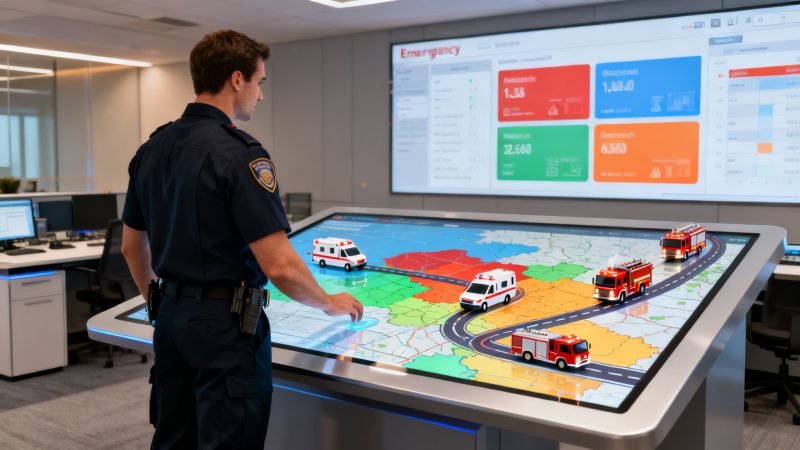
In the high-stakes world of emergency response, every second and every dollar counts. Effective resource allocation is not just an administrative task; it is the backbone of operational success, directly impacting response times, personnel safety, and budget adherence. Choosing the right resource allocation strategies can transform a chaotic, reactive process into a streamlined, proactive system that saves lives and conserves critical funds. When an incident requires specialized, coordinated action, the efficiency of your allocation model is put to the ultimate test. For scenarios demanding peak performance, understanding specialized frameworks is key. For example, medical teams can learn about Mastering Resuscitation Triangle Roles for Your Team to optimize performance in critical situations.
This comprehensive guide moves beyond theory to provide a tactical playbook for first responders, security firms, and dispatch centers. We will explore 10 proven resource allocation strategies, detailing how to implement each one effectively. You will find practical examples and actionable insights designed to optimize your operations and maximize the impact of every available asset. This article will demonstrate how leveraging a powerful platform like Resgrid can turn these strategies into significant, real-world cost savings and performance gains. From priority-based dispatching to on-demand surge capacity, prepare to gain the knowledge needed to ensure the right resources are in the right place at the right time, every time.
1. Priority-Based Resource Allocation
Priority-based resource allocation is a foundational strategy that directs assets and personnel based on a predefined hierarchy of incident severity and urgency. This method ensures that the most critical emergencies, such as those involving immediate threats to life or property, receive an immediate and robust response. Lower-priority calls are systematically queued or assigned resources as they become available, optimizing the deployment of limited assets.
This hierarchical approach is the bedrock of most emergency response systems, from municipal 911 dispatch to corporate security operations. It provides a clear, logical framework for making high-stakes decisions under pressure, ensuring that the most urgent needs are met first.
How It Works in Practice
A fire department’s Computer-Aided Dispatch (CAD) system automatically classifies a confirmed structure fire with trapped occupants as a Priority 1, triggering the dispatch of multiple engines, a ladder truck, and a battalion chief. In contrast, a non-emergency call about a sparking electrical outlet with no visible fire might be classified as a Priority 3, placed in a queue for the next available engine company after it clears a more critical incident. This prevents tying up multiple units on a low-risk call.
Actionable Insights & Cost Savings
To effectively implement priority-based resource allocation strategies, your organization can take several key steps:
- Establish Clear Guidelines: Develop a comprehensive priority matrix that defines the criteria for each level (e.g., Priority 1: immediate threat to life; Priority 4: non-urgent public assist).
- Leverage Technology: Utilize Resgrid to automate priority assignment. You can configure call types (e.g., "Cardiac Arrest") to default to a specific priority, ensuring consistency and speed. This prevents over-dispatching, which saves on fuel, vehicle wear, and unnecessary personnel hours.
- Train and Review: Conduct regular training on priority standards. Use Resgrid's reporting to analyze response times against priority levels, identifying if low-priority calls are consuming resources that could be saved for critical incidents. This data helps justify staffing models and proves operational efficiency, directly supporting budget requests.
By ensuring your most capable resources are always assigned to the most critical tasks, you reduce the risk of over-dispatching for minor incidents. This saves on fuel, vehicle wear-and-tear, and personnel hours, directly contributing to a more cost-effective operation without compromising safety.
2. Round-Robin Allocation (Rotation-Based)
Round-robin allocation is a strategy focused on fair and equitable distribution, assigning tasks or incidents to personnel and units in a cyclical, sequential order. This method ensures workloads are balanced across a team, preventing any single resource from becoming consistently overburdened or, conversely, underutilized. It promotes operational fairness and is highly effective in managing burnout in high-volume environments.
This rotational approach is ideal for scenarios where all responding units have similar capabilities and the incidents do not require specialized skills. It creates a predictable and transparent system for assignments, which can boost team morale and prevent perceptions of favoritism in dispatching.
How It Works in Practice
In a non-emergency medical transport service, ambulances are dispatched sequentially from a list. Ambulance 1 takes the first scheduled transport, Ambulance 2 takes the second, and so on. Once every ambulance has taken a call, the cycle restarts with Ambulance 1. This ensures each crew handles a similar number of calls and gets comparable downtime throughout a shift, preventing burnout and keeping the fleet's mileage balanced.
Actionable Insights & Cost Savings
To successfully implement round-robin resource allocation strategies, your organization can adopt the following measures:
- Define the Rotation Group: Clearly establish which units or personnel are part of the rotation (e.g., all patrol cars on the day shift).
- Automate the Sequence: Use Resgrid to manage the rotation automatically. You can create personnel groups and view availability at a glance, making it simple to see who is next in line. This eliminates manual tracking errors and ensures fairness without dispatcher bias.
- Establish Override Protocols: Create clear guidelines for when the rotation can be broken, such as a high-priority call requiring the closest unit.
- Monitor and Adjust: Use Resgrid’s reporting to track call distribution. If one unit is consistently finishing assignments faster, the rotation might need adjustment. This balanced workload prevents burnout, which reduces staff turnover and the high costs associated with recruitment and training. It also balances vehicle wear and tear, spreading maintenance costs evenly across the fleet and extending its service life.
By distributing routine assignments equally, you prevent burnout and reduce personnel turnover, which is a major long-term cost. This strategy also maximizes the use of all available assets, ensuring you aren't paying for idle resources while others are overworked, leading to more efficient payroll and fuel expenditure.
3. Skill-Based Resource Allocation
Skill-based resource allocation is an intelligent strategy that matches personnel and equipment to incidents based on their specific certifications, training, and expertise. This method goes beyond just availability, ensuring that the right team with the right competencies is assigned to a task, which maximizes operational effectiveness, improves outcomes, and enhances personnel safety.
This targeted approach is critical for agencies managing diverse skill sets and specialized incident types, such as technical rescue or hazardous materials response. It provides a precise framework for deploying experts where they are most needed, preventing the dispatch of under-qualified teams to complex scenes and ensuring the highest standard of care or intervention.
How It Works in Practice
A call reports an overturned tanker truck on the highway. Instead of dispatching the closest fire engine, the dispatch system identifies the incident type as "HAZMAT" and automatically alerts only the members of the certified Hazardous Materials Response Team. This ensures that personnel with the right training and protective gear are the first to arrive, preventing injury and improper handling of the incident.
Actionable Insights & Cost Savings
To effectively implement skill-based resource allocation strategies, your organization can take several key steps:
- Maintain a Centralized Skills Database: Use Resgrid to create a detailed profile for each team member, logging certifications like "Paramedic," "HAZMAT Technician," or "Swift Water Rescue." This creates a single source of truth for dispatchers.
- Automate Skill-Based Dispatching: Configure your dispatch protocols in Resgrid to automatically suggest or assign units based on skills. For example, a "HAZMAT Spill" call type can be set to only alert personnel tagged with the appropriate credentials.
- Conduct Regular Skill Audits: Use Resgrid to track certification expiration dates and identify training gaps. This proactive approach prevents costly recertification lapses and ensures you always have qualified staff available. Explore the full range of personnel management features to streamline this process.
By dispatching the correct specialists the first time, you avoid costly and time-consuming secondary responses. This saves money by preventing the misallocation of highly paid experts to incidents that don’t require their skills. It also reduces fuel consumption and minimizes unnecessary vehicle usage, directly optimizing your operational budget.
4. Geographic/Location-Based Allocation
Geographic or location-based allocation is a spatial strategy that dispatches resources based on their physical proximity to an incident. The core principle is simple yet powerful: assign the closest available unit to minimize response times. This approach is fundamental for organizations managing geographically dispersed service areas, ensuring the fastest possible arrival on scene.
This method leverages real-time location data to make intelligent dispatch decisions, dramatically improving operational efficiency. For first responders, cutting down travel time by even a few minutes can be the difference between a controlled situation and a catastrophe, directly impacting public safety and incident outcomes.

How It Works in Practice
A fire is reported at an address that sits on the border of two fire stations' primary response zones. Station A is technically the "first-due" station. However, Station B's engine is returning from a previous call and is currently only two blocks away. A system using geographic allocation will see this and dispatch Station B's engine, cutting the response time from six minutes to under one minute.
Actionable Insights & Cost Savings
To successfully implement geographic resource allocation strategies, your organization can focus on these key steps:
- Integrate Real-Time Tracking: Use a system with live personnel and vehicle tracking. Resgrid’s mobile applications, which you can learn more about on the apps page, provide real-time GPS data, giving dispatchers an accurate operational picture to assign the truly closest unit.
- Analyze Response Data: Use Resgrid’s reporting features to analyze response times by geographic area. This data can identify "hot spots" with high call volumes, allowing you to strategically pre-stage units during peak hours to proactively reduce travel distances and save fuel.
- Account for Barriers: Configure your dispatch system to recognize real-world travel barriers like rivers, highways, and one-way streets. A unit might be geographically "closest" as the crow flies but will have a longer response time due to road networks.
By consistently dispatching the closest unit, you significantly reduce fuel consumption, vehicle mileage, and associated maintenance costs. This direct reduction in operational expenses allows you to reallocate budget savings to other critical areas like training or equipment upgrades.
5. Load Leveling (Workload Balancing)
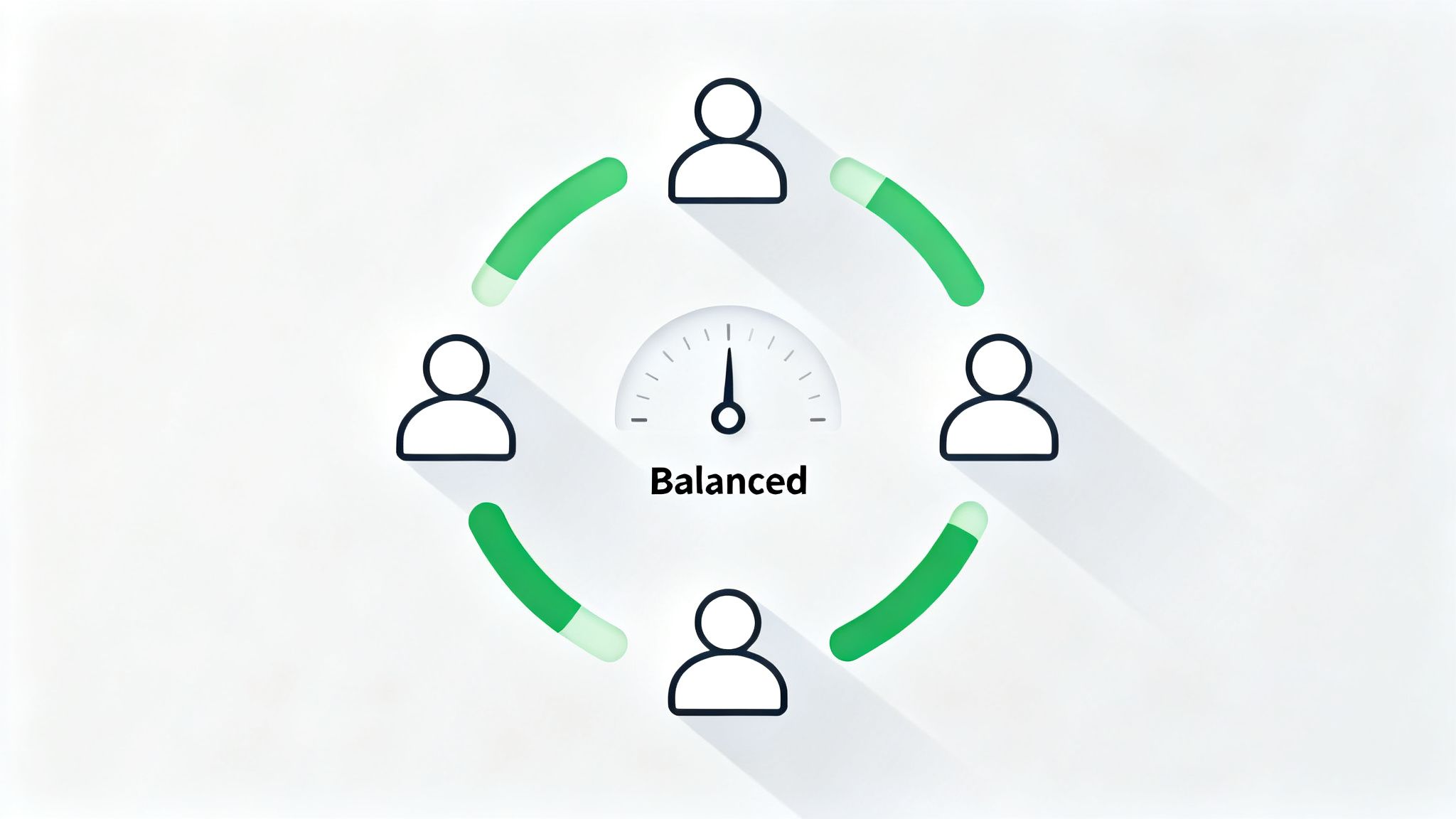
Load leveling, or workload balancing, is a dynamic strategy focused on distributing tasks evenly across available resources to prevent any single unit or individual from becoming overwhelmed. This method monitors real-time capacity and assigns new incidents to the least-burdened responders, ensuring consistent performance and preventing burnout, especially during high-volume periods.
By maintaining equilibrium, this approach enhances the overall sustainability and quality of service. It moves beyond simply assigning the closest unit and considers the cumulative strain on personnel and equipment, leading to a more resilient and effective operational tempo.
How It Works in Practice
During a major storm, a dispatch center is flooded with calls for downed trees and power lines. Unit 5 has already handled four back-to-back incidents. Although a new call is in their immediate vicinity, the system flags them as "overloaded." Instead, it assigns the call to Unit 7, which has been idle for the past hour, even though they are a few minutes further away. This prevents Unit 5's crew from becoming dangerously fatigued and ensures Unit 7 remains engaged and productive.
Actionable Insights & Cost Savings
To successfully integrate load leveling as one of your core resource allocation strategies, your agency can adopt the following measures:
- Set Workload Thresholds: Define clear limits for what constitutes a full workload (e.g., number of active calls, total time on scene in a shift). Use Resgrid to monitor these metrics in real-time for each unit.
- Automate Assignments: Configure your dispatch platform to automatically suggest the unit with the lowest current workload, factoring in both proximity and capacity. This prevents responder fatigue, which is a leading cause of costly mistakes and accidents.
- Integrate Scheduling: Combine real-time load balancing with proactive workforce planning. To effectively implement workload balancing and ensure human resources are optimally utilized, leveraging appropriate tools like staff scheduling software can be invaluable. This allows you to anticipate high-demand periods and staff accordingly.
- Review and Adjust: Use Resgrid's reporting to analyze workload data. This can identify personnel who are chronically overloaded, helping you justify additional staffing or adjust response zones to save on overtime costs and reduce expensive staff turnover.
This strategy directly translates to cost savings by reducing personnel burnout and turnover, which are expensive drains on any organization. By preventing over-utilization of specific vehicles and equipment, you also extend their service life and reduce maintenance costs, contributing to a more efficient and fiscally responsible operation.
6. Time-Based/Shift Allocation
Time-based or shift allocation is a proactive scheduling strategy that assigns resources based on predictable demand patterns tied to specific times of day, days of the week, or seasons. By analyzing historical data, organizations can anticipate when call volumes will spike and pre-deploy personnel and assets accordingly, ensuring optimal coverage during peak periods.
This forward-thinking approach moves beyond reactive dispatching, allowing agencies to align operational capacity with expected needs. It is particularly effective for managing recurring events, such as weekend nightlife, holiday periods, or seasonal trends like flu season in healthcare, transforming scheduling from a logistical task into a strategic asset.
How It Works in Practice
A police department analyzes its call data and finds that assaults and public disturbances spike by 50% between 10 PM and 3 AM on Fridays and Saturdays in the downtown entertainment district. In response, they create an "entertainment district overlay" shift, scheduling two additional patrol cars to work only those hours in that specific area. This ensures faster response times during peak demand without overstaffing the entire city during quieter periods.
Actionable Insights & Cost Savings
To successfully implement time-based resource allocation strategies, your organization can follow these key steps:
- Analyze Historical Data: Use Resgrid’s reporting tools to review call data and identify clear patterns related to time, day, and season. Pinpoint your busiest periods to inform schedule creation.
- Utilize Scheduling Tools: Leverage Resgrid's scheduling and calendar features to build dynamic shift schedules that match your identified demand patterns. This allows you to staff up for predictable surges and scale down during lulls, avoiding costly overtime pay.
- Build in a Buffer: Plan for a small buffer capacity in your peak-time schedules. This provides the flexibility to handle unexpected major incidents without pulling resources from other areas.
- Review and Adjust Quarterly: Demand patterns can change. Conduct a quarterly review of your actual call volume against your scheduled resources and make data-informed adjustments to optimize future schedules and further reduce personnel costs.
By precisely matching staffing levels to anticipated demand, you avoid the high costs of unnecessary overtime during predictable peaks and prevent overstaffing during lulls. This targeted approach reduces personnel costs, minimizes burnout, and improves operational readiness without wasteful spending.
7. Capability-Based Resource Pooling
Capability-based resource pooling is an advanced strategy where specialized teams with specific skill sets are created and deployed as cohesive units. Instead of assigning individual responders who may have varying levels of expertise, this method allocates pre-formed teams (e.g., hazmat, tactical, urban search and rescue) to incidents that explicitly require their unique, complementary capabilities.
This approach is crucial for complex, multi-disciplinary emergencies where a coordinated, expert response is non-negotiable. It ensures that the right combination of skills, equipment, and leadership arrives on-scene together, ready to execute specialized tasks with maximum efficiency and safety from the outset.
How It Works in Practice
A 911 call reports a building collapse after an explosion. Instead of dispatching individual fire engines and ambulances piece by piece, the dispatch center activates a pre-designated Urban Search and Rescue (USAR) Task Force. This single activation deploys a complete unit that includes structural engineers, search specialists with listening devices, K9 handlers, and paramedics trained in crush injuries, all of whom arrive together and operate under a unified command structure.
Actionable Insights & Cost Savings
To leverage capability-based resource allocation strategies, your agency should focus on organization and readiness:
- Define and Document Teams: Clearly define the mission and composition of each specialized team. Use Resgrid to tag personnel with their team assignments (e.g., "USAR Team," "Tactical Medic"), making it easy to see who is available and qualified.
- Establish Activation Protocols: Create clear protocols in your dispatch system that trigger the deployment of a specific team. A "Hostage Situation" call type in Resgrid can be configured to automatically alert all members of the tactical response unit.
- Schedule Team-Based Training: Use Resgrid's scheduling and calendar features to manage training sessions and track attendance for these specialized teams. This ensures all team members maintain their proficiencies and are ready for deployment.
Deploying a single, highly-trained team prevents the costly over-dispatch of multiple, less-specialized units that lack the right equipment or skills. This focused approach saves money by reducing unnecessary personnel hours, fuel consumption, and equipment wear, all while delivering a more effective and professional response.
8. Cost-Optimization Allocation
Cost-optimization allocation is a strategy that focuses on minimizing operational expenditures while strictly maintaining service quality and response standards. This method assigns resources to optimize fuel usage, reduce overtime, minimize equipment wear-and-tear, and improve overall efficiency metrics. It is particularly crucial for organizations operating under tight budget constraints or in cost-sensitive environments.
This pragmatic approach ensures financial sustainability without compromising on the core mission of safety and response. By making deliberate, data-informed deployment decisions, agencies can stretch their budgets further, ensuring they remain effective and prepared for the long term.
How It Works in Practice
An ambulance service needs to perform a non-emergency patient transfer between two hospitals. Instead of sending the closest available ambulance, which might be an advanced life support (ALS) unit with a highly-paid paramedic, the system identifies that a less expensive basic life support (BLS) unit is available and appropriate for the patient's condition. Dispatching the BLS unit saves on hourly personnel costs for that specific transport without compromising patient care.
Actionable Insights & Cost Savings
To effectively implement cost-optimization as one of your resource allocation strategies, your organization can take several key steps:
- Establish Baseline Metrics: First, you must understand your current costs. Track metrics for fuel consumption per vehicle, average overtime hours, and maintenance costs per unit.
- Leverage Reporting Tools: Use Resgrid’s comprehensive reporting features to monitor personnel costs, equipment maintenance schedules, and resource utilization. Analyzing this data reveals inefficiencies, such as a particular unit that consistently uses more fuel, highlighting a potential maintenance issue before it becomes a costly repair.
- Balance Cost and Quality: Implement cost-saving measures without sacrificing service quality. For example, for a low-priority call, dispatch the closest unit but instruct them to travel without lights and sirens to save fuel and reduce engine strain. Use key performance indicators (KPIs) like response times to ensure standards are not slipping.
By meticulously tracking and managing operational expenses, you can identify waste and reallocate funds to more critical areas. This data-driven approach allows for smarter budgeting and resource planning. To see how Resgrid's features can support these goals with a clear cost structure, you can explore the Resgrid pricing plans.
9. Hybrid/Multi-Criteria Allocation
Hybrid or multi-criteria allocation is an advanced strategy that moves beyond single-factor decision-making. Instead of relying solely on priority or proximity, this method combines multiple criteria, such as incident priority, unit proximity, specific skills, current workload, and availability, into a sophisticated, weighted decision algorithm. This approach assigns resources based on an optimized score that balances competing objectives for the most intelligent dispatch possible.
This represents a best-practice evolution in resource allocation strategies, especially for complex, diverse operations facing varied circumstances. It allows agencies to fine-tune their dispatch logic to meet specific operational goals, whether that's minimizing response time, matching the right skills to the incident, or preventing crew burnout by balancing workloads.
How It Works in Practice
A call reports a person having a seizure. The dispatch system analyzes all available ambulance units based on a weighted formula: Proximity (40% weight), Skill Level (40%), and Current Workload (20%). Unit 1 is 3 minutes away but is a BLS crew. Unit 2 is a Paramedic (ALS) crew 5 minutes away, but they just finished a stressful cardiac arrest call. Unit 3 is a Paramedic crew 6 minutes away and has been idle. The algorithm calculates the highest score for Unit 3, balancing the need for advanced skills with the risk of sending a fatigued crew, making the optimal choice.
Actionable Insights & Cost Savings
To leverage hybrid/multi-criteria resource allocation strategies, your organization can implement a phased approach:
- Establish Clear Objectives: Define what you want to optimize. Is the primary goal speed, skill-matching, cost reduction, or workload balancing?
- Start Simple and Iterate: Begin by combining priority and proximity. Once that is working, layer in additional criteria like personnel skills and current workload.
- Leverage Rich Data: A system like Resgrid is essential for this strategy. Use Resgrid’s personnel management to track certifications, its real-time GPS for proximity, and its unit status monitoring for workload data. This data feeds your algorithm for smarter assignments that send the right unit the first time.
By sending the most appropriate unit first, you avoid the costly mistake of dispatching an under-qualified crew and then having to send a second, properly-equipped unit later. This directly cuts operational costs by reducing fuel consumption, vehicle mileage, and unnecessary personnel hours, all while improving service outcomes.
10. On-Demand Surge Capacity Allocation
On-demand surge capacity allocation is a flexible strategy that maintains a reserve of resources, including personnel and equipment, for rapid deployment during sudden high-demand periods. This method allows an organization to scale its response capabilities without the cost of permanently maintaining oversized capacity, transitioning resources from standby to active status only when specific thresholds are exceeded.
This forward-thinking approach is critical for handling unpredictable events, from natural disasters to large-scale public incidents. It provides a structured plan for managing peak demand, ensuring that service levels do not degrade when call volumes or operational needs spike unexpectedly.
How It Works in Practice
A city's 911 dispatch center has a policy to activate surge protocols when the number of pending emergency calls exceeds 15 for more than five minutes. During a severe thunderstorm, the call queue hits 18. This automatically triggers a mass notification to a pre-defined list of off-duty dispatchers, calling them in for overtime. Simultaneously, it authorizes the use of a neighboring town's dispatch center for overflow call-taking based on a mutual aid agreement.
Actionable Insights & Cost Savings
To effectively implement on-demand surge capacity, your organization can take several key steps:
- Define Clear Triggers: Establish specific, quantifiable thresholds for activating surge protocols (e.g., call volume, number of units committed to a single incident).
- Pre-Identify Resources: Maintain an up-to-date roster of all available surge personnel. Use Resgrid to manage personnel statuses and create call-in lists, ensuring you can contact and deploy off-duty staff quickly.
- Establish Communication Protocols: Create and test a mass notification plan. Resgrid’s messaging and push notification features can automate this process, sending a single alert to all designated surge personnel and saving critical time.
- Conduct Surge Drills: Run quarterly drills to test your activation triggers and communication plans. This ensures readiness and identifies weaknesses before a real event.
By maintaining a lean daily operation and only activating additional resources when absolutely necessary, you significantly reduce ongoing payroll and fleet maintenance costs. This strategy avoids the high expense of a constantly oversized workforce, saving on overtime, fuel, and vehicle wear while ensuring you are always prepared for the worst-case scenario.
Resource Allocation Strategies: 10-Point Comparison
| Strategy | Implementation Complexity 🔄 | Resource Requirements ⚡ | Expected Outcomes ⭐📊 | Ideal Use Cases | Key Advantages 💡 |
|---|---|---|---|---|---|
| Priority-Based Resource Allocation | 🔄 High — real-time priority assessment & queuing | ⚡ Moderate — CAD/automation + training | ⭐ High; 📊 Faster critical-response, improved life-safety metrics | Emergency dispatch, EMS, fire departments | 💡 Prioritizes life-safety; reduces response time for critical incidents |
| Round-Robin Allocation (Rotation-Based) | 🔄 Low — simple cyclical assignment | ⚡ Low — basic scheduling/automation | ⭐ Moderate; 📊 Even workload distribution, lower burnout | Security patrols, event staff, low-acuity ambulance services | 💡 Fairness and simplicity; easy to implement and explain |
| Skill-Based Resource Allocation | 🔄 Medium-High — skill databases & matching logic | ⚡ Moderate-High — certification tracking, training systems | ⭐ High; 📊 Improved effectiveness and safety, fewer errors | HAZMAT, high-angle rescue, specialized medical responses | 💡 Matches competencies to needs; improves resolution quality |
| Geographic/Location-Based Allocation | 🔄 Medium — GPS/routing integration | ⚡ Moderate — real-time tracking & mapping tools | ⭐ High; 📊 Reduced travel times, lower fuel/use costs | Dispatch centers, rideshare, security patrol routing | 💡 Minimizes response time and distance; improves coverage consistency |
| Load Leveling (Workload Balancing) | 🔄 High — continuous monitoring & dynamic algorithms | ⚡ High — real-time telemetry and performance metrics | ⭐ High; 📊 Balanced utilization, reduced burnout, stable quality | Call centers, ERs, high-volume dispatch operations | 💡 Prevents overload; maintains predictable service levels |
| Time-Based/Shift Allocation | 🔄 Low-Medium — scheduling and forecasting | ⚡ Low — shift planning tools and historical data | ⭐ Moderate; 📊 Predictable staffing, reduced overtime | Retail, hospitals, pre-scheduled dispatch shifts | 💡 Proactive staffing aligned to demand patterns; improves work-life balance |
| Capability-Based Resource Pooling | 🔄 Medium-High — team grouping & coordination rules | ⚡ High — specialized training, equipment, team management | ⭐ High; 📊 Better coordination on complex incidents | HAZMAT teams, USAR, tactical response units | 💡 Deploys cohesive skilled teams; reduces on-scene coordination overhead |
| Cost-Optimization Allocation | 🔄 Medium — cost models and trade-off rules | ⚡ Moderate — cost-tracking, forecasting tools | ⭐ Moderate; 📊 Lower operating expenses and improved budget predictability | Businesses, event organizers, budget-constrained agencies | 💡 Reduces costs and equipment wear while maintaining acceptable service |
| Hybrid/Multi-Criteria Allocation | 🔄 Very High — weighted multi-variable algorithms | ⚡ Very High — data, analytics, testing and tuning | ⭐ Very High; 📊 Balanced outcomes across multiple KPIs | Large organizations, modern 911, complex multi-objective ops | 💡 Balances competing objectives; adaptable and high-performing when tuned |
| On-Demand Surge Capacity Allocation | 🔄 High — surge thresholds and activation protocols | ⚡ High — reserve personnel, equipment staging, training | ⭐ High; 📊 Maintains service during peaks with rapid scalability | Hospitals, 911 centers, large events, emergency response | 💡 Scales capacity for peaks without permanent overhead; improves resilience |
Putting Strategy into Action: Your Path to Smarter Allocation
Mastering the art and science of resource allocation isn't just an operational goal; it's the bedrock of an effective, resilient, and financially sustainable organization. Throughout this guide, we've explored a comprehensive suite of resource allocation strategies, from the fundamental logic of Priority-Based and Geographic Allocation to the nuanced precision of Skill-Based and Hybrid models. Each strategy offers a distinct lens through which to view your operational challenges, providing a unique pathway to enhanced efficiency and reduced costs.
The journey from theory to practice, however, requires more than just understanding these models. It demands a commitment to a new way of thinking, one that is proactive, data-driven, and relentlessly focused on optimization. The ultimate takeaway is that the most powerful approach is rarely a single, static strategy. Instead, it's a dynamic, blended system tailored to your specific operational realities. You might use Geographic Allocation as your baseline, layered with Skill-Based criteria for specialized incidents and On-Demand Surge Capacity protocols for major events.
Key Takeaways for Immediate Impact
The difference between a good operation and a great one lies in the details of execution. To transform these concepts into tangible results, focus on these core principles:
- Embrace Hybrid Models: Don't limit your organization to a single strategy. The most sophisticated dispatch centers and response teams blend multiple resource allocation strategies to create a flexible, responsive system. For example, combining Load Leveling with Time-Based shifts ensures that no single team is consistently overwhelmed, reducing burnout and costly overtime.
- Data is Your Navigator: Intuition is valuable, but data is definitive. Use your historical dispatch data, response times, and incident reports to validate your chosen strategies. Are your Geographic zones truly efficient? Do your Skill-Based assignments measurably improve outcomes? Let the numbers guide your refinements.
- Technology is the Enabler: Attempting to manually manage complex, multi-criteria allocation is inefficient and prone to error. A robust platform like Resgrid automates these rules, providing the real-time visibility and data analytics needed to make smart, instantaneous decisions that save both time and money.
Your Actionable Next Steps
Transitioning to a more strategic model of resource allocation is an iterative process. It doesn't happen overnight, but you can start making significant progress today.
- Conduct a Resource Audit: Begin by analyzing your current state. Where are your biggest bottlenecks? Which incidents consume the most resources? Identify the top 2-3 areas where a new strategy could deliver the greatest ROI, such as reducing fuel costs through smarter geographic dispatching or cutting overtime by implementing better load-leveling.
- Pilot a New Strategy: Select one high-impact area and implement a new, targeted strategy. For instance, you could pilot a Capability-Based Pooling model for a specific type of large-scale event you handle regularly. Measure the before-and-after KPIs, focusing on response time, operational cost, and personnel utilization.
- Invest in a Centralized System: To truly scale these efforts, you need a single source of truth. A platform that integrates scheduling, dispatching, tracking, and reporting is essential for implementing and managing sophisticated, hybrid resource allocation strategies effectively.
Ultimately, adopting these advanced resource allocation strategies is about more than just efficiency. It’s about building a smarter, more agile organization capable of delivering the best possible service under any circumstances. It's about empowering your teams with the right resources at the right time, ensuring they can perform their duties safely and effectively. By moving from a reactive to a predictive and strategic model, you unlock a new level of operational excellence that saves money, protects assets, and, most importantly, saves lives.
Ready to implement these powerful resource allocation strategies with a tool built for the job? Resgrid, LLC provides a comprehensive platform for dispatching, real-time tracking, scheduling, and reporting, enabling you to automate and optimize your operations seamlessly. Explore how Resgrid, LLC can transform your resource management and drive significant cost savings today.