
Size Up the Scene: A First Responder’s Essential Guide
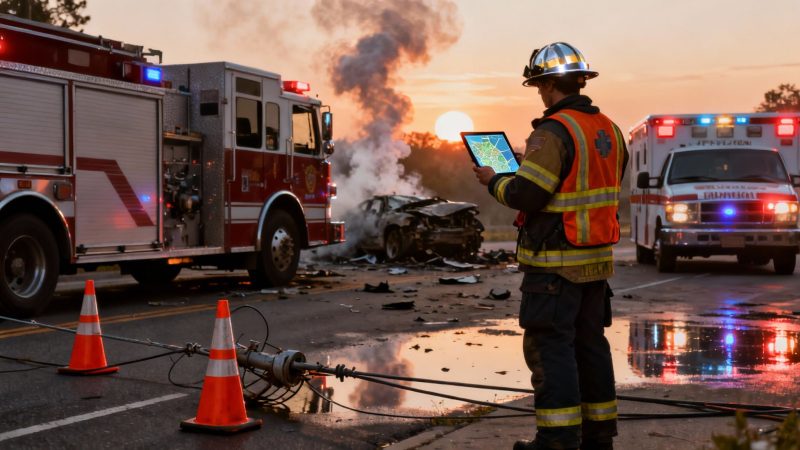
Knowing how to size up the scene is the first, most critical step in laying the groundwork for a safe and successful emergency response. It's that rapid, yet systematic, process of evaluating an incident to figure out its scope, spot immediate hazards, and get a handle on what resources you'll need.
Every single action that follows hinges on this initial look, making sure your crew stays safe while delivering efficient patient care.
The Foundation of Every Successful Response
That first glance at an incident—whether it's a multi-car pileup on the highway or a structure fire—sets the entire response in motion. This isn't just about running through a mental checklist; it's the foundation for every decision you and your crew will make from that point forward.
A sharp, accurate scene size-up is what separates a controlled, effective operation from a chaotic one where risks spiral and resources get wasted. It's a dynamic process that's not just about what you see, but how you interpret and, crucially, communicate it.
The 3 Pillars of an Effective Scene Size-Up
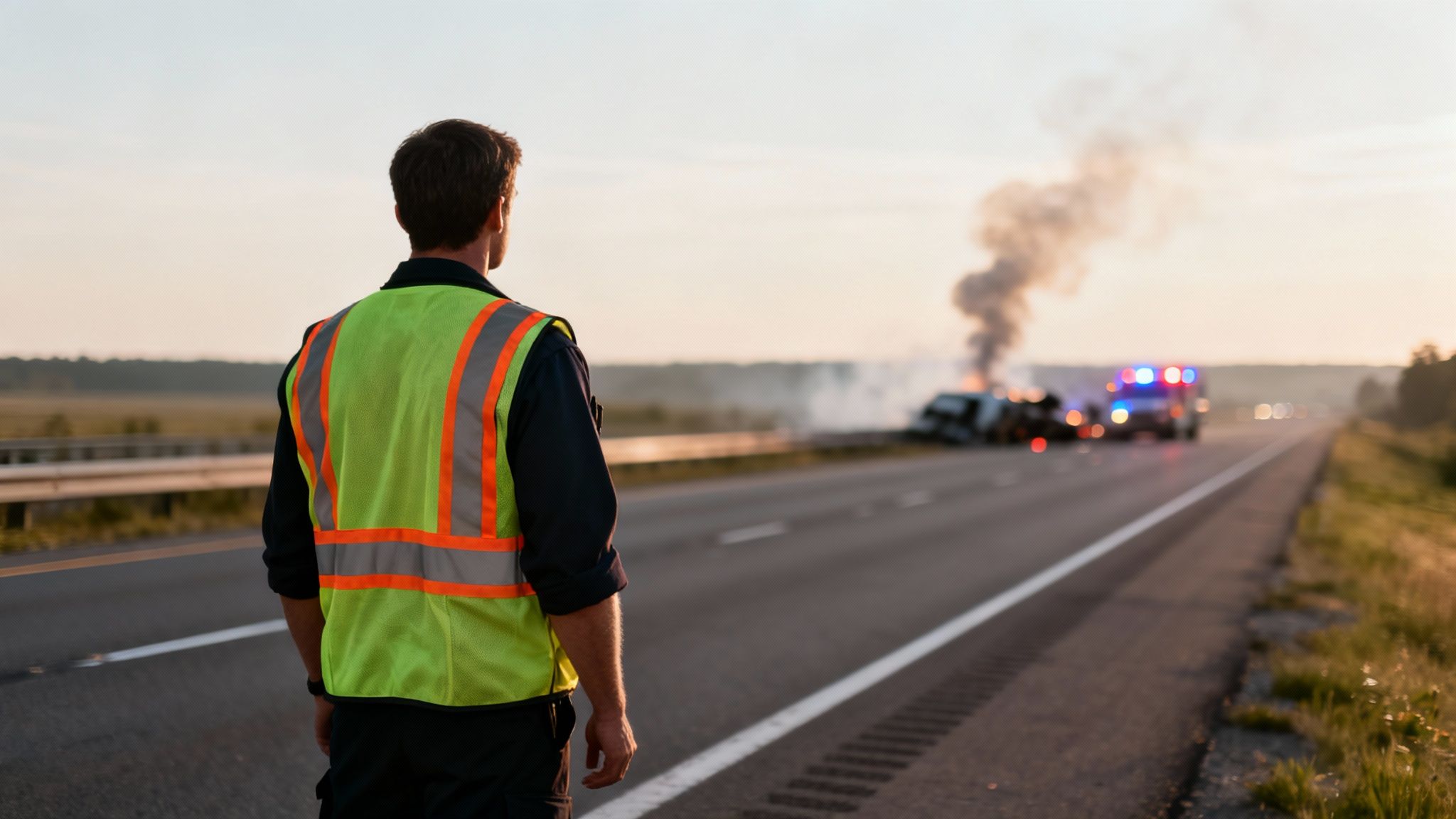
A strong assessment really boils down to three core pillars. When they work together, they create a clear operational picture that protects your crew, conserves critical resources, and ultimately saves lives.
Mastering these elements is non-negotiable for anyone in the field. They're the fundamentals that keep you and your team ahead of the incident, not behind it.
| The 3 Pillars of an Effective Scene Size-Up | ||
|---|---|---|
| Pillar | Key Objective | Actionable Insight |
| Responder Safety | Identify and mitigate immediate and potential dangers to all personnel. | Practical Example: You arrive at a single-car crash and see a downed power line sparking 10 feet away. Your first action isn't patient care; it's establishing a safe zone and calling the power company. Rushing in risks electrocution and turns rescuers into victims. |
| Incident Scope | Quickly determine the nature, scale, and complexity of the problem. | Practical Example: A call for a "man down" at a shopping mall. You find one patient, but also notice a strange odor and see others looking dizzy. This isn't a medical call; it's a potential hazmat incident requiring a much larger response. |
| Resource Needs | Match the right resources to the scale of the incident. | Practical Example: A fender bender with no injuries doesn't need a heavy rescue and three ambulances. Calling for only what you need—one engine for fluid cleanup and PD for traffic—keeps other units in service, saving fuel and ensuring they're available for the next, more serious call. |
These pillars aren't sequential steps but a constant feedback loop that informs your strategy from the moment you arrive until the scene is cleared.
Sizing up the scene is like being the quarterback in a crisis playbook—you're rapidly scanning for scale, hazards, and needs to orchestrate a winning response.
Modern Tools for a Modern Response
This evolution in emergency management is why the Next Generation Emergency Response System Market is booming. It was valued at USD 281.8 billion in 2025 and is projected to climb past USD 402.1 billion by 2032.
Platforms like Resgrid are right at the heart of this trend. By integrating messaging, tracking, and reporting into one system, they enable 20-40% faster scene evaluations, according to industry benchmarks. Actionable Insight: For a department, faster evaluation means making the right call on resources sooner. Canceling just one unnecessary engine or ambulance roll per shift because you had better initial intel can save hundreds of dollars in fuel and operational costs each week. You can find out more about the emergency response system market's growth and trends to see where things are headed.
Sizing Up the Scene Before You Arrive
Your size-up doesn't start when your boots hit the ground. It begins the second that call drops. That crucial window of time you spend driving to the scene isn't just for getting there—it's for strategic preparation. The initial dispatch information is your first set of clues, and you need to start piecing them together immediately.
First, break down what dispatch is telling you. Was it a single caller or multiple? It's a simple question, but multiple calls for the same incident almost always point to a much bigger event than what was first reported. Practical Example: A single call for a "car fire" might be a minor engine compartment issue. But if dispatch reports five calls for the same location, you should already be thinking bigger—a fully involved vehicle, potential exposures to other cars or structures, and the need for more resources.
Reading the Environment from a Distance
As you get closer, your eyes are your best tool. Don't wait until you're parked in the middle of the chaos to start gathering intel. Look for cues from blocks away.
- Traffic Flow: Is traffic already re-routing itself? Are you seeing cars pulling over erratically? This can pinpoint the location and scale of a bad MVC long before you see the wreckage.
- Civilian Behavior: This is a big one. Are people running toward the scene out of curiosity, or are they running away from it in fear? Their actions give you a raw, unfiltered read on the immediate threat level.
- Visible Signs: A column of smoke is the classic example, but you have to know how to read it. Thick, black smoke screams burning synthetics and a completely different tactical approach than light, white smoke, which might just be steam or burning organic material.
A proactive size-up is what keeps you from walking into a disaster. What you see and process in the two minutes before you arrive is often more valuable than your first two minutes on scene. It's what prevents injuries and saves equipment from costly damage.
Building a Mental Picture with Technology
This whole pre-arrival phase gets a massive boost when your team is using modern coordination tools. Instead of just relying on fragmented radio traffic, you can build a complete mental picture before you even have eyes on the target. This creates a shared understanding and stops responders from showing up with conflicting information.
Practical Example: Imagine a captain in the first-due engine seeing the real-time GPS locations of other responding units on a map. They can get a quick text update from an officer already on scene that says, "Watch for downed power lines on the north side." That's the kind of information that saves lives and prevents thousands in equipment repairs. You can see how the Resgrid mobile apps create this kind of shared awareness for teams out in the field.
Actionable Insight: This digital coordination prevents the "train of trucks" effect, where multiple units take the same congested route. Seeing other units' locations allows for smarter, staggered approaches, saving fuel and reducing response times. This simple act of sharing intel early turns a bunch of individual units into a truly cohesive team.
The 360 Walkaround: Uncovering Hidden Dangers
Once you arrive, the single most critical thing you can do is the 360-degree walkaround. This isn’t just a casual stroll around the scene; it’s a deliberate, systematic sweep to uncover threats and gather intel you couldn’t see from the cab of your truck. Every second spent on this survey directly impacts the safety and efficiency of the entire operation.
You have to get past what's immediately obvious. A car crash isn't just two vehicles smashed together—it's a potential minefield of hazards. As you circle the incident, you’re actively hunting for ejected patients, leaking fluids, and signs of vehicle instability. You need to see all four sides to truly get the lay of the land.
This whole process, from the moment dispatch tones you out to your initial observations on arrival, builds the foundation for everything you do on scene.
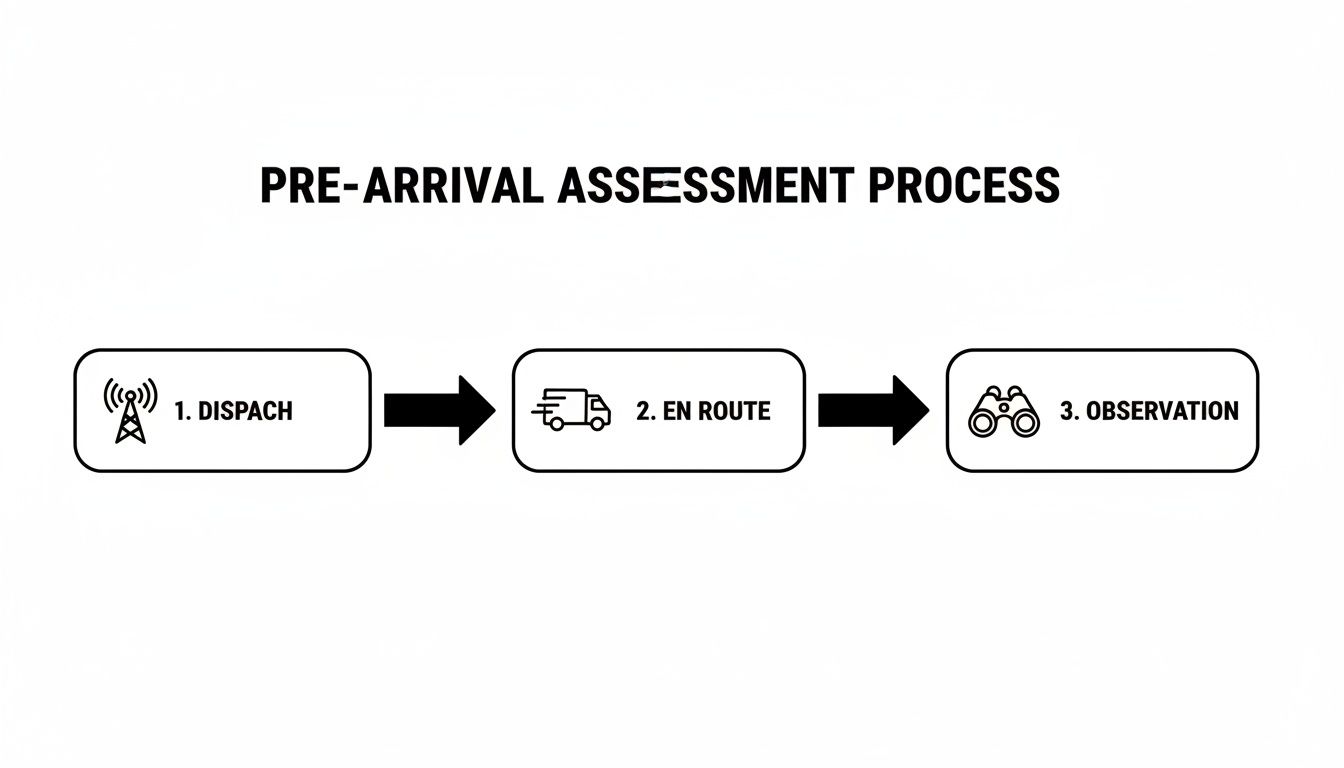
As you can see, the size-up is a constant flow of information that starts long before you even step foot on the scene and culminates with what you see with your own two eyes.
Tailoring Your Walkaround to the Incident
A one-size-fits-all approach just doesn't work out here. Your mental checklist has to change based on the emergency you're rolling up on, or you're going to miss something important.
At a structure fire, your walkaround is focused on a completely different set of threats:
- Utility Shutoffs: Where are the gas and electric meters? Getting utilities secured early is a top priority.
- Secondary Egress: Are there back doors or windows we can use for rescue or, just as importantly, as a firefighter escape route?
- Structural Integrity: Practical Example: You see smoke pushing through the mortar joints of a brick wall. This is a tell-tale sign of intense heat inside that could lead to a structural collapse. You immediately mark that as a collapse zone, keeping crews and expensive apparatus out of harm's way.
But at a vehicle collision, your priorities shift entirely:
- Unseen Victims: You have to check under and around the vehicles for patients who might have been ejected. It happens more than you think.
- Vehicle Hazards: Practical Example: You notice the "HYBRID" badge on the trunk of a wrecked car. You must now assume the high-voltage system is active, changing your extrication tactics completely to avoid a deadly electrical shock.
- Scene Stability: Is the vehicle on its wheels, or is it on its side and in need of stabilization before anyone can even think about getting inside?
The 360 walkaround is your first and best defense against ugly surprises. It's where you find the downed powerline hidden behind the building or the second patient who was thrown from the vehicle. Missing these details can have catastrophic consequences for your crew.
Establishing Control and Saving Money
Ultimately, the goal of the walkaround is to establish control. You do this by defining your operational areas—the hot, warm, and cold zones. This simple act of creating boundaries immediately makes the scene safer for your crew, other agencies, and the public by keeping unauthorized folks out of the danger zone.
Here’s where you can make a huge difference: using technology to instantly share what you find saves time, protects your people, and prevents costly mistakes. With a tool like Resgrid, you can drop a pin on a map to mark that downed powerline or add a quick call note about a hostile bystander.
Actionable Insight: That instant, shared information prevents another crew from unknowingly driving a $500,000 engine over a hidden hazard like a ruptured fuel tank or sharp debris. A simple digital note can prevent thousands of dollars in equipment damage and out-of-service time. This turns one person's observation into team-wide situational awareness.
Matching Resources to the Reality of the Incident
Once you've got a handle on the immediate hazards, your attention naturally pivots to resources. This is where your size-up moves beyond what you have to what you truly need. The goal here is precision, not guesswork. Every unit you call to a scene that isn't needed is a unit that's not available for the next 911 call.
Practical Example: A call comes in for a person with chest pain. On arrival, you discover it's an elderly person who lives alone and needs help getting up after a fall, with no signs of trauma or cardiac issues. Instead of calling for a fire engine and a paramedic unit, you request a single lift-assist unit. This keeps advanced life support (ALS) resources available for a true emergency, a direct saving of personnel and high-cost asset availability.
Avoiding the Cost of "Just in Case"
One of the most common—and expensive—mistakes on a scene is over-requesting assets. Calling for that extra engine or a second ladder truck "just in case" might feel like the safe play, but it has real consequences, both financially and operationally. This habit pulls units out of their primary response districts, which stretches response times for any subsequent calls and just burns through fuel and adds wear-and-tear.
The real art of resource management is justifying every single request. Your size-up should give you the data to confidently say, "I need one more ambulance for a confirmed critical patient," not, "Send another bus, we might need it."
This data-driven mindset is becoming the standard for modern emergency services. The demand for efficient, integrated platforms is why the global Emergency and Disaster Response Market is projected to jump from USD 177.70 billion in 2025 to USD 244.38 billion by 2030. That growth is fueled by the need for tools that link dispatch and field operations, especially when studies show these systems can slash deployment delays by up to 30%. You can learn more about these market trends in disaster response and see how tech is changing the game.
Smart Resource Allocation in Action
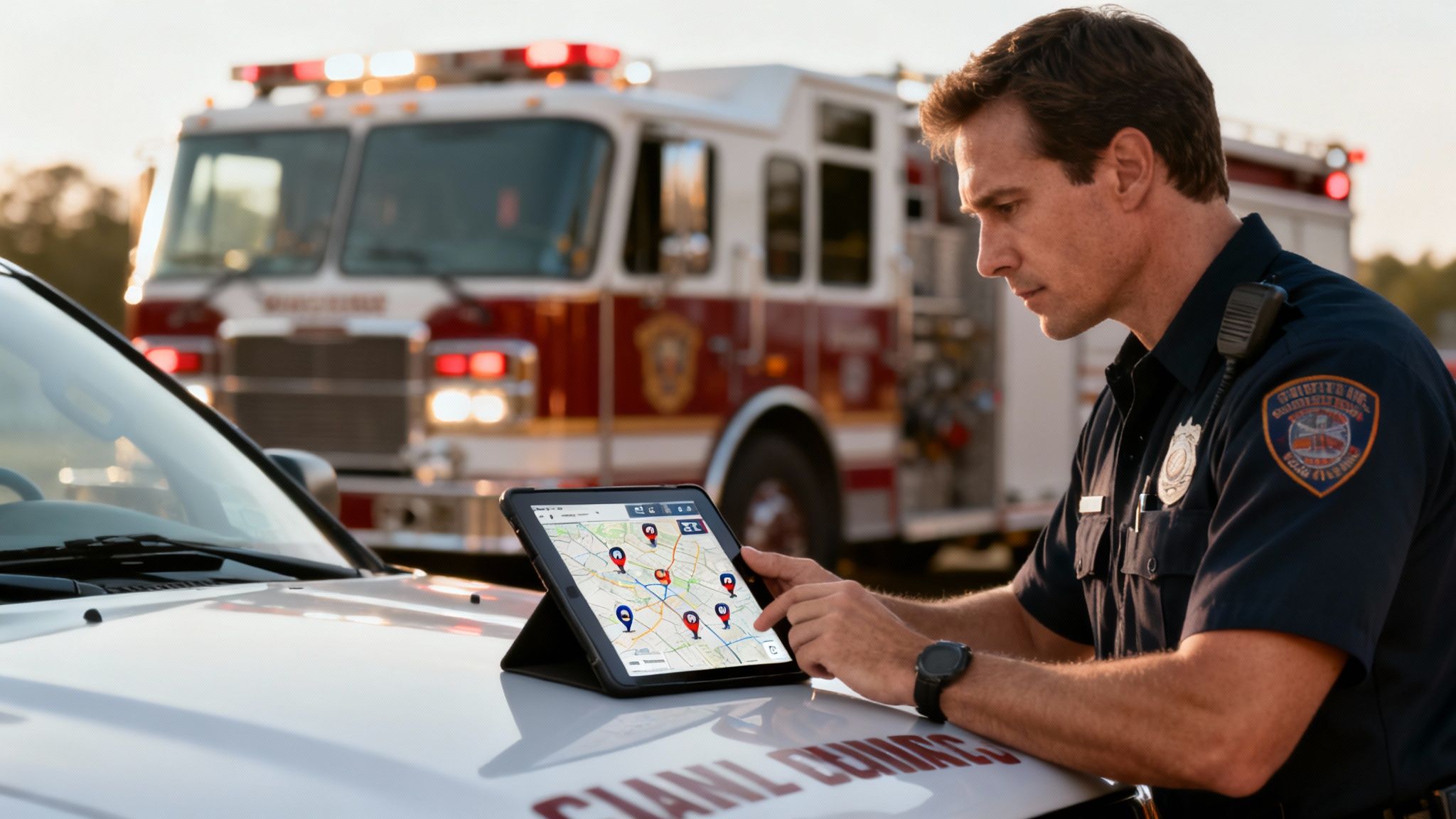
Instead of just going with your gut, a modern command officer can use today's tools to make sharp, evidence-based decisions. This is where a platform like Resgrid can make a tangible financial impact. Imagine seeing a live roster of who's on duty, what their qualifications are, and the exact ETA of incoming units, all on one screen.
Here’s how that plays out on a real call:
- Real-World Scenario: You pull up to a commercial fire alarm. Your 360 reveals light smoke coming from a rooftop HVAC unit, not a working structure fire.
- The "Old Way": You might just let the full first-alarm assignment roll in, tying up multiple engines and a ladder truck that you don't actually need.
- The Smart Way: Using Resgrid, you see exactly who is responding. You can immediately send a broadcast message to cancel specific units and just keep one engine on scene to investigate the HVAC unit.
Actionable Insight: That one decision saves hundreds of dollars in fuel and reduces vehicle wear across multiple apparatus. Most importantly, it keeps other units in service and ready to respond in their own districts. This is just one of the many Resgrid features designed to boost system-wide efficiency and save taxpayer dollars by matching the response to the reality of the incident.
Communicating Your Findings for a Coordinated Response
A silent size-up is a useless one. Simple as that. All the crucial information you just gathered during your 360-degree walkaround is only valuable once you get it on the radio. This is where your individual assessment transforms into coordinated, team-wide action, and it's absolutely critical to getting the scene under control.
Your initial radio report is what sets the tone for the entire incident. Using a proven, concise format ensures nothing gets missed in the heat of the moment. One of the best and easiest methods I've seen in the field is the C.A.N. report.
The C.A.N. Report Structure
This simple framework helps you give dispatch and other incoming units a clear, actionable summary. It's designed to be quick and easy to remember when your adrenaline is pumping.
- Conditions: What are you seeing right now? Give them a brief but vivid snapshot. Practical Example: "Dispatch, Engine 1 is on scene. We have a two-vehicle MVA, heavy front-end damage to both. All eastbound lanes are blocked."
- Actions: What is your crew doing? This lets everyone know your immediate priorities. Practical Example: "Engine 1 crew is starting patient assessment and setting up traffic control."
- Needs: What else do you need? Be specific. This prevents you from getting too much or, worse, too little help. Practical Example: "Requesting a second ambulance for an additional patient and PD for traffic management."
A clear, concise radio report is the difference between a controlled scene and a chaotic one. It ensures the right help is on the way without tying up units that are needed elsewhere—a direct saving in fuel, time, and personnel availability.
This isn't a one-and-done deal, either. Communication has to be continuous. As the situation changes—a patient’s condition worsens, a fire spreads, or you find a new hazard—you have to get back on the radio and provide updates to keep everyone on the same page.
Streamlining Documentation for Future Savings
Let's be honest, documentation is the last thing on anyone's mind during a call, but it's incredibly important down the line. There's a reason the Incident and Emergency Management Market, valued at USD 145.90 billion in 2025, sees situational awareness solutions holding the highest market share. Good communication and documentation are the backbone of that awareness, improving outcomes by as much as 25% in training drills. You can read more about the emergency management market on Grand View Research.
Actionable Insight: This is where a tool like Resgrid becomes a huge cost-saver. Instead of spending hours after a tough incident trying to piece together details for reports, your size-up notes, hazard locations, and resource requests can be logged directly into the call record in real-time. This creates an accurate timeline that drastically cuts down on post-incident administrative hours for both paid staff and volunteers.
Even better, this detailed, time-stamped data gives you the concrete evidence needed to justify budget requests. When you can show the chief or the town board exactly how many times you needed specialized extrication equipment or extra personnel for traffic control over the last year, your request transforms from a simple "ask" into a data-backed necessity. This approach makes securing funding for new equipment and personnel a whole lot easier.
Common Questions on Scene Size-Up
Even with a solid process, questions are always going to pop up in the field. The key to making a quality scene size-up second nature is to tackle these common challenges head-on. It's all about reinforcing good habits and knowing how to adapt when things don't go by the book.
Below are some of the most frequent questions we hear from responders. Think of this as a quick-reference guide with direct, practical answers to help you navigate those tricky situations and sharpen your on-scene decision-making.
How Often Should I Re-Evaluate the Scene?
Your initial size-up is absolutely not a one-and-done task; it's a continuous loop. You have to re-evaluate every single time something significant changes—a fire doubles in size, a new hazard is spotted, or a key resource finally arrives. This constant reassessment is what keeps your operation safe and effective.
Practical Example: You are working a house fire that seems routine. During your second walkaround 15 minutes in, you notice the wall on the "C" side is now bulging. This is a critical sign of impending collapse. You immediately re-evaluate, pull all crews out, and switch to a defensive attack, preventing a potential catastrophe.
Any update to your initial assessment must be broadcast immediately to all units. This ensures everyone is operating with the same intel, maintaining scene safety and preventing crews from walking into unexpected dangers. A shared understanding is a safe understanding.
What Is the Biggest Mistake in a Scene Size-Up?
The single most dangerous—and common—mistake is tunnel vision. This is what happens when a responder rushes in to treat an obvious victim or attack a fire without first completing a full 360-degree survey. With adrenaline pumping, it’s an incredibly easy trap to fall into.
Practical Example: An EMT rushes to a screaming patient in an overturned car. Focused only on the patient, they miss the leaking gasoline pooling under the vehicle. A spark from their own equipment could ignite a fire, injuring the patient and the entire crew. Taking that extra 30 seconds for a 360 walkaround would have identified the fuel leak, allowing the crew to mitigate it before starting patient care.
How Can Technology Help a Small Volunteer Department?
For volunteer departments working with tight budgets and limited personnel, effective resource management is everything. This is where a platform like Resgrid becomes a powerful, money-saving tool.
Instead of just guessing who is responding to a call, Resgrid gives you a real-time roster on your phone or tablet. This immediately prevents you from calling out more people than you actually need for a minor incident, which directly saves money on fuel and reduces unnecessary wear and tear on your apparatus.
- Practical Example: A fire alarm goes off at 3 a.m. Instead of paging the entire department and rolling multiple trucks, the chief checks Resgrid and sees that a qualified crew of four living near the station is already en route. He can then send a message telling everyone else to stand down unless needed, saving fuel and letting other volunteers get their sleep.
Actionable Insight: Beyond call response, its detailed call logging and reporting features provide the hard data you need to justify grant applications. When you can show a funding body exactly how many calls you ran and the resources used, you transform a free tool into a powerful asset for securing critical funding for new equipment or training. For more help, you can always check out the information on the Resgrid support pages for guidance.
Resgrid provides the tools you need to manage your personnel, resources, and incidents effectively, saving you time and money while improving operational readiness. See how our platform can support your team at https://resgrid.com.