

The Ultimate Truck Checklist Inspection: 8 Frameworks to Use in 2026
In the world of first responders and fleet operations, vehicle readiness isn't just a goal; it's a life-saving necessity. A missed crack in a brake line, an overlooked low tire, or an unstocked medical kit can have catastrophic consequences. But a generic, pencil-whipped checklist is no longer enough. The difference between operational excellence and costly downtime lies in a structured, actionable, and digitally integrated truck checklist inspection. A robust inspection program doesn't just prevent accidents; it's a powerful financial tool that slashes unexpected repair bills, lowers insurance premiums, and extends the life of your most valuable assets. For example, catching a slow coolant leak (a $20 fix) during a daily check prevents a catastrophic engine overheat on the road, which could cost over $10,000 in repairs and vehicle downtime.
This guide moves beyond the basics, breaking down eight essential inspection frameworks that provide the structure you need to ensure every vehicle is safe, compliant, and mission-ready. We'll explore specific, actionable insights and practical examples showing how each framework can be implemented to deliver real cost savings and enhanced safety, transforming your inspections from a routine chore into a strategic advantage. While our focus is on commercial and emergency vehicles, a highly detailed consumer-level guide can also offer valuable perspectives. For instance, drawing insights from an ultimate used car inspection checklist can further refine your truck inspection protocols by highlighting meticulous component-level checks.
From the rigorous standards of the CVSA and NFPA to the quality management principles of ISO 9001, you will learn how to build a comprehensive inspection process. We will show you how to identify common defects before they become critical failures and integrate these checks seamlessly into platforms like Resgrid for streamlined tracking and reporting, ultimately turning your fleet into a consistently reliable operational force.
1. Commercial Vehicle Safety Alliance (CVSA) Pre-Trip Inspection
The Commercial Vehicle Safety Alliance (CVSA) Pre-Trip Inspection is the gold standard for ensuring commercial and emergency vehicles are safe and compliant before they hit the road. Developed in alignment with Department of Transportation (DOT) and Federal Motor Carrier Safety Administration (FMCSA) regulations, this comprehensive procedure serves as a systematic walk-around and operational check. It is designed to catch mechanical defects and safety hazards, from brake systems to signal lights, that could lead to catastrophic failures, costly roadside violations, or operational downtime. A practical example is a driver identifying a tire with low pressure during the walk-around, a simple fix that prevents a dangerous and expensive highway blowout.
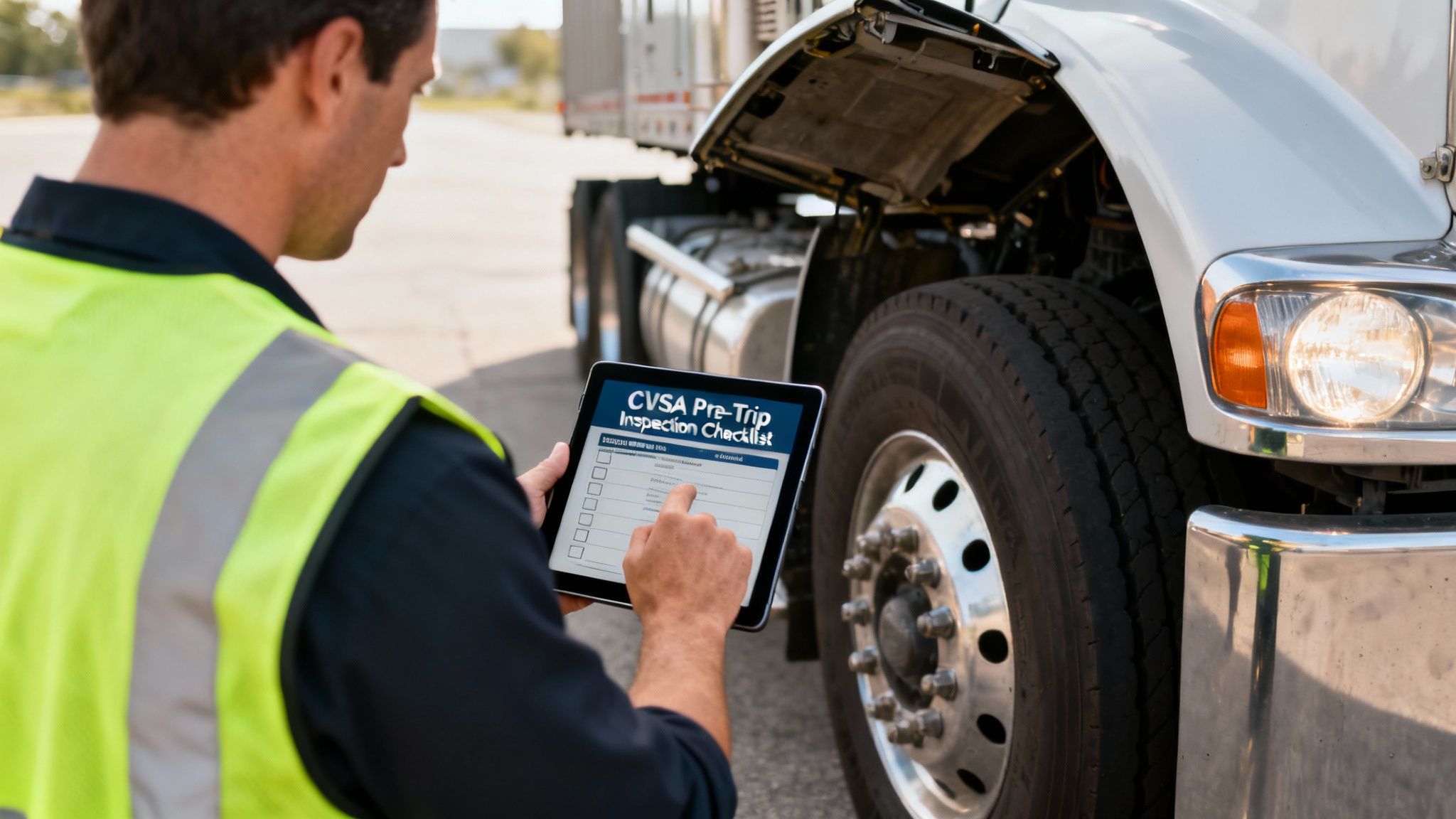
Adopting the CVSA standard for your truck checklist inspection is crucial for any organization that relies on vehicle readiness, especially first responders. This standardized approach ensures that every vehicle, whether it's an ambulance, a fire engine, or a patrol car, is inspected with the same level of rigor before every shift. It covers everything from checking fluid levels under the hood to verifying the integrity of tires, lights, and steering components.
Actionable Insights for Implementation
To make the CVSA Pre-Trip Inspection work for your fleet, focus on integration and consistency.
- Digitize the Checklist: Transition from paper forms to a digital solution. Using an app that syncs with a platform like Resgrid allows for real-time submission, immediate flagging of defects, and a searchable digital audit trail. This eliminates lost paperwork and provides instant visibility to fleet managers.
- Automate Maintenance Workflows: A key money-saving strategy is to connect your inspection process directly to your maintenance system. When an operator fails an item on the digital checklist—like worn brake pads—it can automatically trigger a work order in Resgrid. This proactive approach prevents minor issues from becoming major, expensive repairs and keeps vehicles in service longer, avoiding the high cost of a brake system failure which can run into thousands of dollars.
- Standardize Training: Ensure every driver and operator receives identical training on the CVSA inspection protocol. This consistency is vital for reliable data and guarantees that no steps are missed, regardless of who is performing the check. Schedule these inspections during shift briefings to make them a routine, non-negotiable part of daily operations.
By embedding the CVSA inspection into your daily workflow, you not only enhance safety but also build a robust system for compliance and preventative maintenance, ultimately reducing operational costs and extending the life of your critical assets.
2. NFPA 1915 Fire Service Vehicle Inspection Standard
The NFPA 1915 standard is the definitive guide for the inspection, maintenance, testing, and retirement of fire apparatus. Unlike general commercial vehicle inspections, NFPA 1915 is tailored specifically for the unique and complex systems found on fire engines, ladder trucks, and other emergency response vehicles. This standard provides a rigorous framework for ensuring that every component, from the chassis and engine to the fire pump, aerial device, and foam systems, is in a constant state of operational readiness. A practical example is the weekly check of an aerial ladder's hydraulic fluid, which can catch a small leak before it leads to a catastrophic failure during a rescue operation.
For fire departments and emergency services, adhering to NFPA 1915 is not just best practice; it's a critical component of risk management and firefighter safety. A thorough truck checklist inspection based on this standard ensures that an apparatus will perform reliably under the extreme demands of an emergency scene. It covers detailed checks that are mission-critical, such as verifying pump pressures, hydraulic fluid levels for aerials, and the functionality of warning lights and sirens, which are often overlooked in standard vehicle checks.
Actionable Insights for Implementation
To effectively implement NFPA 1915, focus on structured documentation and proactive maintenance.
- Create Tiered Digital Checklists: Use a platform like Resgrid to build out tiered inspection forms that align with NFPA 1915's required frequencies: daily, weekly, monthly, and annually. This ensures the correct level of detail is captured at the right interval, from a quick pre-shift check to a comprehensive annual pump test.
- Link Inspections to Equipment and Personnel: Tie each inspection directly to the specific apparatus and the personnel performing it. Within Resgrid, you can assign these checks as part of a daily schedule. This creates accountability and a clear, auditable record of who checked what and when, which is vital for compliance and liability purposes.
- Automate Corrective Action for Failed Items: The fastest way to save money and prevent catastrophic failure is to act immediately on defects. Configure your digital checklist so that a failed item, like a low aerial hydraulic fluid level, automatically generates a high-priority maintenance ticket and notifies the fleet manager. This prevents a minor issue from grounding a multi-million dollar piece of equipment when it's needed most, saving on costly emergency vendor call-outs.
By integrating the NFPA 1915 standard into your daily operations through a digital system, you transform routine checks from a chore into a powerful tool for ensuring firefighter safety, maximizing apparatus uptime, and extending the service life of your fleet.
3. Department of Transportation (DOT) Vehicle Inspection Report (DVIR)
The Department of Transportation (DOT) Vehicle Inspection Report (DVIR) is a federally mandated process for documenting the condition of commercial motor vehicles. Governed by 49 CFR 396, the DVIR is a formal record completed daily by drivers to report any defects or deficiencies that could impact safe operation. For dispatch-focused organizations like ambulance services or security firms, the DVIR is more than a compliance tool; it's a critical communication link between operators, fleet managers, and maintenance teams, ensuring accountability and a systematic approach to vehicle health. For example, a driver noting "steering feels loose" on a DVIR can trigger a mechanic to check the tie rods, a simple preventative fix that averts a potential loss-of-control accident.
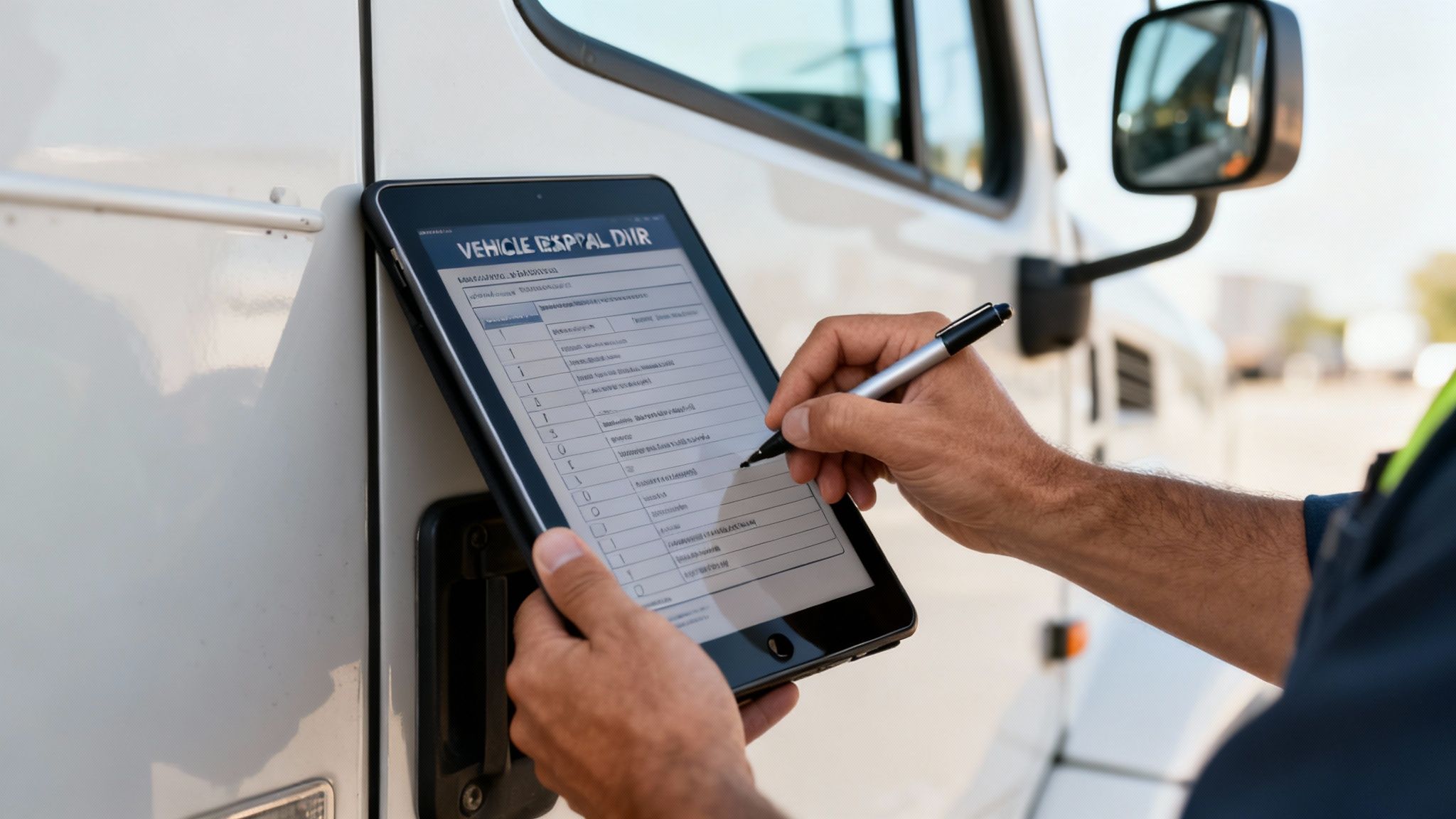
Integrating a DVIR process into your truck checklist inspection protocol provides an official, auditable record that is essential for regulatory adherence and operational integrity. This daily report prompts drivers to systematically check key components like brakes, lights, tires, and emergency equipment. For first responders, this formal documentation is crucial for proving due diligence in maintaining vehicle readiness and can be invaluable in post-incident reviews or liability situations. It establishes a clear chain of custody for identified issues, from driver reporting to mechanic certification of repair.
Actionable Insights for Implementation
To maximize the effectiveness of your DVIR process, focus on digitalization and proactive maintenance workflows.
- Digitize the DVIR Form: Transition your paper DVIRs to a digital format using the Resgrid mobile app. This allows drivers to complete and submit reports from the field instantly. Digital submissions create a centralized, searchable database of all inspections, eliminating the risk of lost paperwork and providing immediate visibility into vehicle status for dispatch and fleet managers.
- Automate Defect Alerts and Workflows: A significant money-saving tactic is to configure automated alerts for failed items on the DVIR. When a driver reports a critical defect like low tire pressure or a malfunctioning siren, the system can automatically notify the maintenance supervisor and generate a work order in Resgrid. This immediate action prevents small issues from escalating into costly roadside breakdowns or out-of-service events.
- Generate Compliance and Trend Reports: Use the collected DVIR data to generate comprehensive reports for compliance audits and performance analysis. Tracking defect trends across your fleet can help identify recurring problems with specific vehicle models or components. This data-driven insight allows you to make more informed purchasing decisions and adjust preventative maintenance schedules, reducing long-term repair costs. For instance, noticing frequent headlight failures on a certain model can lead to switching to a more durable brand, saving on parts and labor over the fleet's lifetime.
By embedding a streamlined DVIR process into your operations, you ensure federal compliance while creating a powerful system for proactive vehicle management, ultimately enhancing safety and reducing the total cost of ownership for your critical assets.
4. ISO 9001 Quality Management Inspection Protocol
The ISO 9001 standard offers a powerful framework for establishing a quality management system that can be applied directly to fleet maintenance and vehicle safety. While not an inspection checklist itself, it provides the principles for creating highly structured, repeatable, and auditable inspection processes. Adopting an ISO 9001 approach to your truck checklist inspection shifts the focus from simply finding defects to implementing a system of continuous improvement, ensuring every check is performed consistently and data is used to enhance overall fleet reliability. A practical example is using inspection data to identify that a specific type of brake pad wears out 20% faster than the manufacturer's estimate, leading to an adjusted, more cost-effective replacement schedule.
For organizations like municipal emergency services or hospitals managing ambulance fleets, an ISO 9001-aligned protocol demonstrates a commitment to the highest standards of quality and safety. This system requires meticulous documentation of all procedures, clear definitions of roles, and a structured process for addressing non-conformities. It transforms routine inspections into a core component of a larger quality assurance strategy, making your operations more efficient, defensible during audits, and ultimately safer.
Actionable Insights for Implementation
To leverage the ISO 9001 framework for your fleet, concentrate on documentation, analysis, and systematic improvement.
- Document and Standardize Procedures: Use a platform like Resgrid to create and store official, version-controlled inspection procedures. Every step of the walk-around, from checking tire pressure to verifying medical equipment, must be documented. This ensures every operator follows the exact same standardized truck checklist inspection process, eliminating variations and creating a reliable baseline for performance data.
- Implement Corrective Action Workflows: When a defect is found, the ISO 9001 methodology demands a structured response. Configure your system to not only create a repair ticket but also to initiate a corrective action report. This forces a root cause analysis—was it component failure, operator error, or a maintenance gap? This insight is a money-saving tool that helps prevent the same issue from recurring across the fleet, reducing long-term repair costs.
- Use Data for Management Review: An essential part of ISO 9001 is the management review process. Generate regular reports within Resgrid that track key metrics like the number of failed inspections, common defect types, and time-to-repair. This data provides leadership with clear visibility into fleet health, enabling informed decisions on budget allocation, vehicle replacement cycles, and preventative maintenance schedules that optimize asset lifespan and reduce unexpected expenses.
5. Emergency Medical Services (EMS) Ambulance Checklist
The Emergency Medical Services (EMS) Ambulance Checklist is a specialized inspection template designed specifically for medical transport vehicles. It addresses both mechanical safety and medical equipment readiness, ensuring ambulances are not only operationally sound but also fully stocked for patient care. This comprehensive check, often guided by standards from bodies like the National Association of Emergency Medical Technicians (NAEMT) and state EMS offices, combines DOT compliance requirements with critical life-saving protocols, making it indispensable for any medical first responder organization. For instance, a daily check verifying that the onboard oxygen tank is full prevents a life-threatening shortage during a critical patient transport.
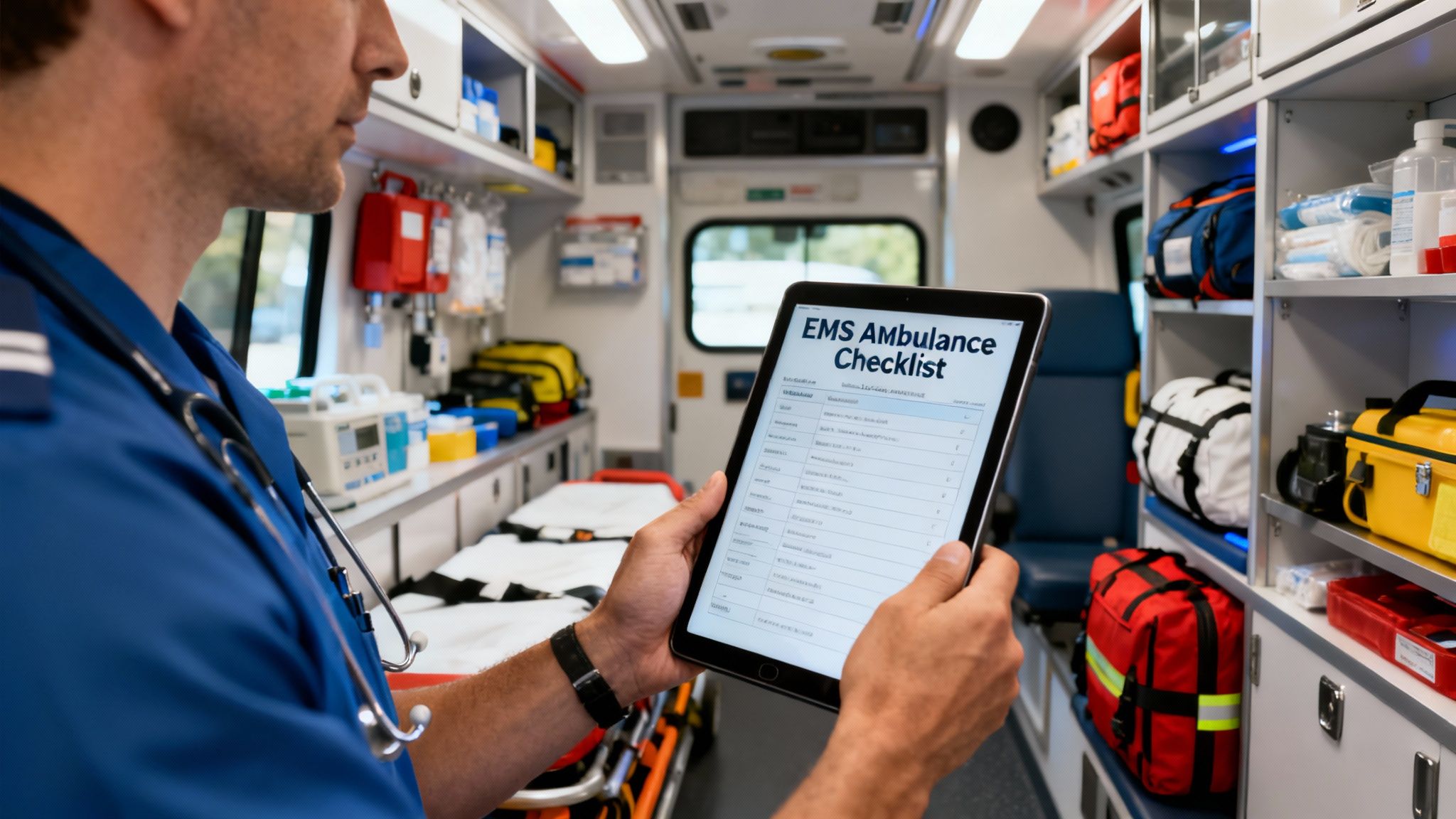
For hospital-based services, fire-based EMS systems, and independent providers, adopting a rigorous ambulance truck checklist inspection is a non-negotiable part of daily operations. The process goes beyond typical vehicle checks by including verifications for medical oxygen levels, AED functionality, medication expiration dates, and the availability of sterile supplies. This dual focus ensures that when a call comes in, the crew can concentrate on patient care without worrying about vehicle failure or missing equipment.
Actionable Insights for Implementation
To maximize the effectiveness of your EMS ambulance checklist, focus on automation and accountability.
- Integrate with Inventory Management: Connect your digital checklist to your inventory system. When a paramedic marks an item like a trauma dressing or a medication as low during their inspection in a Resgrid form, it can automatically trigger a restock notification or order. This prevents critical supply shortages and reduces the money wasted on last-minute, expedited orders.
- Link Equipment Failures to Maintenance: A major cost-saver is automating the repair process. If a crew member logs a malfunctioning AED or a faulty suction unit on their mobile checklist, the system can automatically create a work order for the biomedical equipment technician. This immediate action minimizes downtime for life-saving equipment and avoids the high costs associated with complete equipment failure.
- Automate Compliance Reporting: Use a platform like Resgrid to generate automated compliance reports based on completed checklists. This provides supervisors and state regulators with an instant, auditable record of vehicle and equipment readiness, saving countless administrative hours and ensuring you are always prepared for an audit. Standardize this check as a mandatory task during every shift change to maintain consistent readiness.
6. OSHA Heavy Equipment Inspection Checklist
The OSHA Heavy Equipment Inspection Checklist is a critical framework for organizations operating specialized trucks in material handling, public works, or industrial settings. Guided by the Occupational Safety and Health Administration's standards, this inspection protocol prioritizes the safety of both the equipment operator and surrounding personnel. It extends beyond basic roadworthiness to cover job-specific components like hydraulic systems, lifting mechanisms, and operator protective structures, ensuring compliance with federal workplace safety laws. A practical example is a pre-use check of a bucket truck's outriggers, ensuring they are functional and preventing a catastrophic tip-over incident.
Adopting OSHA standards for your truck checklist inspection is non-negotiable for public works departments, utility service providers, and industrial emergency response teams. This checklist ensures that vehicles like dump trucks, bucket trucks, or mobile cranes are mechanically sound and equipped with all required safety features before beginning hazardous tasks. The process involves a rigorous check of mechanical integrity, emergency stops, guards, and other features designed to prevent workplace accidents, injuries, and costly OSHA citations.
Actionable Insights for Implementation
To effectively integrate OSHA standards, focus on documentation, compliance, and rapid response to identified hazards.
- Develop OSHA-Specific Templates: Use a digital platform like Resgrid to build custom inspection forms that mirror OSHA's specific requirements for each type of heavy equipment. This ensures every legally mandated checkpoint, from rollover protective structures (ROPS) to backup alarms, is verified and digitally logged for compliance audits.
- Automate Escalation for Critical Violations: A major money-saving and safety-enhancing strategy is to create automated workflows for high-risk defects. If an inspector identifies a critical failure like a compromised hydraulic line or a non-functional emergency brake, the system can automatically flag the vehicle as out-of-service, notify a supervisor, and generate a high-priority work order. This prevents catastrophic failures and ensures immediate corrective action, avoiding massive fines and worker compensation claims.
- Track Inspector Certifications: Mandate and track operator and inspector certifications directly within your fleet management system. By linking inspections to certified personnel in Resgrid, you create an accountable record proving that qualified staff performed the checks, strengthening your defense against potential liability and ensuring a higher standard of inspection quality.
By embedding OSHA's rigorous checklist into your operational fabric, you protect your team, ensure legal compliance, and reduce the financial risks associated with workplace accidents and regulatory fines.
7. Preventive Maintenance Inspection Schedule (PMIS)
A Preventive Maintenance Inspection Schedule (PMIS) is a proactive framework that shifts fleet management from a reactive, break-fix model to a strategic, data-driven approach. Instead of waiting for a component to fail, a PMIS establishes regular, timed inspection and maintenance intervals based on vehicle age, mileage, operating hours, and usage patterns. This system ensures that potential issues are identified and addressed before they can lead to unexpected downtime, roadside failures, or costly emergency repairs. For example, scheduling a coolant system flush every two years, regardless of mileage, prevents corrosion that can lead to a much more expensive radiator replacement down the line.
Implementing a PMIS is essential for any first responder or municipal fleet where vehicle reliability is non-negotiable. This scheduled approach transforms your truck checklist inspection from a simple daily check into a long-term asset management tool. For example, a fire department can schedule annual pump certification inspections, while a police department implements mileage-based service cycles for its patrol cars. This foresight ensures every vehicle remains mission-ready, compliant, and safe, extending its operational lifespan and maximizing its return on investment.
Actionable Insights for Implementation
To effectively integrate a PMIS, focus on automation and data analysis to optimize your fleet's health and budget.
- Automate Maintenance Triggers: Use a fleet management platform like Resgrid to track vehicle mileage, engine hours, and usage automatically. Set predefined thresholds for key maintenance tasks. For instance, you can configure the system to automatically generate a work order for an oil change every 5,000 miles or a comprehensive brake system inspection every six months, ensuring no vehicle misses its scheduled service.
- Create Vehicle-Specific Templates: Not all vehicles are the same. Develop customized inspection templates within your digital system for different apparatus types, like ambulances, ladder trucks, or command vehicles. This ensures that specialized equipment, such as medical devices or hydraulic systems, receives the specific attention it requires at the correct intervals, preventing failures of critical components.
- Analyze Data to Optimize Intervals: A key money-saving strategy is to use the data collected from your PMIS to refine your maintenance schedules. By analyzing historical maintenance records in Resgrid, you can identify trends. You might discover that certain vehicle models require more frequent brake inspections or that your current oil change interval is too conservative for your operational tempo, allowing you to adjust schedules to reduce costs without compromising safety.
By adopting a PMIS, you create a predictable and controlled maintenance environment. This proactive stance not only improves vehicle availability but also provides the financial predictability needed for effective long-term budget planning.
8. Risk-Based Inspection Matrix (RBIM)
A Risk-Based Inspection Matrix (RBIM) is a strategic framework that moves beyond a one-size-fits-all approach to vehicle checks. Instead of inspecting every vehicle with the same frequency and intensity, RBIM prioritizes inspection resources based on data-driven risk factors. This dynamic model considers vehicle age, mileage, usage patterns, maintenance history, and criticality to the mission, allowing organizations to focus their attention on the assets most likely to fail or pose a safety hazard. A practical example is subjecting a 10-year-old frontline ambulance to a comprehensive weekly inspection, while a newer, low-mileage backup unit only receives a bi-weekly check, optimizing mechanic time.
For a large urban fire department or a regional EMS provider, adopting an RBIM for your truck checklist inspection protocol is a game-changer. It ensures that the primary ladder truck with a history of hydraulic issues receives more frequent and detailed checks than a low-mileage support vehicle used for administrative runs. This intelligent allocation of resources maximizes safety and vehicle uptime without overwhelming maintenance staff, directly impacting operational readiness and budget efficiency.
Actionable Insights for Implementation
To implement an RBIM effectively, leverage data and automation to create a smarter inspection schedule.
- Develop a Risk-Scoring System: Create a simple scoring formula that assigns risk points based on key metrics like vehicle age, hours of service, recent repair frequency, and operational role. A high-mileage, frontline ambulance would score higher than a backup transport van. Use this score to determine inspection frequency and depth.
- Automate Dynamic Scheduling: Use a platform like Resgrid to automate inspection schedules based on your risk scores. Set up triggers so that when a vehicle crosses a certain mileage threshold or is flagged for repeated minor issues, it is automatically assigned a more comprehensive inspection form. This prevents high-risk units from slipping through the cracks.
- Integrate with Fleet Analytics: Connect your inspection data to a central analytics dashboard. By tracking trends in failures across high-risk vehicle categories, you can identify systemic issues—like a specific model having recurring brake problems. This insight allows you to take proactive, money-saving measures, such as ordering reinforced parts or adjusting preventative maintenance schedules, rather than reacting to costly roadside breakdowns.
8-Point Truck Inspection Checklist Comparison
| Inspection Type | 🔄 Implementation Complexity | ⚡ Resource Requirements | ⭐ Expected Outcomes / 📊 Impact | 💡 Ideal Use Cases |
|---|---|---|---|---|
| Commercial Vehicle Safety Alliance (CVSA) Pre-Trip Inspection | Moderate 🔄 — standardized checklist; requires trained staff | Low–Moderate ⚡ — inspector time, tablets/apps | High ⭐ — reduces violations; 📊 improves safety & maintenance scheduling | Commercial fleets, EMS daily checks, large dispatch centers |
| NFPA 1915 Fire Service Vehicle Inspection Standard | High 🔄 — multi-level (daily/weekly/monthly/annual) specialized procedures | High ⚡ — certified inspectors, time, detailed documentation | Very High ⭐ — apparatus readiness; 📊 lowers failure risk and supports insurance | Fire departments, ARFF, regional/volunteer fire services |
| Department of Transportation (DOT) DVIR | Low–Moderate 🔄 — mandated form/process, driver-signature workflow | Low ⚡ — driver time; digital DVIR reduces paperwork | High ⭐ — legal compliance & accountability; 📊 audit-ready records | Commercial carriers, ambulances, police/security fleets |
| ISO 9001 Quality Management Inspection Protocol | Very High 🔄 — organization-wide QMS, extensive documentation | High ⚡ — audits, certification costs, training, record control | High ⭐ — consistent quality & continuous improvement; 📊 strong audit traceability | Organizations seeking certification (municipal fleets, hospitals) |
| Emergency Medical Services (EMS) Ambulance Checklist | Moderate–High 🔄 — combined mechanical + medical checks | High ⚡ — trained EMS staff, inventory & drug tracking | Very High ⭐ — patient safety & equipment readiness; 📊 regulatory compliance | Hospital EMS, independent EMS providers, critical care transport |
| OSHA Heavy Equipment Inspection Checklist | High 🔄 — equipment- and workplace-specific procedures, safety training | High ⚡ — certified inspectors, specialized tools, documentation | High ⭐ — worker safety & reduced penalties; 📊 longer equipment service life | Construction, public works, utilities, industrial teams |
| Preventive Maintenance Inspection Schedule (PMIS) | Moderate 🔄 — scheduling rules, mileage/time-based setup | Moderate ⚡ — telematics/mileage data, parts inventory, planning time | High ⭐ — less downtime & lower TCO; 📊 predictable maintenance budgets | Large municipal/commercial fleets, fire/police departments |
| Risk-Based Inspection Matrix (RBIM) | Very High 🔄 — risk scoring, dynamic scheduling, analytics | High ⚡ — data analytics, leadership buy-in, monitoring tools | High ⭐ — targeted safety improvements; 📊 optimized inspection resources | Large/diverse fleets with constrained inspection resources |
From Checklist to Command Center: Unifying Your Fleet Inspection Strategy
Navigating the landscape of truck checklist inspection frameworks, from the rigorous standards of CVSA and NFPA 1915 to the quality-driven protocols of ISO 9001 and OSHA, is the foundational step toward building a culture of safety and operational excellence. We've explored a variety of powerful tools, each designed to address specific needs, whether it's the daily diligence of a DOT Vehicle Inspection Report (DVIR) or the long-term foresight of a Preventive Maintenance Inspection Schedule (PMIS). The core takeaway is clear: a systematic inspection is not just a regulatory hurdle; it's a strategic asset. It is the first line of defense against catastrophic failures, unexpected downtime, and costly roadside violations.
However, the true power of these checklists is only unlocked when they evolve from static paper forms into dynamic, integrated data points. The most meticulously designed checklist is of little value if the findings get lost in a filing cabinet or a forgotten email chain. The critical shift happens when your inspection process becomes the central nervous system of your fleet operations, providing real-time feedback that drives immediate, intelligent action.
Key Takeaways: From Silos to Synergy
The real value of mastering your truck checklist inspection process lies in its ability to connect disparate parts of your operation. A simple walk-around inspection, when digitized and integrated, becomes a powerful catalyst for efficiency and cost savings.
- Proactive vs. Reactive Maintenance: A consistent inspection routine, especially one guided by a PMIS or a Risk-Based Inspection Matrix (RBIM), allows you to identify minor issues like a slow oil leak or slight brake wear before they escalate into major engine failures or complete brake system replacements. This proactive approach saves thousands in emergency repair costs and prevents the significant operational disruption of having a critical vehicle out of service unexpectedly.
- Data-Driven Decision Making: When every inspection report is logged digitally, you begin to build a rich historical database for each vehicle. You can identify patterns, such as a specific model of ambulance consistently showing premature tire wear or a fire engine frequently reporting electrical faults. This data empowers you to make smarter purchasing decisions, adjust maintenance schedules, and even provide targeted training to operators.
- Compliance as a Byproduct of Excellence: Meeting DOT, OSHA, or NFPA standards becomes less about a last-minute scramble and more about a natural outcome of your daily operational rhythm. Digital records with timestamps, photos, and signatures provide an irrefutable audit trail, simplifying compliance and protecting your organization from potential liability.
To truly unify your fleet inspection strategy and turn your checklists into a command center, consider leveraging a robust fleet management system. These systems provide a holistic view of vehicle health, driver behavior, and operational logistics, creating a single source of truth for your entire fleet.
Your Next Steps: Activating the Strategy
Moving forward, the goal is to transform this knowledge into tangible action. Start by evaluating your current inspection process against the frameworks discussed. Are there gaps? Is your current checklist tailored to the unique demands of your emergency vehicles?
- Select and Customize: Choose a primary framework (like NFPA 1915 for a fire department) and augment it with elements from others (like the proactive scheduling of a PMIS) to create a hybrid checklist that perfectly fits your fleet's needs.
- Digitize Your Process: Transition from paper forms to a digital platform. This is the single most impactful step you can take to make your truck checklist inspection data actionable.
- Integrate and Automate: Connect your digital checklist to your maintenance and communication workflows. A failed brake check should automatically generate a work order for the mechanic and notify the shift supervisor, removing manual steps and potential for human error.
Ultimately, a world-class truck checklist inspection program does more than just keep vehicles on the road; it builds confidence. It ensures that when a call comes in, every unit is not just available, but in peak condition, ready to perform its critical mission safely and effectively. This commitment to detail is the bedrock of operational readiness and the hallmark of a truly professional organization.
Ready to transform your paper checklists into an intelligent, automated system that saves time, reduces costs, and enhances safety? Resgrid, LLC provides a powerful platform designed for first responders to create, manage, and track custom vehicle inspections like the ones discussed. Digitize your forms, automate notifications for deficiencies, and maintain a complete audit trail effortlessly with Resgrid, LLC.