
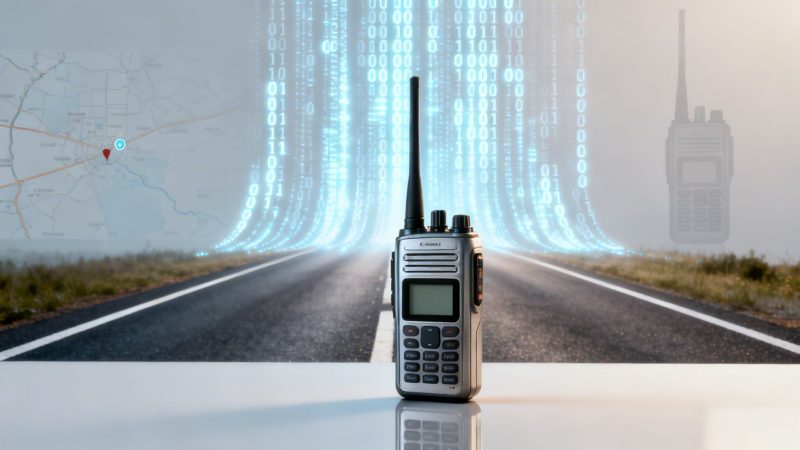
What is a dmr radio? Explore what is a dmr radio and its benefits in 2026
So, what exactly is a DMR radio? At its heart, a DMR (Digital Mobile Radio) is a modern two-way radio that has left its crackly, old-school analog cousins in the dust. It sends your voice and data digitally, which means you get crystal-clear audio and a whole lot more efficiency.
The real magic of DMR, though, is its ability to run two separate conversations on a single radio frequency at the same time. This effectively doubles your talk capacity without you having to spend a dime more on frequency licenses.
Understanding The Core of DMR Technology

Think of an old analog radio channel like a single-lane road. Only one car can pass at a time. If two people try to talk at once, you get a garbled mess. It's just one conversation, one frequency. Simple, but very limiting.
DMR completely changes the game. It’s like turning that single-lane road into a two-lane highway without buying any new land. It uses a clever method called Time Division Multiple Access (TDMA) to slice one radio frequency into two distinct "time slots."
Actionable Money-Saving Insight: DMR gives you two channels for the price of one frequency. You instantly double your call capacity without the headache and high cost of getting new licensed frequencies, which can save an organization thousands of dollars annually on licensing fees alone.
This is a massive leap in efficiency. For example, your security team can use one time slot for their routine patrols while the logistics team uses the second slot to coordinate a delivery. Both conversations happen on the same frequency, at the same time, with zero interference.
The Three Tiers of DMR
To really get a grip on DMR, it helps to know about its three tiers. Each one is built for a different scale, from a simple setup for a small crew to a massive network covering an entire city.
- Tier I is the most basic, designed for license-free use. Think small retail stores or hobbyists. For example, a small event crew using four radios to coordinate within a single building.
- Tier II is the workhorse standard for most professionals. It uses repeaters for wider coverage and is perfect for places like manufacturing plants or school campuses. A practical example is a hotel using a single repeater to provide coverage for security, housekeeping, and maintenance talkgroups across the entire property.
- Tier III is for the big leagues. It supports large, trunked radio systems that automatically manage frequencies for many different user groups—ideal for public utilities or city-wide services. A city's transit authority using a trunked system to manage bus routes, dispatch, and maintenance crews is a classic Tier III example.
How DMR Stacks Up Against Other Standards
DMR’s smart design is a big reason why it has become the go-to digital choice for so many private and commercial networks. It works within the same 12.5 kHz channel space as older analog systems, but its TDMA technology squeezes in two voice channels instead of one.
This makes it far more spectrally efficient than both analog radios and even some other digital competitors. If you want to dig into the nitty-gritty, you can explore more about the technical specifications of DMR's global standard to see exactly how it works.
To give you a quick cheat sheet, here’s a look at the three DMR tiers and who they're for.
DMR Tiers at a Glance
This table breaks down the three tiers, their main jobs, and the kinds of teams that benefit from each.
| DMR Tier | Primary Use Case | Ideal For |
|---|---|---|
| Tier I | Simple, short-range, license-free communication | Small businesses, hobbyists, or personal use in specific regions. |
| Tier II | Professional systems with repeaters for wide area | Factories, hospitals, security firms, and single-site operations. |
| Tier III | Large, multi-site trunked networks | Public transit systems, large enterprises, and municipal public works. |
Choosing the right tier really comes down to your operational needs—how many people need to talk, and how large of an area do you need to cover? This tiered approach is what makes DMR so flexible.
How DMR Technology Transforms Voice into Data

So, how does DMR actually squeeze two conversations onto a single radio channel without them trampling all over each other? The secret sauce is a technique called Time Division Multiple Access (TDMA). It’s what gives DMR its incredible efficiency, effectively doubling your channel capacity right out of the box.
Think about the old way with analog radios. If you had a security team and a maintenance crew that both needed their own channel, you were stuck. You’d have to get two separate frequencies, which isn't always cheap or even possible.
DMR completely changes the game. It takes that single frequency and splits it into two "time slots." The system then rapidly switches between the two conversations, giving each one a tiny slice of time to transmit. This happens so fast—thousands of times a second—that to the people on the ground, it just sounds like two perfectly normal, independent radio calls.
The Magic of the Vocoder
This rapid-fire switching is all thanks to a piece of tech called a vocoder. You can think of the vocoder as a smart translator for your voice. When you key the mic on a DMR radio, the vocoder doesn't just pass along the sound; it instantly analyzes it, compresses it, and packages it into a tidy digital data packet.
This is a fundamental shift from analog, which just transmits the entire raw audio wave—your voice, the background noise, everything. A vocoder is smarter than that. It’s been designed to recognize and prioritize the specific frequencies of human speech.
Practical Example: Picture a firefighter trying to communicate while standing next to a screaming pumper truck and wailing sirens. An old analog radio would just blast all of that noise over the air, making the message a garbled mess. The vocoder in a DMR radio, however, actively filters out that chaos, grabbing only the clear voice data and sending that through.
This digital conversion is the whole reason DMR audio quality is so consistently clear and easy to understand. It strips away the static, hiss, and ambient noise that have plagued radio communications for decades. For anyone trying to get a real feel for what a DMR radio is, that crystal-clear audio is one of its most powerful selling points.
Saving Money Through Clarity
This advanced noise filtering isn't just a nice-to-have feature; it has a real, tangible impact on your operations and your bottom line. In chaotic places like a construction site or an emergency scene, clear communication is everything.
- Fewer Misunderstandings: When commands are heard clearly the first time, you waste less time asking for repeats. This cuts down on errors and keeps the operation moving. A practical example is a crane operator receiving clear instructions, avoiding a costly mistake of moving a load to the wrong location.
- Increased Safety: Getting instructions right is critical for safety. Preventing one accident because a message was understood correctly can save you from costly downtime, injuries, and liability headaches.
- Reduced Radio Chatter: Clear, concise messages mean people spend less time talking. This frees up the channel for other team members who need to get critical information across.
For a team managing a loud concert, this is the difference between a smooth, coordinated event and a complete communication breakdown. This relentless focus on intelligible voice is what makes DMR such a smart choice for professional teams.
What DMR Can Really Do For Your Team
Sure, the digital audio is crisp and you get more channels, but that's just scratching the surface. The real game-changer with DMR is the set of tools it gives you for smarter, more focused communication. It's what turns a simple radio into a genuine coordination powerhouse, helping your team get things done faster and with a lot less noise.
At its core, DMR gives you fine-grained control over who hears your transmissions. This is a huge leap from the old analog world where every single message was a broadcast to everyone on the channel.
- Private Call: A direct, one-to-one call between two radios. This is perfect when a supervisor needs to give instructions to a specific person without tying up the channel for everyone else. For instance, a manager discreetly discussing a sensitive staffing issue with a team lead.
- Group Call: This lets you talk to a specific, pre-defined team. Honestly, this is where you'll spend most of your time and get the most value out of DMR. A practical example is a "Loading Dock" group call that includes only forklift operators and shipping clerks.
- All-Call: This is the big red button. It's a broadcast that hits every radio on the frequency, used for emergencies or announcements that absolutely everyone needs to hear, such as a site-wide evacuation order.
Cutting Through the Noise with Talkgroups
What makes those group calls so powerful is a concept called talkgroups. Think of a talkgroup as a virtual team you program into the radio. It lets different departments all share the same frequency without constantly talking over each other.
Actionable Money-Saving Insight: When you use specific talkgroups instead of just blasting every message out, you kill a massive amount of unnecessary radio chatter. Team members know that when their radio chirps, the message is actually for them. This improves efficiency, leading to fewer wasted work hours spent listening to irrelevant chatter, which directly impacts your labor costs.
Imagine how this works in a hospital setting. You could set up talkgroups for:
- Security Team: For handling patrols and incident response.
- Facilities Staff: For coordinating maintenance and cleaning requests.
- Emergency Department: For all the critical, time-sensitive medical chatter.
A security guard can talk to the rest of their team on the "Security" talkgroup all day long without ever bothering the facilities crew. That kind of organization is what really unlocks the potential of a DMR system.
It's Not Just About Voice: Data on DMR
DMR isn't just for talking; it's digital, which means it can send data. This opens up a whole new level of coordination that can save you a ton of time and even money. Text messaging is one of the most practical uses. You can see how we've built this into our own platform by checking out Resgrid's messaging capabilities.
A great example is using pre-programmed, or "canned," messages. A field tech can push one button to send a status update like "En Route" or "Job Complete." That information gets logged instantly without a word being spoken, keeping the voice channel clear for more urgent traffic.
Many DMR radios also come with built-in GPS. This is huge. The radio can automatically transmit its location back to a dispatch console, giving you a live map of all your units. For first responders and public safety, using DMR's Tier II and III modes is non-negotiable, as they support the repeaters and infrastructure needed for wide-area coverage on VHF (136-174 MHz) and UHF (403-527 MHz) bands. This is what makes large-scale emergency coordination possible, as noted in the Digital Mobile Radio market report. This location data is invaluable for dispatching the closest unit to a call, which saves fuel and makes a real difference in response times.
Comparing DMR With Other Radio Standards
When it's time to decide on a new communication system, you have to understand how DMR stacks up against the alternatives. For a lot of organizations, the choice boils down to sticking with familiar analog radios or figuring out which digital standard makes the most sense. Let's break down where your money is best spent.
The jump from traditional analog radio to DMR is immediate and huge. Sure, analog is simple, but it's also incredibly inefficient and notoriously prone to static and interference. DMR, on the other hand, delivers consistently clear audio, secure communications, and a serious boost in battery life.
Actionable Money-Saving Insight: A DMR radio often lasts up to 40% longer on a single charge compared to an analog radio doing the same job. This isn't just a convenience; it translates directly into cost savings by cutting down on mid-shift battery swaps and lowering your long-term battery replacement budget.
DMR Versus Other Digital Standards
Once you move into the digital world, the decision gets a bit more nuanced. It really comes down to your specific operational needs and, of course, your budget. The main players you'll hear about are P25, TETRA, and NXDN, and each has its own strengths. DMR often hits that perfect "sweet spot" for a huge range of users.
To help you see the differences, here’s a quick rundown of the main digital radio protocols.
| Standard | Technology | Primary Audience | Relative Cost |
|---|---|---|---|
| DMR | TDMA | Commercial, Private, some Public Safety | Moderate |
| P25 | FDMA/TDMA | North American Public Safety (Police, Fire, EMS) | High |
| TETRA | TDMA | European Public Safety, High-Density Commercial | Very High |
| NXDN | FDMA | Commercial, Transportation, Utilities | Moderate |
This table shows that while standards like P25 and TETRA are powerhouses, that power comes with a serious price tag.
Here’s a bit more on what those differences mean in the real world:
- P25 (Project 25): This is the gold standard for public safety in North America. It's often a requirement for agencies that need to qualify for federal grants and ensure seamless interoperability with neighboring departments. It's robust and reliable, but P25 systems come with a significantly higher price tag for both the radios and the infrastructure.
- TETRA (Terrestrial Trunked Radio): You'll find TETRA all over Europe. It's built for high-density environments like massive airports or public transit systems and excels at handling a ton of voice and data traffic at once. The catch? It requires a substantial and costly infrastructure build-out, which just isn't practical for many businesses.
- NXDN: Another solid digital standard, NXDN uses FDMA (Frequency Division Multiple Access) technology. This allows for very narrow channel spacing, which gives it excellent audio quality and great coverage. The trade-off is that it doesn't have the built-in two-for-one channel capacity that you get from DMR's TDMA technology.
This is where you can really see how DMR blends different communication types—from one-on-one private calls to group-wide broadcasts and even GPS tracking—all within a single, efficient system.

Finding the Best Value for Your Operation
For most commercial and private organizations—think security, manufacturing, hospitality, or logistics—DMR just represents the most practical and cost-effective way to go digital. It delivers all the core benefits you're looking for (clear audio, data features, longer battery life) without the steep investment that standards like P25 or TETRA demand.
In fact, a key thing to remember is that for many organizations, DMR provides 90% of the functional benefits of a P25 system for a fraction of the cost.
Think about it this way: a regional event security company needs reliable comms across a large, crowded venue. A P25 system would be complete overkill and blow their budget. An old analog system would get congested and sound terrible in loud areas. A DMR Tier II system, however, gives them exactly what they need: crystal-clear audio, separate talkgroups for different teams (parking, gates, stage crew), and the ability to send text messages for quiet updates—all at a price that makes sense.
Integrating DMR with Modern Dispatch Platforms

This is where things get really interesting. DMR radios are great on their own, but their true power really comes to life when you plug them into a modern dispatch platform. This is how you stop thinking about individual radios and start thinking about a unified command system.
It bridges the gap between your people in the field and the dispatchers back at the command center, creating a single source of truth that boosts both speed and awareness.
For example, imagine your dispatcher needs to send a license plate number or a gate code to a security guard. Instead of tying up the voice channel, they can just type a text message on their console and send it straight to that specific guard's radio. It's discreet, it's quiet, and it's logged.
Real-Time Awareness and Response
The data features baked into DMR are what make this integration so powerful. Good dispatching software doesn't just let you talk; it receives and understands the data coming from the radios, presenting it to command staff in a way that makes sense.
A perfect real-world example is the emergency button. When a paramedic hits that orange button on their radio, it’s not just an alarm.
- An instant, high-priority alert flashes on the dispatcher's screen.
- The system automatically flags which unit is in distress.
- Most importantly, the radio transmits its live GPS coordinates, which pop up on the dispatch map immediately.
This means help gets sent to the right person, at the right location, in seconds—often without a single word being exchanged. If you want to see how these pieces fit together, it’s worth looking at platforms designed for managing dispatch operations to understand how they unify these capabilities.
Actionable Money-Saving Insight: By combining open-standard DMR hardware with a flexible software platform, you can build out a professional-grade command system for a fraction of what you'd traditionally pay. This strategy lets you sidestep the massive licensing fees and proprietary hardware lock-in from legacy console vendors, potentially saving you tens of thousands of dollars.
Unifying Communications for Less
This integrated approach gives you a path to advanced features without the crazy price tag. You're no longer stuck in one vendor's ecosystem, forced to buy their consoles just because you bought their radios.
You can pick the best DMR radios for your needs and budget, then connect them to a software platform that fits your operation. That freedom to mix and match is one of the biggest wins when you really understand what DMR is and how it fits into your overall communications strategy.
A Practical Guide to Deploying and Managing Your DMR Network
Deciding to go with DMR is one thing. Actually getting it up and running smoothly is a whole different ballgame. A smart, well-thought-out deployment is what really pays off in the long run, saving you headaches and money down the road. This is our roadmap for doing it right.
You don't have to look far to see that DMR is catching on. The market numbers tell the story pretty clearly: valued at $4.15 billion in 2020, the global DMR market is on track to hit $11.49 billion by 2030. If you want to dig into the trends driving this, particularly in public safety, Allied Market Research has a comprehensive report on the DMR market. That kind of growth shows just how critical it is to get your own setup right from the start.
Smart Procurement and Initial Setup
Before you even think about buying a single radio, take the time to map out your real-world coverage needs and get a firm headcount of your users. This simple step is the best way to keep from sinking money into gear or infrastructure you just don't need.
Actionable Money-Saving Insight: We've seen a lot of organizations get talked into a complex Tier III trunked system when a scalable Tier II setup would have done the job perfectly. Unless you're dealing with a massive number of users spread across multiple sites, starting with Tier II can literally save you tens of thousands of dollars on unnecessary infrastructure.
Once the radios arrive, getting organized is everything. The first thing you should do is build a logical ‘fleet map’. This is just a plan that gives every radio a unique ID and sorts your people into the right talkgroups. Getting this done on day one prevents a lot of chaos and keeps your comms clean. And if you're using a repeater, remember that its antenna placement is the single biggest factor in getting the coverage you paid for.
Best Practices for Long-Term Reliability
Your DMR system isn't a disposable asset; it's a long-term investment. A little bit of routine care will keep it dependable for years, and you don't need to be a radio tech to do it.
Here are a few simple habits to build into your operations:
- Battery Health: Get your team into the habit of running a full battery conditioning cycle every so often (a full drain followed by a full recharge). It makes a huge difference in battery lifespan and cuts down on replacement costs.
- Firmware Updates: Once a year, make a point to check for firmware updates from your manufacturer. These often patch security holes, fix bugs, and sometimes even improve performance.
- Audio Level Checks: At least twice a year, run some quick audio level tests. You want to make sure transmissions aren't coming through garbled, too quiet, or distorted. A simple check like this ensures every message gets through loud and clear.
These straightforward steps, paired with a solid approach to security, are what turn a DMR network into a tool you can truly count on. You might find it interesting to read about how Resgrid approaches platform security to see how we think about protecting critical communications.
Common Questions We Hear About DMR
Even with a solid grasp of the tech, we find most teams still have a few practical questions before they're ready to make the switch to DMR. It usually boils down to the real-world stuff: licensing, cost, and how it plays with the gear you already own.
Let's tackle the big ones. Getting these details straight is often the final piece of the puzzle.
Do I Need a License for a DMR Radio?
For almost any professional setup, the answer is yes. If you're running a Tier II or Tier III system for your business or public safety team, you'll need a license from the proper regulatory body in your country. This is what gives you the legal right to operate on specific frequencies.
The only real exception is Tier I DMR. These are low-power, walkie-talkie style radios that operate on license-free 446 MHz frequencies in some parts of the world. Think of them for personal use or very small-scale operations where range isn't a major concern. For instance, a family using them on a camping trip would not need a license.
What's the Real-World Cost Difference?
On paper, a single DMR radio might look like it costs 20-50% more upfront than a similar analog radio. But looking at just the sticker price is a classic mistake. The total cost of ownership is where DMR really starts to save you money.
Actionable Money-Saving Insight: because DMR's TDMA technology squeezes two talk paths onto a single frequency, you essentially cut your repeater and frequency needs in half. You don't have to buy and license that second frequency, which can translate into thousands of dollars in savings right out of the gate on infrastructure and licensing fees.
On top of that, DMR radios are just plain more efficient. We've seen them deliver up to 40% better battery life than their analog counterparts. That means fewer mid-shift battery swaps and a smaller budget for replacements over the long haul—a win for both your bottom line and your team's readiness.
Can DMR and Analog Radios Talk to Each Other?
They absolutely can, and this is a non-negotiable feature for any team planning a gradual upgrade. The good news is that most modern DMR radios are "dual-mode," meaning they have both digital DMR and old-school analog FM modes built right in.
This dual-mode capability is your ticket to a smooth, budget-friendly migration. You can start phasing in new DMR radios without having to replace everything at once, letting your new digital gear communicate seamlessly with your existing analog equipment. A practical example is buying 10 new DMR radios for your supervisors while the rest of the team continues using older analog models. The supervisors can switch to an analog channel to talk to everyone, and use a digital channel for management-only communication. It's the best way to protect your initial investment while moving your operations forward.
Ready to build a powerful, cost-effective dispatch and coordination system? Resgrid offers a unified, open-source platform that integrates seamlessly with DMR to manage your personnel, messaging, and real-time tracking all in one place. Get started with Resgrid today.