
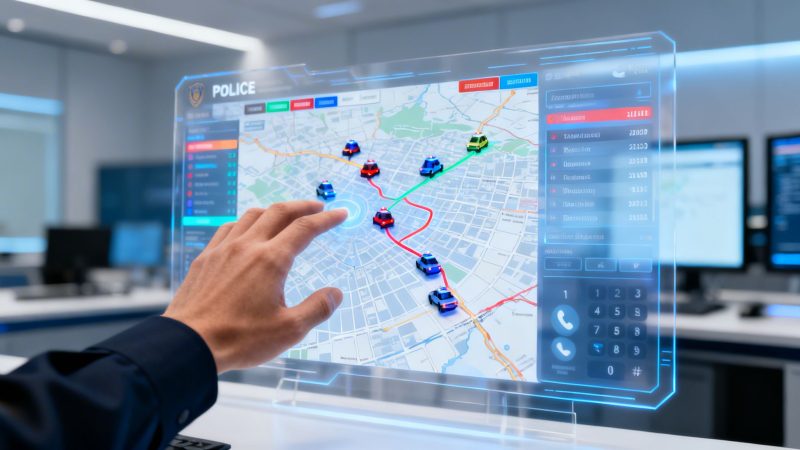
A Modern Guide to CAD Systems for Police in 2026
When you hear about CAD systems for police, don't just think of software. Think of the digital heartbeat of a law enforcement agency. It’s the command center that turns a frantic 911 call into a coordinated, real-time response, managing everything from dispatch to officer safety.
These systems are what stand between chaos and control. They’re absolutely essential for modern policing.
What Are Police CAD Systems and Why Are They Essential

At the most basic level, a Computer-Aided Dispatch (CAD) system is what a police dispatcher uses to manage an incident from start to finish. It’s the tool that wrangles an overwhelming flood of incoming calls and information into orderly, actionable events.
Before CAD, dispatchers were stuck with pen, paper, and radio calls. In a high-stress, life-or-death situation, that’s just too slow and way too easy to mess up. A good CAD system isn't just an upgrade; it's a force multiplier. It gives dispatchers a bird's-eye view of the entire operation, showing not just where the emergency is, but the live status and location of every officer on the street.
From 911 Call to Officer on Scene
Let's walk through it. A 911 call comes in—burglary in progress. As the call-taker gathers information, they’re plugging it straight into the CAD: address, nature of the call, suspect descriptions. The system instantly pins that location on a map.
The dispatcher sees this new incident pop onto their screen, along with the real-time positions of every patrol unit. A solid CAD system might even suggest the closest available unit. With a couple of clicks, the call is assigned.
Practical Example: This is where it gets tactical. Instead of broadcasting sensitive details over an open radio channel for anyone to hear, the dispatcher uses the CAD to push the information silently and directly to the officer's in-car computer or mobile device. This keeps suspects from listening in on police radio traffic and gives the responding officer a huge advantage.
The officer gets the alert, taps "acknowledge" on their terminal, and the CAD automatically logs their status as "en-route." The dispatcher can literally watch their icon move across the map, making sure they get there fast and safe. You just can't get that seamless flow without a modern CAD.
Core Functions at a Glance
To really get what these systems do, it helps to break down their main jobs. We've put together a quick table that shows what each core function is and what it means for the folks on the ground.
Here’s a look at the core capabilities you’ll find in just about any police CAD system and how they directly impact day-to-day operations.
| Core Function | Description | Practical Impact |
|---|---|---|
| Dispatching & Call Taking | Creates and manages incident records from 911 calls, assigning them to available units. | Turns raw call data into structured, actionable incidents for first responders. |
| Mapping & AVL | Displays incident locations, unit positions, and geographic data on an interactive map. | Provides instant situational awareness, helping dispatchers choose the closest unit. |
| Unit Status Management | Tracks the real-time status of every officer and vehicle (e.g., available, en-route, on-scene). | Maximizes resource efficiency and ensures officer accountability from call to completion. |
| Incident Logging | Creates a permanent, time-stamped log of every action, communication, and status change. | Provides an ironclad record for investigations, court evidence, and after-action reviews. |
| Records Integration | Connects to the Records Management System (RMS) to pull up prior history on people or locations. | Gives officers critical background information before they even arrive on scene. |
This isn't just a list of features; it's a breakdown of how a CAD system empowers an entire department to work smarter and safer.
A Growing Market Driven by Necessity
The central role these systems play is no secret. The global Computer-Aided Dispatch market is on track to grow from $2.57 billion in 2026 to $3.75 billion by 2030. That growth is being pushed by public safety agencies modernizing their tech and a clear need for better emergency management. For more on these trends, you can see how companies like CentralSquare.com are tracking the market.
This isn't about chasing the latest tech fad. Investing in a solid CAD platform is a foundational move for any agency serious about operational excellence and keeping its officers safe. It’s no longer a nice-to-have; it's a must-have.
Essential Features of Modern Police CAD Systems
Any police CAD worth its salt can take a call and dispatch a unit. That’s the bare minimum. But the systems we have today go so much further, moving way beyond just logging incidents. They’re about giving dispatchers and officers real situational awareness, protecting them on the street, and building a powerful data trail.
The biggest leap forward has been in mapping. The old way was a static pin on a map. Today's platforms are a different beast entirely.
Intelligent Mapping and Unit Location
A modern CAD system for police isn’t just a map; it’s a living, breathing view of your entire operational area. By pulling in Geographic Information System (GIS) data and Automatic Vehicle Location (AVL), it provides context that can literally save lives. It's way more than just seeing dots on a screen.
- Data Overlays: Dispatchers can flip through layers of information. Think of seeing prior incident histories for an address, known hazards like chemical storage, or even pulling up building floor plans for a school or a courthouse.
- Real-Time Officer Location: AVL tracks the exact spot and status of every unit. This lets a dispatcher send the actually closest officer, not just the one who’s supposed to be in that zone according to a beat map.
Practical Example: A call comes in for a domestic disturbance. A good CAD instantly flags the address, showing three prior domestic violence calls in the last year. It also pops a safety note from a previous officer: a resident there is known to be hostile. The responding officers get this intel before they even park their car, shifting their mindset from a routine call to a high-risk entry. That's officer safety in action.
Smart Dispatching and Mobile Data Terminals
Relying on just the voice radio is slow, clunky, and frankly, insecure. The best CAD systems use smart algorithms to silently push call details straight to an officer's Mobile Data Terminal (MDT) or even their department-issued smartphone.
This digital approach is a game-changer. For one, it’s quiet. Broadcasting a suspect's description or tactical plans over an open radio channel is just asking for trouble, especially with how common scanners are. Pushing details to a screen keeps that information secure.
It also creates a perfect, time-stamped log of what information was sent and when. This becomes an undeniable record for court or after-action reviews. The really advanced CAD systems for police even suggest the best unit for a call, factoring in not just location but also special skills (like a certified crisis intervention officer) or specific equipment (like a K-9 unit). You can see how dispatching systems from Resgrid manage this level of coordination.
Robust Reporting and Analytics
The data flowing through a CAD is a gold mine for command staff, but only if you can actually get to it and make sense of it. Modern systems have reporting tools that turn all those raw logs into real intelligence.
Actionable Insight: For a police chief, this is how you build a budget request that can’t be ignored. Instead of just saying, "We need more officers," a chief can pull a report straight from the CAD showing a 40% increase in response times in a specific district over six months. That’s a hard, data-driven argument that can secure funding and prevent unnecessary overtime costs by justifying new hires.
This kind of capability is what’s driving the entire market. In fact, Computer-Aided Dispatch systems are on track to grab 24.55% of the total revenue in the broader law enforcement software market. This isn't an accident. Agencies are demanding platforms with rich GIS, solid mobile integration, and powerful analytics—it’s a clear shift toward smarter, data-guided policing. You can read more about the growth of the law enforcement software market on MordorIntelligence.com.
These features aren't just bells and whistles. They are fundamental tools that help a department operate more safely, efficiently, and with more intelligence than ever before.
Technical Requirements And Critical System Integrations
A police CAD system that sits by itself is like a brain without a nervous system. It holds information, but it can't really do much. The real magic happens when you connect it to all the other crucial tech your department uses every single day.
Without those connections, your CAD is just a glorified digital call log. But with them, it becomes the central hub, the beating heart of your entire operation, improving officer safety and making everything run a whole lot smoother.
The Unbreakable Bond: CAD and RMS
Let's start with the most important connection of all: the link to your Records Management System (RMS). This isn't a "nice-to-have"; it's an absolute necessity. Your RMS is the long-term memory of your department, holding every incident report, arrest record, and piece of historical data you've ever collected.
When your CAD and RMS talk to each other, the workflow becomes seamless. It cuts out the mind-numbing double-entry that eats up so much of an officer's time and introduces the risk of human error.
Actionable Insight: An officer clears a call for a B&E. They get back in their vehicle and pull up the report on their laptop. Because the CAD and RMS are integrated, all the foundational info—the incident number, address, call notes, and timestamps—is already filled in. This can cut report-writing time by 50% or more. For a medium-sized agency, this simple automation can reclaim hundreds of patrol hours per month, effectively adding an officer to your force without the cost of a new hire.
That simple automation saves an incredible amount of time. For a medium-sized agency, we're talking about hundreds of hours a month that officers can spend on patrol instead of pecking at a keyboard.
Before we move on, let's look at how the old way of doing things stacks up against a modern, connected system. The differences in both efficiency and cost are pretty stark.
Legacy CAD vs Modern Integrated CAD Systems
| Feature | Legacy CAD System | Modern Integrated CAD System (e.g., Resgrid) | Cost Savings Impact |
|---|---|---|---|
| Data Entry | Manual, redundant entry into both CAD and RMS. | Automated data population from CAD to RMS. | Significant reduction in administrative hours, freeing up officer time for patrol. |
| Reporting | Time-consuming process; officers spend 30-40% of their shift on paperwork. | Streamlined reporting in minutes, not hours. | Massive ROI from increased officer productivity and proactive policing time. |
| Data Accuracy | High risk of typos, incorrect incident numbers, and mismatched data. | Minimized errors through automated data transfer. | Reduced costs associated with correcting bad data and improved case file integrity. |
| Situational Awareness | Information is siloed; dispatchers and officers lack a complete picture. | Real-time data sharing across all platforms (dispatch, mobile, records). | Better officer safety and more informed operational decisions, reducing liability risks. |
It's clear that sticking with an outdated, siloed system isn't just inefficient—it's actively costing your department money and putting officers at a disadvantage. A modern, integrated approach isn't a luxury; it's a financial and operational necessity.
Getting Ready For Next-Generation 911
Another connection you absolutely have to plan for is with Next-Generation 911 (NG911). The old 911 system was built for one thing: voice calls from a landline. That’s not the world we live in anymore.
NG911 is built for today, ready to handle texts, photos, and even live video from a citizen's smartphone. Your CAD system for police has to be ready to catch that data. When someone sends a video of a crime in progress, your CAD needs to not only receive it but immediately push it out to the dispatcher and every responding unit. It gives officers eyes on the scene before they even arrive. This isn't just an upgrade; it's about future-proofing your entire dispatch operation.
This diagram shows how all these pieces fit together. It’s not a one-way street; it’s a cycle.

As you can see, the core functions like dispatching and mapping feed directly into the system's ability to create powerful reports. Better data in means better analysis out. You can learn more about how crucial this is by exploring the mapping features of a modern CAD.
The Elephant in the Room: Security and Compliance
When you connect all these systems, you create a massive, centralized treasure trove of highly sensitive data. And that puts a huge target on your back. Cyberattacks against public safety agencies have doubled in recent years. A successful attack on your CAD can knock you offline for weeks, forcing you back to the stone age of pen, paper, and radios.
This is why security can't be an afterthought. Any CAD you consider must meet the FBI's strict Criminal Justice Information Services (CJIS) Security Policy. It's not optional. This means your system must have:
- Rock-Solid Data Encryption: All data has to be scrambled and unreadable, whether it's sitting on a server or flying across the network.
- Strict Access Controls: Only the right people can see the right information. This is managed through strong passwords and role-based permissions.
- Detailed Audit Logs: You need an unchangeable record of who accessed what data, and when. This is critical for accountability and investigating any potential issues.
Meeting these government security mandates is a dealbreaker. It’s worth getting familiar with frameworks like NIST 800-53 compliance to understand what’s required to keep your agency’s data safe. When you're looking at vendors, their commitment to security should be one of your top considerations.
How to Save Money on Your Next CAD System
Buying a new CAD system for police can feel like an impossible budget item, especially for smaller agencies. The initial price tag on traditional systems is enough to cause sticker shock, but the real pain often comes from the hidden costs that creep in over the years. By getting a handle on these expenses and looking at modern alternatives, departments of any size can get their hands on powerful tech without draining their budgets.
The old way of doing things meant a massive, one-time payment for on-premise software. But that's just the tip of the iceberg. The true cost of owning that system balloons quickly once you start digging into the long-term commitments these legacy vendors demand.
Uncovering the Hidden Costs of Legacy CAD
It's easy to get tunnel vision and focus only on the initial software license. Many departments do, and they end up locked into an expensive ecosystem. The real costs are buried in the fine print and the day-to-day operational needs.
These often sneak up on you and include:
- On-Premise Hardware: You’re on the hook for buying, housing, and maintaining physical servers. That means paying for the servers themselves, plus the power, cooling, and the IT staff needed to babysit them.
- Mandatory Training Contracts: Many vendors lock you into expensive, multi-day training sessions for your whole team, sometimes even for minor software updates.
- Per-User Licensing Fees: As your department grows, so does your bill. Adding just one new dispatcher or officer can trigger more licensing fees that pile up fast.
- Lengthy Implementation and Customization Fees: Getting the system set up and configured for your agency's specific workflows can come with huge professional service fees that weren't obvious in the first quote.
Actionable Insight: Before signing any contract, demand a five-year Total Cost of Ownership (TCO) estimate from the vendor. Make them list every potential fee: annual maintenance, per-user licenses, data storage overages, and mandatory training. This forces transparency and helps you avoid a system that looks cheap upfront but costs a fortune over time, saving your budget from massive, unexpected hits.
A Smarter Financial Strategy: The SaaS Model
Fortunately, there’s a much more flexible and wallet-friendly way: the cloud-based Software-as-a-Service (SaaS) model. Instead of buying the software, you subscribe to it. This completely flips the financial script for police departments.
This approach gets rid of the need for pricey on-site servers and all the maintenance that comes with them. It turns what was a huge capital expense into a predictable, manageable operating cost—a lot like your monthly utility bill.
Here’s an example of what modern, transparent SaaS pricing can look like, letting departments scale their costs up or down based on what they actually need.
This structure lets an agency pick a plan that fits its current size and budget, with the freedom to change plans as its needs evolve.
The big takeaway here is that you only pay for what you use. You can sidestep the six-figure upfront investments that legacy systems demand. For smaller departments or those with fluctuating staff numbers, this is a total game-changer.
Practical Cost Comparison: A Real-World Example
Let's make this real with a quick example. Picture a small police department with 15 officers and 2 dispatchers.
- Traditional On-Premise System: The upfront cost could easily hit $50,000 – $100,000 for the software, server hardware, and initial setup. Then, add annual maintenance contracts (often 15-20% of the initial cost) on top of that, plus fees for any new user you add. The first-year cost alone can be staggering.
- SaaS Model (like Resgrid): With a self-service platform, there are no hardware costs and no setup fees. The department could pick a monthly plan that covers all their personnel for a few hundred dollars. This adds up to an annual cost in the low thousands, saving the department tens of thousands of dollars in the very first year.
By going with a SaaS solution, that small department avoids a massive fight for capital funds and can fit the cost into its regular operating budget. It makes modern CAD systems for police accessible to everyone, not just the big, well-funded agencies. To see exactly how this works, you can explore the different subscription options available from Resgrid, which we designed for organizations of all sizes. It's the most direct path to saving money while giving your agency better tools.
The Future of CAD and Predictive Policing

For a long time, the core job of a CAD system for police was to react. A call comes in, a unit gets dispatched. It was a digital version of the old pin-and-map board. But that model is starting to feel dated. The conversation is shifting from simple response to something much smarter: getting ahead of crime before the 911 call is even made.
This isn't just a fantasy from a sci-fi movie; it's what's happening on the ground right now. Departments are starting to use their CAD systems not just as a logbook, but as a brain that helps them predict needs and place resources where they'll do the most good.
From Reactive to Predictive with AI
The term "Artificial Intelligence" gets thrown around a lot, but in modern CAD, it has a very practical job. AI is incredibly good at one thing humans aren't: sifting through years of incident data to find subtle patterns. It can look at every robbery, every break-in, every public disturbance, and connect the dots between time, location, and incident type.
This allows for a practical kind of predictive policing. The system can flag "hotspots"—areas where certain crimes are statistically likely to pop up.
Practical Example: Let's say an AI-enabled CAD chews through five years of robbery data. It might notice that a specific three-block strip of bars and restaurants has a spike in strong-arm robberies on Friday nights between 9 PM and midnight. Armed with that insight, a shift commander can stop relying on random patrols and instead place a unit directly in that zone during that window. It’s a deterrent, and if a call does come in, response is immediate. You're using your patrol hours with surgical precision.
The Rise of Real-Time Crime Centers
One of the biggest trends we’re seeing is the explosion of Real-Time Crime Centers (RTCCs). Think of these as a high-tech command post, and the CAD system is its heart, pulling all the disparate data streams into one coherent picture.
The growth here has been staggering. Over the last four years, the number of RTCCs in the U.S. has jumped by 148%. That’s a clear signal that departments are all-in on this centralized, data-first approach.
Inside an RTCC, analysts are watching live feeds integrated directly into the CAD, including:
- Live Video Feeds from traffic cams and public surveillance.
- Automated License Plate Readers (ALPR) that can instantly flag a stolen car or a vehicle tied to an active alert.
- Gunshot Detection Systems that can pinpoint gunfire and create a CAD event before anyone has even had a chance to dial 911.
This gives commanders a live, bird's-eye view of their entire jurisdiction. When a major incident kicks off, they see it unfold in real time, with automated alerts and visual intel all tied together in the CAD. Looking ahead to 2026, we'll see an even greater reliance on tools like forensic video analysis software to make sense of all the digital evidence these systems collect.
This whole shift is driving huge investment. The entire law enforcement software market is expected to hit $40.76 billion by 2033, growing at a 10.4% compound annual rate. You can dig into the numbers yourself over on the global law enforcement software market on grandviewresearch.com. This isn't just about buying new tools; it's a fundamental change in how policing gets done.
How Resgrid Modernizes Police CAD on Any Budget
Shopping for a new CAD system for police can be a real headache. You’re often looking at six-figure contracts and implementation timelines that stretch out for months, if not longer. We built Resgrid to get around all that. It’s a powerful, modern dispatch platform that any agency can get up and running right away, without the traditional cost and complexity.
We designed our platform from the ground up to solve the real problems first responders face every day. It’s not some stripped-down version of an enterprise system. Resgrid brings together dispatching, live unit mapping, personnel management, and real-time messaging into one unified system built for how you actually operate.
Enterprise Power Without the Enterprise Price
Let's be honest: the biggest hurdle for most departments is the price tag. Legacy CAD vendors lock you into eye-watering contracts, mandatory training fees, and per-seat licenses that penalize you for growing your team. We wanted to offer a better way.
Resgrid uses a straightforward, subscription-based model. It's completely self-service, which means we've cut out the parts of the process that inflate the cost and waste your time.
Actionable Insight: A small department can use Resgrid to skip the entire traditional procurement song and dance. No sales calls, no long-term contracts to haggle over, and no huge upfront investment. You can literally sign up online and have a fully functional CAD system running in a few hours, saving tens of thousands of dollars and months of administrative work.
This approach puts you in the driver's seat of your budget. You pick a plan that fits your agency's size and can scale it up or down whenever you need to. It’s a predictable operating expense, not a capital budget crisis waiting to happen.
Here’s a quick look at the Resgrid dashboard, which gives you a clean, at-a-glance view of your entire operation.
This interface pulls together everything your dispatchers need—unit status, active calls, and personnel availability—so they have the situational awareness to make smart, fast decisions.
A Flexible and Future-Ready Platform
Resgrid isn't just about saving money; it's about being more flexible. Our system is built on an open-source foundation, giving it a level of adaptability that closed, proprietary systems just can't offer. You get all the tools you need to handle everything from routine patrols to major emergency incidents.
- Integrated Dispatch: Create and assign calls, with real-time updates pushed straight to your officers' phones or tablets.
- Live Mapping: Track all your unit locations and incident markers on a dynamic map for a clear operational picture.
- Personnel Management: Handle schedules, check qualifications, and manage availability, all from one spot.
At the end of the day, Resgrid makes modern operational effectiveness achievable for any department, no matter its size or budget. It’s the practical, money-saving path forward for agencies ready to upgrade their capabilities without breaking the bank.
Frequently Asked Questions About Police CAD Systems
Jumping into the world of CAD systems for police can bring up a ton of questions, especially when you’re talking about a major technology investment for your department. Let's tackle some of the most common things we hear from agencies looking to get a new system or upgrade an old one.
What Is the Biggest Mistake to Avoid When Choosing a CAD System?
The single biggest mistake is getting fixated on the initial purchase price and completely ignoring the total cost of ownership (TCO). A lot of legacy systems look great on paper with a lower upfront cost, but they bury massive long-term expenses in the fine print.
You'll get hit with hidden fees for things like expensive mandatory training, locked-in maintenance contracts, per-user licenses that punish you for growing, and the need for pricey server hardware. It’s a model designed to lock you into an inflexible and financially draining system for years.
Actionable Insight: The key is to always find a system with transparent, all-in pricing. A modern SaaS model is your best bet here because it eliminates surprise bills. You know exactly what you’re paying each month and can budget accordingly, saving you from having to make emergency funding requests for unexpected maintenance or license fees.
How Long Does It Typically Take to Implement a New Police CAD System?
This is where you see a night-and-day difference between old-school and modern systems. The legacy, on-premise CAD platforms from the big, established vendors can take anywhere from 6 to 18 months to get fully up and running. That long wait comes from complex on-site hardware installation, painful data migration, and required multi-week training sessions for every single person.
On the other hand, modern cloud-based (SaaS) systems can be deployed in a tiny fraction of that time. We've seen agencies get up and running in a matter of hours or days, not months. The self-service nature of these platforms means you can configure the system to your exact needs without having to wait on a vendor, which gets your department seeing value almost immediately.
Can Smaller Police Departments Afford a Modern CAD System?
Absolutely. It’s true that traditional CAD systems were historically way too expensive for smaller agencies, but that’s just not the case anymore. The growth of cloud-based and open-source solutions has made this critical technology something that departments of any size can actually afford.
Instead of a massive capital expense that’s a nightmare to get through the budget approval process, these systems use a subscription model (SaaS). This turns the cost into a predictable operational expense, just like your utility bill.
- Practical Example: A small municipal department or even a university police force can now get a powerful CAD platform for a few hundred dollars a month. They get the same core features—dispatching, mapping, and reporting—that the big agencies have, but at a price that actually fits their operating budget. This levels the playing field, improves officer safety, and can even help lower insurance premiums by demonstrating enhanced operational oversight.
Ready to see how a modern, affordable CAD system can change your operations without the sticker shock? With Resgrid, you get enterprise-grade dispatch capabilities on a self-service platform that fits any budget. Explore our features and get started today.