
Discover what is incident management system
You're probably dealing with some version of this right now. Calls come in from different places. One supervisor gets a text. Dispatch gets a phone update. Someone in the field radios that conditions changed, but that update never makes it to the person assigning units. Later, everyone agrees the response felt messy, yet nobody can reconstruct exactly where the breakdown happened.
That's the gap behind the search for what is incident management system. People often think they need a better chat tool, a better CAD screen, or a better notification app. Sometimes they do. More often, they need something different: a system that turns scattered incident activity into a shared operational process.
A true incident management system doesn't just help people talk. It helps them coordinate, track, assign, and review. That difference affects response speed, staffing efficiency, fuel use, overtime, auditability, and safety. In emergency management, public safety, security, and business operations, that's the line between a team that reacts and a team that stays in command.
The Anatomy of a Chaotic Response
A multi-vehicle crash on a wet highway starts like many incidents do. The first call is incomplete. The second caller reports something different. A patrol unit arrives and asks for fire and EMS. Another caller says there may be a fuel leak. Someone at a nearby agency hears about lane blockage and starts moving resources before the full picture is clear.
Then the familiar problems begin.
Dispatch has one version of the event. The field supervisor has another. A unit is sent from farther away because the closest available resource wasn't visible to the person making the call. Two responders ask the same question over different channels. One update lives in a text thread. Another sits in a notebook. A critical status change is spoken over radio once and missed by half the people who need it.

Where the money leaks out
Chaos isn't just stressful. It's expensive.
When teams don't have a single incident record, they waste time repeating information, moving the wrong units, and correcting avoidable mistakes. That drives hidden costs in overtime, extra mileage, duplicated effort, and delayed recovery. It also creates a poor record if someone later asks why a unit was delayed, why mutual aid was requested late, or why a road closure decision changed three times.
A lot of organizations try to patch this with more communication tools. That usually means adding another app on top of the confusion. More channels don't solve bad coordination. They often make it worse.
The same lesson shows up outside public safety. In technical operations, the moment when remote IT support fails is usually the moment everyone realizes that messages alone don't restore order. Someone still has to own the event, track actions, and manage handoffs.
Practical rule: If your team can't answer who has the latest incident status, you don't have an incident system. You have conversations about an incident.
What good response feels like
A disciplined response feels quieter, even when the event is serious. The right people see the same incident. Resource status is visible. Updates attach to the incident itself instead of disappearing into side conversations. Command staff don't need to chase information because the workflow already captures it.
That's what people are really asking for when they ask what is incident management system. They want the incident to stop living in people's heads, radios, and inboxes, and start living in a controlled operational record.
From Chaos to Command The Core Concept
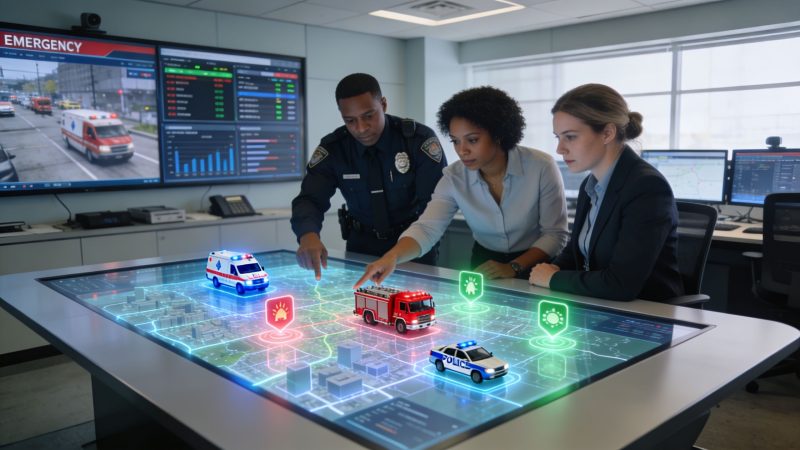
An incident management system is a digital command center for managing events from first report through closure. It's not just a place to send alerts. It's a platform that turns scattered reports, calls, and updates into a structured incident that people can work from.
That distinction matters. A message says something happened. A managed incident says what happened, who reported it, when it started, how serious it is, who owns it, what resources are assigned, and what changed over time.
The shift from message to managed incident
According to Atlassian's incident management overview, an incident management system is most effective when it treats incidents as structured data objects rather than simple messages. The first technical steps are identification, then logging, then classification and prioritization. In practical terms, the incident log typically captures the reporter, timestamp, description, and a unique tracking ID. Atlassian also notes that classification includes assigning the staff level that should handle the incident.
That sounds simple, but it changes everything operationally.
Once the incident is structured, the team can route it based on severity and urgency. Supervisors can see status without asking for verbal updates every few minutes. Dispatch can track ownership. Administrators can review timelines later for after-action work, SLA control in IT settings, or internal accountability in public safety and security operations.
For teams evaluating this in a field context, it helps to look at how a modern dispatching workflow connects call creation, assignment, status changes, and closure inside one operating picture.
What a real IMS contains
A true IMS usually includes several core capabilities working together:
- Incident logging: Every event gets a record, not just a notification.
- Classification and prioritization: The system separates low-impact issues from events that need immediate escalation.
- Assignment and escalation: The right responder, team lead, or command role gets the incident based on the rules you set.
- Tracked updates: New information is added to the incident timeline instead of getting lost in separate tools.
- Closure and review: The incident ends with a record that can be searched, audited, and learned from.
Here's the practical difference:
| Simple communication tool | True incident management system |
|---|---|
| Sends messages | Creates incident records |
| Depends on people remembering context | Stores context with the incident |
| Updates live in separate channels | Updates attach to one timeline |
| Hard to audit later | Built for review and reporting |
| Encourages reactive coordination | Supports planned workflows |
A radio channel can move information. An incident management system moves decisions, assignments, and accountability with it.
What doesn't work
What fails in the field is trying to run incident management through a patchwork of radio traffic, text groups, email chains, and whiteboards. Those tools still matter, but they aren't the system of record.
If the operation depends on someone manually copying updates from one channel to another, it will break under pressure. A real IMS reduces that friction by making the incident itself the center of work.
The Four Pillars of an Effective IMS
Most systems claim to manage incidents. Fewer help teams spend less, move faster, and use resources intelligently. In practice, an effective IMS stands on four operating pillars.

Automated dispatching
The first test is simple. Can the system help assign the right people without forcing dispatchers and supervisors to rebuild the incident manually every time something changes?
A useful system does more than alert a group. It supports dispatch logic based on unit type, role, availability, location, or incident category. That cuts down the common waste of over-notifying everyone or sending the wrong resource first.
A practical example is a weather-related road closure. If the closest qualified unit is already committed, the system should help identify the next appropriate resource instead of making a human search across multiple screens and radio updates.
Money-saving impact: better assignment reduces unnecessary mileage, limits avoidable callbacks, and keeps reserve units from being activated too early.
Unified messaging
Teams still need radio, voice, chat, and mobile notifications. The problem is fragmentation. A good IMS centralizes those updates around the incident rather than letting them drift into separate channels that nobody can fully reconstruct later.
That matters during handoffs. A day-shift supervisor shouldn't need a verbal memory dump to understand what happened during the first operational period. The timeline should already hold the major updates, assignments, and status changes.
A weak setup looks like this:
- Radio for urgent traffic
- Text threads for side updates
- Email for supervisors
- Paper notes for timestamps
- A separate spreadsheet for resource status
A stronger setup keeps communications tied to one incident record, even when the actual alerting moves through multiple channels.
Keep your communication tools. Stop using them as your only record.
Real-time resource tracking
At this point, many organizations either save money or deplete it unnoticed.
If command can't see who is available, where units are, or what equipment is committed, they will make conservative decisions. Conservative decisions under uncertainty usually mean sending more than necessary, holding assets longer than needed, or calling for mutual aid before internal options are clear.
Real-time tracking helps commanders avoid those mistakes. If a nearby unit clears early, the system should make that visible. If a piece of equipment is already assigned elsewhere, the system should show that before someone promises it to another incident.
Direct operational benefit: smarter resource use means fewer duplicate deployments, less fuel burn, and fewer avoidable maintenance hours on vehicles and equipment.
Actionable reporting
Reporting is where many buyers lose patience because they think it's only for compliance. It isn't. Reporting is how you find out where money is leaking.
Good reporting tells you which incident types create repeated staffing strain, which shifts rely too heavily on manual workarounds, and where response bottlenecks keep showing up. It also gives you a defensible record after a complaint, near miss, or after-action review.
Here's a practical way to approach it:
| Pillar | Operational use | Cost control effect |
|---|---|---|
| Automated dispatching | Assigns appropriate responders faster | Reduces wasteful deployment |
| Unified messaging | Keeps updates in one shared context | Cuts rework and miscommunication |
| Real-time resource tracking | Shows who and what is available | Avoids unnecessary movement and overtime |
| Actionable reporting | Reveals patterns after the incident | Supports budget and staffing decisions |
The open-platform advantage
This is also where platform design matters. A closed, contract-heavy system may give you core features but still create hidden expense through add-ons, rigid workflows, and paid changes every time your operation evolves. An open platform usually gives agencies and businesses more control over configuration, rollout pace, and integration priorities.
That flexibility matters if your dispatch model changes seasonally, if you rely on volunteers, or if your jurisdiction regularly shifts between routine calls and larger multi-agency events.
Tangible Benefits and Real-World ROI
The return on an incident management system isn't abstract. You see it in fewer wasted movements, cleaner handoffs, faster status awareness, and better records when decisions are questioned later.

Where the return shows up first
Most organizations notice value in three places first.
The first is labor efficiency. Supervisors spend less time chasing updates. Dispatch spends less time repeating details across systems. Field personnel get clearer assignments and fewer unnecessary status checks.
The second is resource discipline. When unit status and incident ownership are visible, teams stop hedging with extra deployments. They also release resources earlier because command can see when the objective has changed.
The third is record quality. A reliable incident timeline helps during internal reviews, external scrutiny, billing support in some environments, and lessons-learned work after a complex event.
Hidden costs that an IMS can cut
A lot of waste hides in normal operations because teams have accepted it as routine. An IMS exposes and reduces that waste.
- Overtime drift: Poor handoffs and unclear ownership often keep people on incidents longer than necessary.
- Fuel waste: Sending distant units because nearby availability isn't visible costs money every day, not just on major incidents.
- Maintenance creep: Unnecessary vehicle movement and duplicate dispatches add wear that budgets eventually absorb.
- Liability exposure: Weak records make it harder to defend decisions after a complaint or operational review.
- Admin burden: Reconstructing an incident from radio logs, notes, and messages takes staff time that should be spent on planning and improvement.
If your team tracks reliability or restoration performance in technical operations, a comprehensive guide on key reliability metrics can help frame how incident data supports better operational decisions. The same mindset applies in emergency and field response. If you can't measure handoffs, delays, and recurring friction, you can't control them.
Why platform model matters to ROI
The software license isn't the whole cost. Procurement teams often underestimate the drag created by proprietary systems with rigid contracts, paid implementation work, and feature gates that turn basic operational changes into billable projects.
An open and flexible model usually lowers total cost of ownership because the organization keeps more control. If you need to add a team, change a workflow, or adapt the system for a temporary operation, you shouldn't have to renegotiate your entire stack.
For agencies and organizations comparing cost structures, platform pricing options are worth reviewing alongside feature lists, because a low headline price can still lead to expensive customization and support dependencies later.
A short product walk-through helps make that real in practice.
A practical ROI test
Ask four questions after a typical incident-heavy month:
- How many times did staff duplicate the same update in different tools?
- How often were resources assigned conservatively because no one trusted the status picture?
- How long did supervisors spend reconstructing incident timelines afterward?
- How many decisions depended on memory instead of a live operational record?
If those answers make people uncomfortable, the business case already exists.
How to Choose and Implement Your IMS
Most buying mistakes happen before implementation starts. Teams compare feature lists, sit through a polished demo, and skip the harder question: who owns this system during a live incident?
That question matters because an IMS sits near dispatch, command, communications, and administration. If ownership is vague, the system becomes everybody's tool and nobody's process.
Start with governance, not features
A key function of an IMS is to create a common operating picture for consistent decisions and shared situational awareness, as noted in DataGuard's discussion of incident management systems. The practical problem is that many teams don't define how that picture connects to dispatch and command authority.
So start there.
Decide whether the system is meant to replace part of your current dispatch workflow, support command after dispatch, or sit alongside existing communications tools as the operational record. Those are different jobs. If you don't define that up front, you'll buy overlapping tools and frustrate staff.
Buy for the handoff points. That's where weak systems fail first.
What to evaluate in the product itself
A strong evaluation process should test field reality, not vendor talking points.
Consider these criteria:
- Ease of use: Can volunteers, part-time staff, and full-time personnel all use it without a long training cycle?
- Mobile fit: Does it work where responders are, not just at a desk?
- Adaptability: Can your team change forms, workflows, and assignment logic as operations evolve?
- Integration readiness: Can it connect cleanly with your dispatch, notification, and reporting environment?
- Data ownership: Can you export your records and retain control if you switch systems later?
- Contract flexibility: Are you buying software, or are you entering a long dependency on vendor services?
One practical option in this category is Resgrid, which combines dispatching, messaging, organization management, tracking, and reporting in one platform and is offered in an open-source model. That matters for organizations trying to avoid contract lock-in while still centralizing incident operations.
Vendor questions that prevent expensive mistakes
Use a checklist in procurement meetings. It will save money later.
| Question | Why it matters |
|---|---|
| Who owns the incident record during a live event? | Prevents command confusion |
| Can the system support both routine and complex incidents? | Avoids buying separate tools |
| What data can we export at any time? | Protects against lock-in |
| What changes require vendor involvement? | Reveals hidden service costs |
| How does mobile use work in the field? | Tests real adoption potential |
| How does it fit with dispatch and command roles? | Clarifies governance |
When teams want a side-by-side view of platform differences, a dispatch and management platform comparison can help structure the conversation around capabilities and trade-offs rather than just sales language.
Implementation that actually sticks
Rollout should follow operations, not org charts.
Start with one incident type or one operating group. Build the workflow around actual responders and dispatchers. Test status updates, handoffs, and closure procedures on a normal week, not just in an exercise. Then adjust before broad rollout.
The teams that struggle most are usually the ones that overbuild too early. They try to model every possible event before anyone has used the system under routine conditions. Start narrower. Get adoption. Then expand.
Answering Your Top IMS Questions
How does an IMS work with the formal Incident Command System
A good IMS should support ICS, not compete with it. ICS defines command structure, roles, span of control, and operational discipline. The IMS gives those roles a shared place to track the incident, resource assignments, status changes, and decision record.
In practice, ICS answers who is in charge and how the organization is structured. The IMS helps those people operate from the same current information.
Can a small volunteer department realistically afford and manage a powerful IMS
Yes, if the system matches the department's real complexity and doesn't trap them in a contract-heavy model.
Small agencies and volunteer organizations usually don't need a giant enterprise rollout. They need simple incident creation, clear dispatching, mobile access, shared messaging, and reliable records. The expensive mistake is buying a system that assumes a large permanent admin team or charges extra every time the workflow changes.
What works better is a platform that can start small, support mixed staffing, and grow as operations become more demanding.
What is interoperability and why is it critical for multi-agency responses
For public safety, interoperability is the main technical requirement when incidents cross agency or vendor boundaries. The system needs to exchange incident information, resource status, and location data across agencies using common standards. The NAPSG technical guide points to standards and information-sharing approaches such as NIEM EMLC, EDXL CAP, and EDXL RM, and explains the need for systems to exchange active incidents, unit status, unit locations, and mutual-aid requests.
That matters because large incidents break manual workflows fast. If one agency has to re-enter another agency's incident details by hand, coordination slows down at the exact moment operations are accelerating.
Interoperability isn't a bonus feature. In multi-agency response, it's the difference between shared awareness and parallel confusion.
If you've been asking what is incident management system, the shortest useful answer is this: it's the system that turns incident response from scattered communication into controlled coordination.
If your team needs a practical way to centralize dispatching, messaging, tracking, and reporting without getting buried in proprietary contracts, take a look at Resgrid, LLC. It's built for first responders, dispatchers, and organizations that need an operational system of record, not just another communication tool.